



Introduction
The plant grows to about three to four feet in height. Its leaves are approximately ten inches long, one inch wide, and pointed at the tip. The flower stalk is about two to three inches long. Its flowers are very rare and are purple in color.
The plant does not produce seeds. Instead, small pieces of the root are planted in the ground, similar to planting potatoes. They grow slowly with water and sunlight and develop into ginger-like roots.
It is cultivated in Chet and Vasakh and harvested in Asoj and Kar. There are two types: one is fibrous, which is abundant, and the other is fiberless, which is produced in smaller quantities. The fresh root is dried and becomes sonth (dry ginger).
Place of Origin
Ginger is abundant in the hilly areas of Punjab, Jammu and Kashmir, Madras, Cochin, Travancore, Bengal, Bihar, Bombay, Surat, Ahmedabad, and other parts of the subcontinent. It has been used medicinally since ancient times.
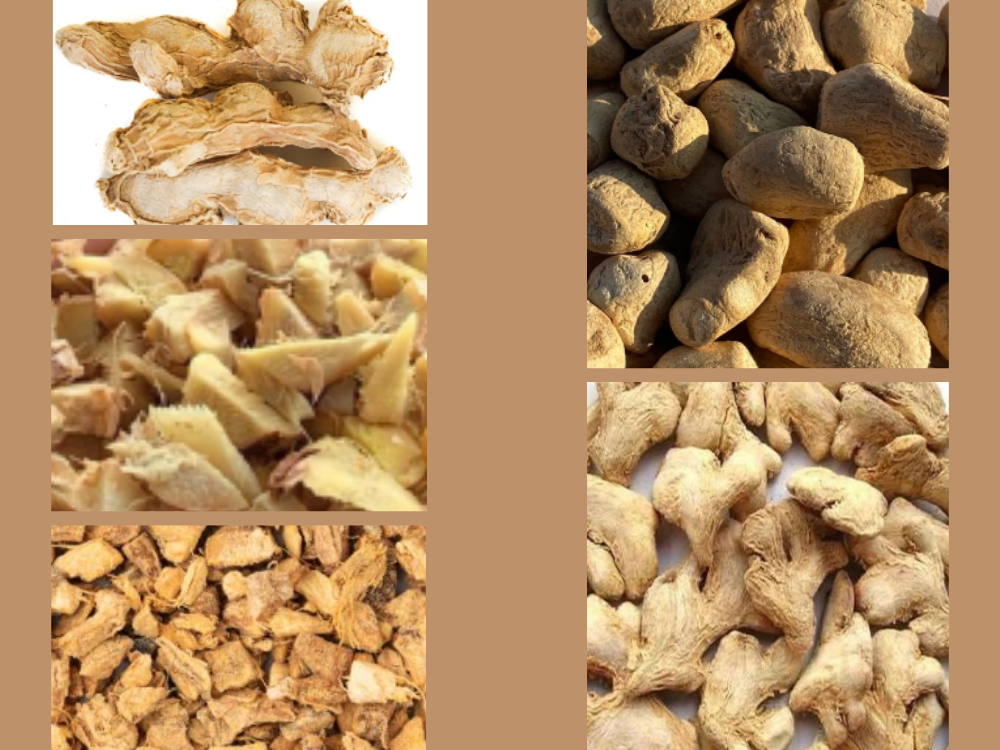
The dried pieces are flat, uneven, and branched, usually three to four inches long, with a light yellowish color on the outside. When broken, the fibrous variety has a sharp and pungent taste.
Chemical Components
Ginger contains approximately 2.5% to 4% volatile oil, which is delicate and fragrant. It also contains:
- Gingerol
- Resin
- Other similar components
Note
When people who prepare dry ginger were asked why fresh ginger does not become proper dry ginger when dried at home, they explained that the fresh ginger available in the market is obtained after the root has remained buried in the ground for a long time and has become fully mature. Once it is properly ripened, it is removed from the ground and prepared as dry ginger.
Well-ripened ginger can also be peeled and dried in the shade, after which it becomes dry ginger. Ginger becomes thicker as it matures. Unripe ginger is called Sathuwan ginger. In Bengal, curry (mango) ginger is used.
Temperament
Hot in the third degree and dry in the first degree. The older the ginger becomes, the drier it becomes, reaching the second degree.
Actions
- Tonic
- Digestive
- Tonic for the mind and memory
- Astringent
- Anti-inflammatory
- Antibacterial
- Antifungal
- Antispasmodic
- Digestive stimulant
Dosage
One to one and a half portions.
Famous Preparations
It is a component of Tarkta, Sonth Marsh, Black Fluff D, and other preparations.