



Introduction
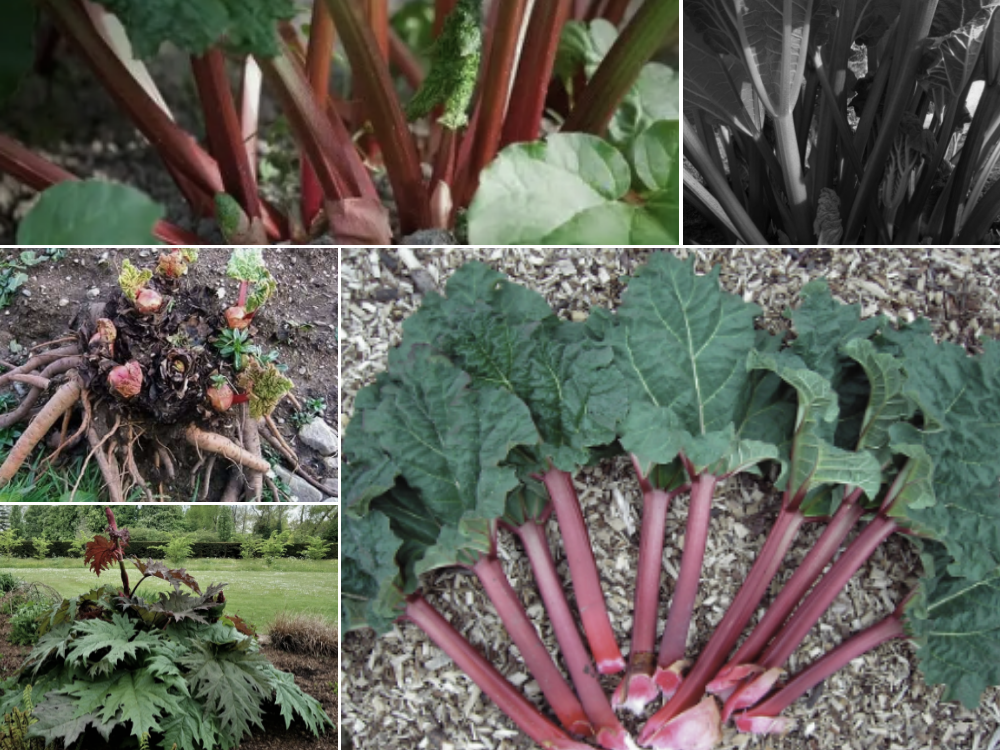
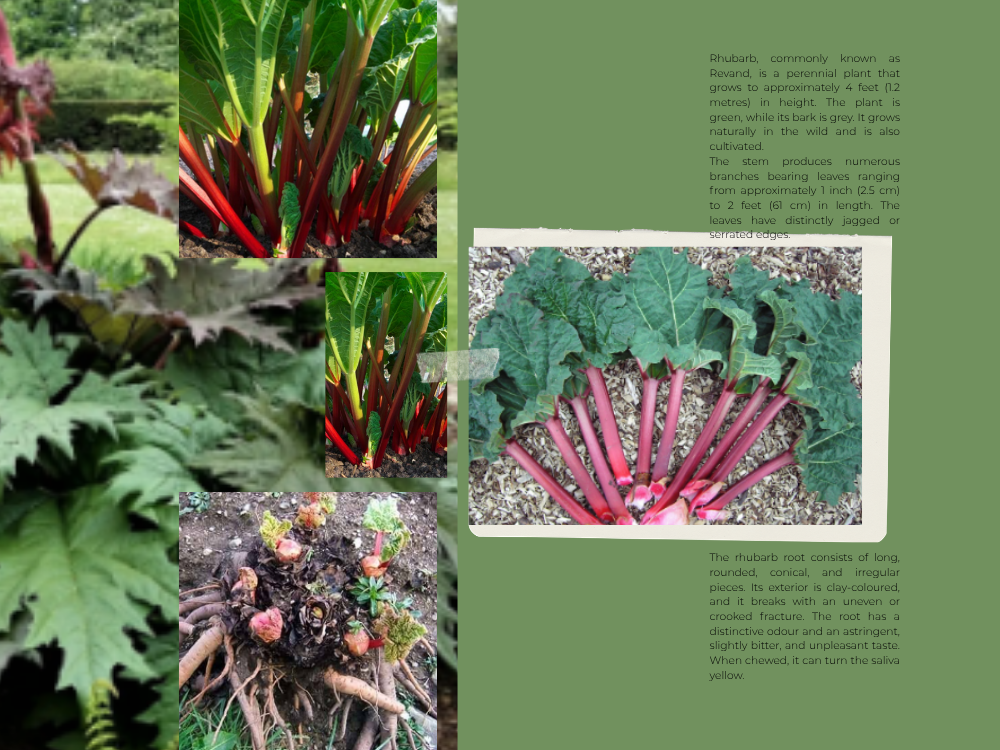
Rhubarb, commonly known as Revand, is a perennial plant that grows to approximately 4 feet (1.2 metres) in height. The plant is green, while its bark is grey. It grows naturally in the wild and is also cultivated.
The stem produces numerous branches bearing leaves ranging from approximately 1 inch (2.5 cm) to 2 feet (61 cm) in length. The leaves have distinctly jagged or serrated edges.
Flowers
The flowers are approximately ½ inch (1.3 cm) across and purple in colour. They contain numerous flat, brown seeds.
Root
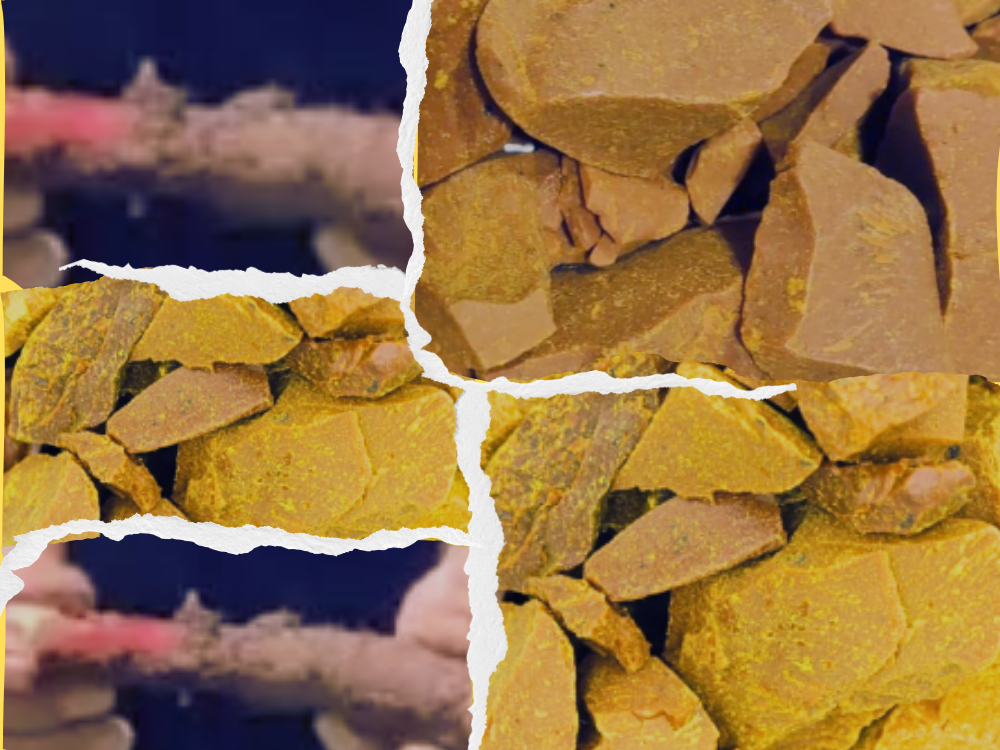
The rhubarb root consists of long, rounded, conical, and irregular pieces. Its exterior is clay-coloured, and it breaks with an uneven or crooked fracture. The root has a distinctive odour and an astringent, slightly bitter, and unpleasant taste. When chewed, it can turn the saliva yellow.
Rhubarb occurs in several varieties.
Temperament
In traditional Unani medicine, rhubarb is described as having a mixed and strong temperament: hot and dry in the second degree.
Traditional Actions
Rhubarb has traditionally been described as:
- Astringent when used externally.
- A mild laxative and intestinal stimulant.
- Phlegm-clearing.
- A stomach and digestive tonic.
- Carminative, helping to relieve flatulence.
- Traditionally used for diarrhoea and painful menstruation.
- A liver and general body tonic.
- Traditionally regarded as a Mufatteh-e-Sudad, meaning an agent that helps relieve or open obstructions.
Traditional Uses
Rhubarb has a long history of use in traditional medicine. Its decoction and preparations made with vinegar have traditionally been applied for various skin complaints, including acne, freckles, pimples, and other blemishes.
It has also traditionally been used for cough and to help clear phlegm associated with breathing complaints such as asthma.
A decoction has traditionally been used for internal and external swellings. In small quantities, rhubarb is described as strengthening the stomach and reducing flatulence. Small doses have also traditionally been used to help control diarrhoea.
Rhubarb has traditionally been used for complaints associated with the liver, spleen, kidneys, and urinary bladder, including jaundice, abdominal fluid accumulation (ascites), liver swelling, and kidney or bladder pain. It has also been described as helping to promote urination.
In larger quantities, rhubarb may produce loose stools. Traditional texts describe it as helping to open or relieve obstructions of the liver, spleen, and intestines.
It has also traditionally been applied or administered for pain and swelling associated with injuries involving the bones and muscles.
For painful menstruation accompanied by reduced menstrual flow, traditional preparations have included finely powdered rhubarb combined with other herbal ingredients and administered before menstruation.
Traditional Compound Preparations
Rhubarb has traditionally been combined with ingredients such as Kabuli Haritaki, Garikeen, and Aloe (Alva). Such formulations have been described in traditional medicine for complaints including headaches, paralysis, epilepsy, mental disorders, anxiety, and ringing in the ears.
Rhubarb syrup has also traditionally been used in preparations intended to promote urination.
Chemical Constituents
Traditional descriptions identify several constituents in rhubarb, including:
- Chrysarobin or related rhubarb anthraquinone compounds.
- Chrysophanic acid.
- Emodin.
- Iodine.
- Rheum-related acids.
- Calcium oxalate, reported in traditional texts at approximately 35%.
- Resin.
- Starch.
- Other organic constituents.
The characteristic colour of rhubarb is attributed to its colouring constituents. Traditional descriptions also note that certain compounds are formed or altered during the drying process through oxidation.
The characteristic crunchy or gritty sensation when rhubarb root is chewed is traditionally attributed largely to its calcium oxalate content.
Internal Effects
Small Doses
Traditional texts describe small doses of approximately 1–2.5 litres of liquid preparation as increasing salivary and gastric secretions and stimulating stomach movement, thereby supporting digestion.
Larger Doses
Larger doses, traditionally described as approximately (about 1.2–1.9 grams), may increase intestinal secretion and produce a laxative effect. Traditional descriptions attribute this action primarily to compounds such as chrysophanic acid and emodin.
The laxative effect may appear several hours after administration and may result in yellow, loose stools. Traditional texts further describe a subsequent astringent effect following the initial laxative action.
Effects on the Kidneys and Urine
The colouring constituents of rhubarb may be eliminated through the kidneys and can impart a yellow colour to the urine. Traditional descriptions also associate its use with increased urinary output.
Excretion
Its constituents are traditionally described as being eliminated through urine and breast milk. Because certain compounds may impart a bitter taste to milk, traditional texts caution that nursing mothers should use such preparations only under appropriate professional guidance.
Special Traditional Benefit
Rhubarb is traditionally valued for helping to facilitate the discharge of mucus and phlegm.
Traditional Caution
Traditional texts advise caution when using rhubarb in weak or debilitated individuals, particularly in cases of diarrhoea, because its laxative action may worsen loose stools.
Traditional Correctives
The following substances are traditionally mentioned as correctives or remedies for unwanted effects:
- Katira (Tragacanth gum)
- Gond/ Gum Bewal
- Behdana
- Ispaghula (Psyllium)
Traditional Alternative
Rosemary is mentioned in traditional practice as an alternative for certain stomach and intestinal complaints.
Traditional Dosage
Traditional dosage varies according to the intended purpose:
- For constipation: approximately (about 120–300 mg).
- For diarrhoea: approximately (about 1–1.9 g).
Because historical units and preparations vary between traditional texts, these figures should not be interpreted as modern medical dosing recommendations.
Traditional Formulations
Rhubarb is traditionally included in various compound preparations, including:
- Akseer-e-Jigar
- Sharbat Dinar
- Hab-e-Shifa
- Safuf preparations
- Madraheez and other traditional formulations