




Introduction
Costus grows in moist soil, particularly in the region between the Jhelum and Chenab rivers, the valleys of Kashmir, and the foothills of the Himalayas. It is also found in the mountainous regions of Kangra, Kashmir, and Himachal Pradesh.
Characteristics
The plant grows upright and may reach a height of approximately 7–8 feet. It has a thick stem and long leaf stalks measuring approximately 2–3 feet.
The lower leaves are large, triangular, and deeply cleft in the middle. They are pointed and may measure approximately 7–8 inches in width.
Flowers
The flowers are round and resemble marigolds, measuring approximately 1–2 inches in diameter. They are generally purple or deep blue in color.
Fruit
The fruit is small, four-sided (quadrangular), serrated, and brown.
Root
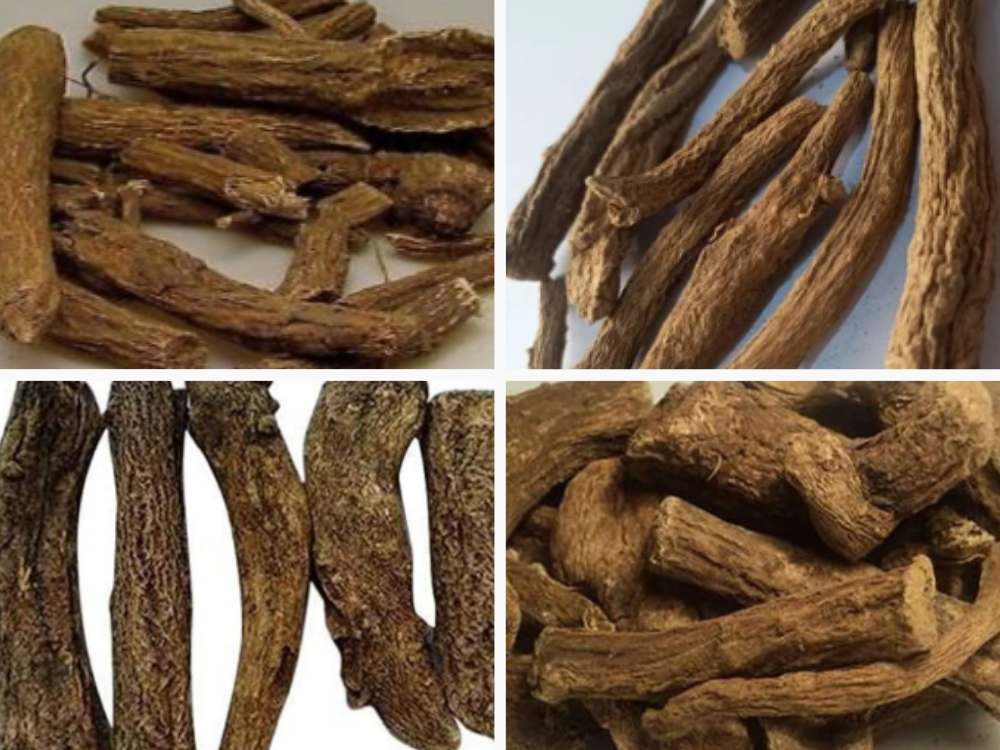
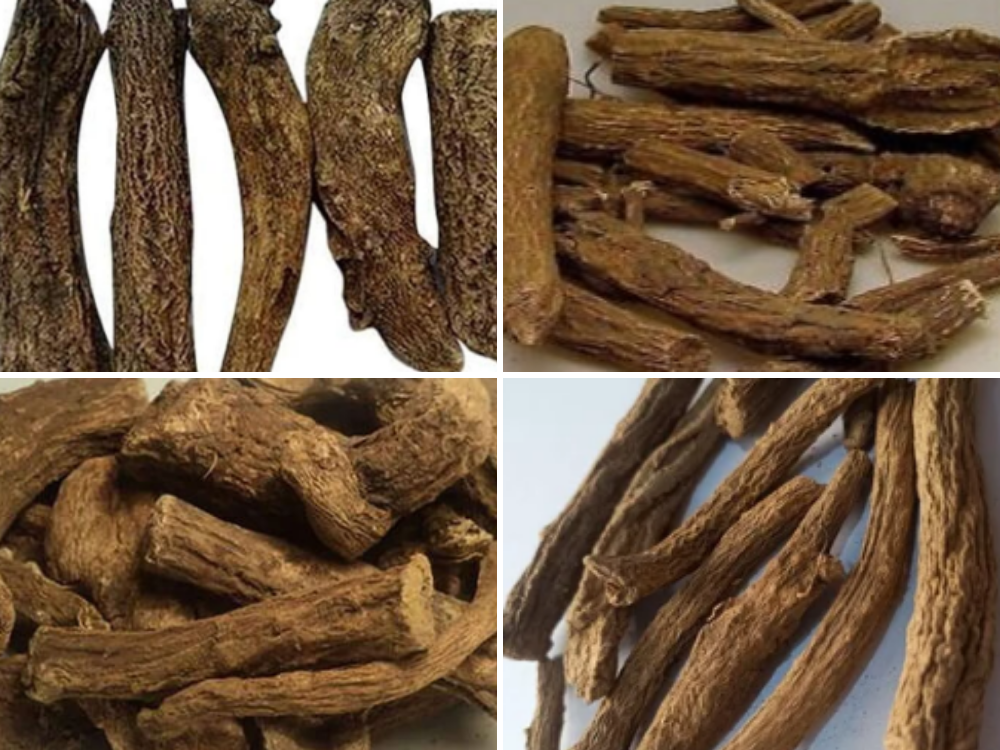
The root system is perennial and produces a new plant each year. As winter approaches, the roots are harvested for medicinal purposes. They are brown externally, approximately as thick as a carrot, and white on the inside.
Costus is traditionally associated with the mountainous regions of Kangra, Kashmir, and Himachal Pradesh. In China, the root has historically been burned at religious sites and regarded as sacred.
Varieties
Traditionally, several varieties of Costus are described:
Qist-e-Bahri / Qist-e-Arabi
This is described as the sweet variety.
Qist-e-Hindi / Qist-e-Talkh
Qist-e-Talkh is the bitter variety. Its outer surface is dark or blackish, while the interior appears yellowish when broken. It is thick but relatively lightweight. The bitter variety is traditionally used, particularly for external applications.
Reddish Variety
A third variety is described as reddish, heavy, aromatic, and non-bitter. Traditional sources consider this variety toxic and therefore unsuitable for medicinal use.
Chemical Constituents
The costus root is traditionally described as containing:
- Volatile oil, including saussurine
- Alkaloids
- Glucosides, including tephrosin/inulin as described in traditional sources
- Fixed oil
- Potassium nitrate
- Traces of glucose
- Ash containing manganese
Temperament
Hot and dry (third degree).
Actions
External Actions
Traditionally, Costus is described as
- Detergent and cleansing
- Absorbent
- Hemostatic
- Desiccative
- Aphrodisiac
Internal Actions
Traditionally, it is described as
- Tonic for the vital organs and nerves
- Expectorant
- Analgesic, particularly for chest pain
- Stomachic and intestinal tonic
- Carminative
- Anthelmintic
- Diuretic
- Emmenagogue
- Aphrodisiac
- Beneficial for phlegmatic fevers
Traditional Uses
Skin Conditions
Because of its traditionally described detergent properties, Costus is used in liniments and poultices, sometimes mixed with honey, for freckles and other skin blemishes.
Hair Loss
When mixed with vinegar or honey, Costus is traditionally applied for alopecia (hair loss) and to stimulate hair growth.
Neurological and Musculoskeletal Conditions
When mixed with olive oil, Costus is traditionally used as a massage preparation for:
- Paralysis
- Tremors
- Facial paralysis (Bell’s palsy)
- Joint pain
- Gout
- Sciatica
It is traditionally believed to stimulate and strengthen the nerves and relieve pain.
Respiratory and Phlegmatic Disorders
Internally, Costus has traditionally been administered in various preparations, including electuaries with honey, for nervous and phlegmatic disorders. It has also been used traditionally for shortness of breath, cough, and chest pain.
Menstrual Uses
A decoction of Costus root is traditionally prescribed to promote menstruation.
Aphrodisiac Uses
Costus is traditionally used both internally and externally in preparations intended to support sexual potency and vitality.
Specific Benefit
Traditionally regarded as a tonic for sexual potency and the vital organs.
Traditional Dosage
1.9–2.9 g (approximately 2–3 g).