



Introduction
In Balochistan, it is known as Amman; in Abbottabad District, as Ashmania; in Kangra and Kulu, as Badhshar; and in Shimla, as Khanda.
Nature
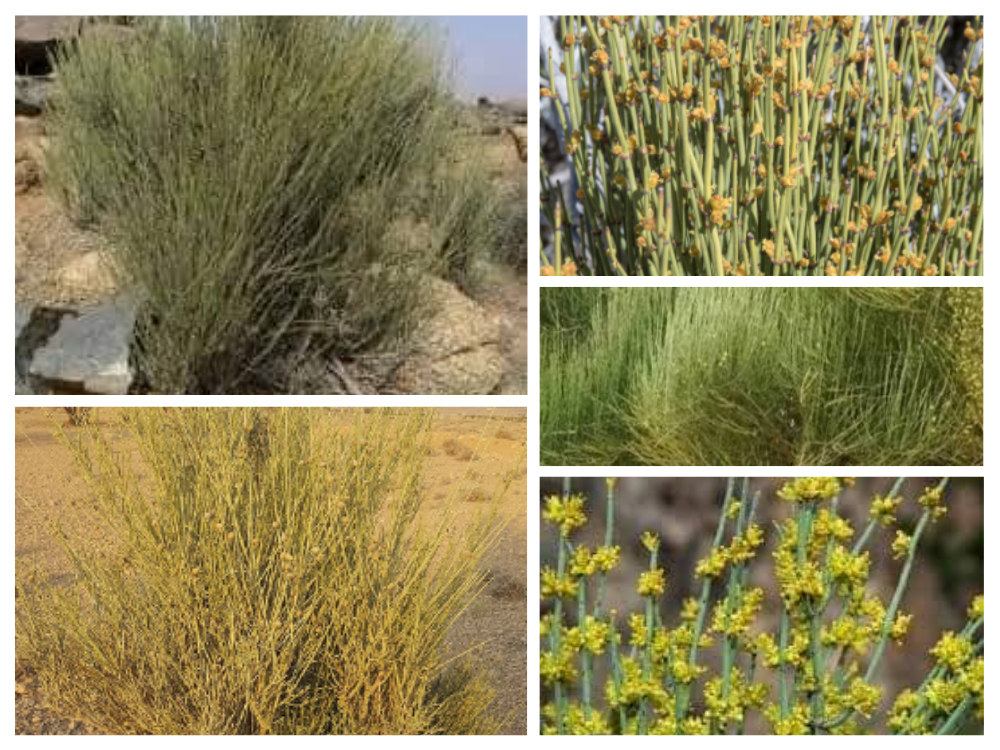
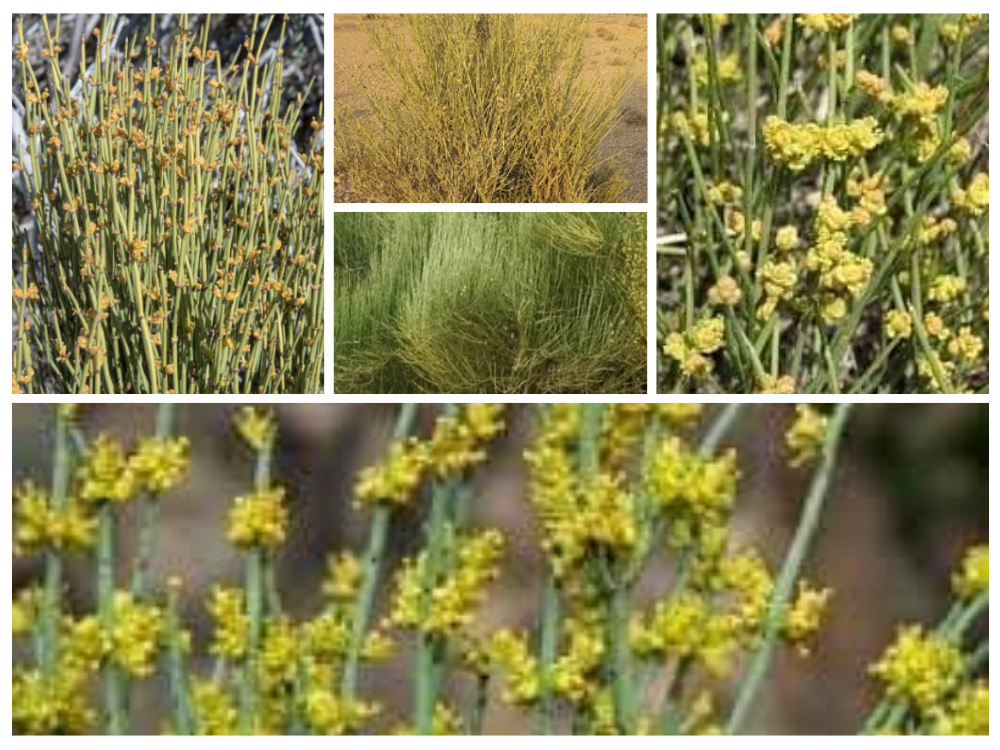
It is a small, shrub-like herb ranging from approximately 8–9 inches to 3.5 feet (20–107 cm) in height. The plant has a mild, pleasant fragrance, although this scent is lost after the herb dries.
When the plant reaches a height of about 8–9 inches, its stems and leaves appear in clusters, giving it a bush-like appearance. It has slender, tough stems, with branches emerging from the roots. Fine branches extend outward and have nodes at short intervals, with leaves arranged around each node.
The plant remains evergreen. Its flowers appear as small catkins or spikes, while the small fruits contain two seeds with a sweet taste.
Habitat and Distribution
The plant is typically found in the Himalayas at elevations of approximately 7,500–14,000 feet (2,286–4,267 meters). However, it can also grow at elevations as low as approximately 1,500 feet (457 meters) in the Kurram Pass via Kahal.
It is abundant in Chitral, Iran; Gilgit; along the banks of the Indus River; Balochistan; Kangra; and Shimla.
Some people use the plant as fuel. The plant itself is somewhat fragile. However, specimens growing in districts with heavy rainfall are traditionally considered to have lower medicinal potency.
Well-Known Varieties
The well-known varieties include
- Ephedra sinica Stapf
- Ephedra equisetina Bunge
- Ephedra gerardiana Wall. ex. Stapf
- Ephedra nebrodensis Tineo ex Stapf
Chemical Constituents
The plant contains substances such as ephedrine and pseudoephedrine, which can be extracted from it. The entire plant is traditionally utilized.
Temperament
Hot and dry (second degree).
Traditional Actions
Traditionally, Ephedra is described as having the following properties:
- Expectorant
- Antispasmodic
- Sedative
It is traditionally described as helping expel phlegm and bile.
Traditional Uses
Shortness of Breath and Phlegmatic Cough
Because of its expectorant properties, a decoction prepared from the herb, either alone or combined with other medicines, is traditionally used for shortness of breath (dyspnea) and phlegmatic coughs.
Method of Preparation
Boil (approximately 11.7 g) of powdered Som Kalpa in ½ seer (approximately 466 g/ml) of water. Continue boiling until the liquid is reduced to approximately one-quarter of its original volume.
The traditional dosage is (approximately 23–29 g/ml) of the decoction, administered three times a day at six-hour intervals.
This preparation is traditionally used for asthma, coughs, and whooping cough.
For children suffering from whooping cough, 1 teaspoon of the decoction three times daily is traditionally recommended for relief. Some practitioners also add licorice (Mulethi) to the preparation.
This formula is traditionally described as effective for the conditions mentioned above.
Mansa Flowers Formula
Take equal parts of Talispatra, licorice (Mulethi), Som Kalpa, and Pushkar Mool. Pulverize the ingredients and sift them through a fine cloth.
A traditional dose of (approximately 1.94 g) is described as providing immediate relief during an asthma attack.
Specific Benefit
Shortness of breath (dyspnea).
Dosage
- Powder: (approximately 1.94 g)
- Decoction: (approximately 11.7 g/ml)