





Introduction
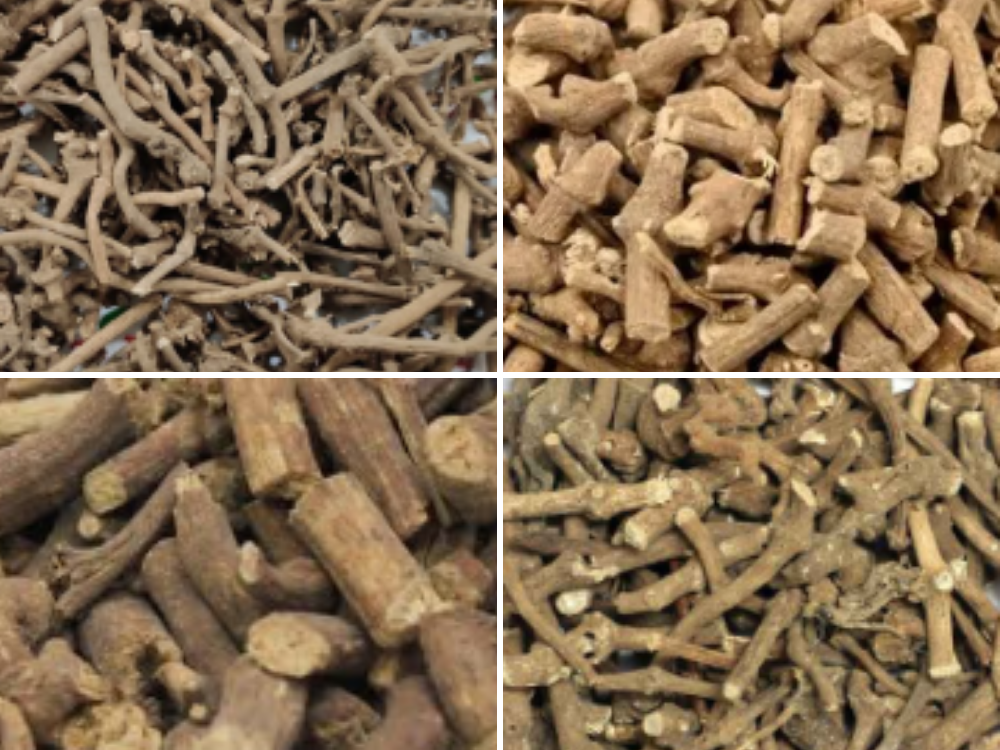
Pippla-Mool refers to the roots of long pepper (Piper longum). The roots are firm, knotty, and relatively heavy. In appearance, they resemble the roots of Chirchita (Achyranthes aspera), which has historically led to the adulteration of Pippla-Mool with Chirchita roots.
However, genuine Long Pepper root is heavier and has a sharper, more bitter, and distinctly pungent taste than Chirchita root.
Externally, the root is grayish-black, while the interior appears white when broken. Its taste is sharp, intense, pungent, and slightly bitter.
In the market, Pippla-Mool is traditionally sold as a mixture containing both stems and roots.
Regions of Origin
Long Pepper is traditionally associated with warm regions and countries, including:
- Rajputana
- The Deccan
- Nepal
- Assam
- Khasi Hills
- Bengal
- The Bombay region
- Travancore
- Ceylon (Sri Lanka)
- Gujarat
- The Philippines
- Bihar
- The Himalayan foothills, including areas around Nainital
Once planted, the crop is traditionally described as continuing to produce fruit for a long period.
Chemical Composition
Pippla-Mool contains:
- Approximately 10% volatile oil
- Resin
- Piperine, a pungent alkaloid
- Starch
Temperament
Hot and dry, second degree.
Actions and Properties
Traditionally, Pippla-Mool is described as
- Aphrodisiac
- Stomachic
- Warming
- Resolvent
- Carminative
- Detergent
Traditional Uses
Aphrodisiac
Pippla-Mool is traditionally used to enhance sexual vitality and is administered either alone or incorporated into Majoon (electuaries) and Safoof (powdered formulations) along with other appropriate ingredients.
Stomachic and Carminative
Because of its traditionally described stomachic and carminative properties, it is used for gastric weakness, abdominal pain, bloating, and impaired digestion.
Warming and Resilient
Its warming and resolvent properties have traditionally led to its use, alone or in combination with other medicines, for joint pain, gout, sciatica, and other cold and phlegmatic disorders.
Expectorant
Pippla-Mool is traditionally used for phlegmatic cough and asthma. It may be administered with honey in traditional preparations.
Traditional External and Eye Uses
Traditional sources describe a preparation in which several Pippali (long pepper) fruits are placed inside a goat’s liver and heated over a fire, producing a fluid that was historically applied to the eyes for conditions described as corneal opacity (Phoola), excessive tearing (Dama), and pterygium (Nakhuna).
This is a traditional historical preparation that should not be applied directly to the eyes, as unsterile or irritating substances can cause serious eye injury or infection.
Traditional Cosmetic Use
A fine paste prepared by grinding Pippla-Mool powder with water has traditionally been applied as a facial mask and is described in traditional sources as helping to brighten the complexion.


