




Introduction
There are two main varieties of Grewia asiatica: Falsa Sharbati (the syrup-yielding variety) and Falsa Shukri (the sweet variety).
Falsa Sharbati
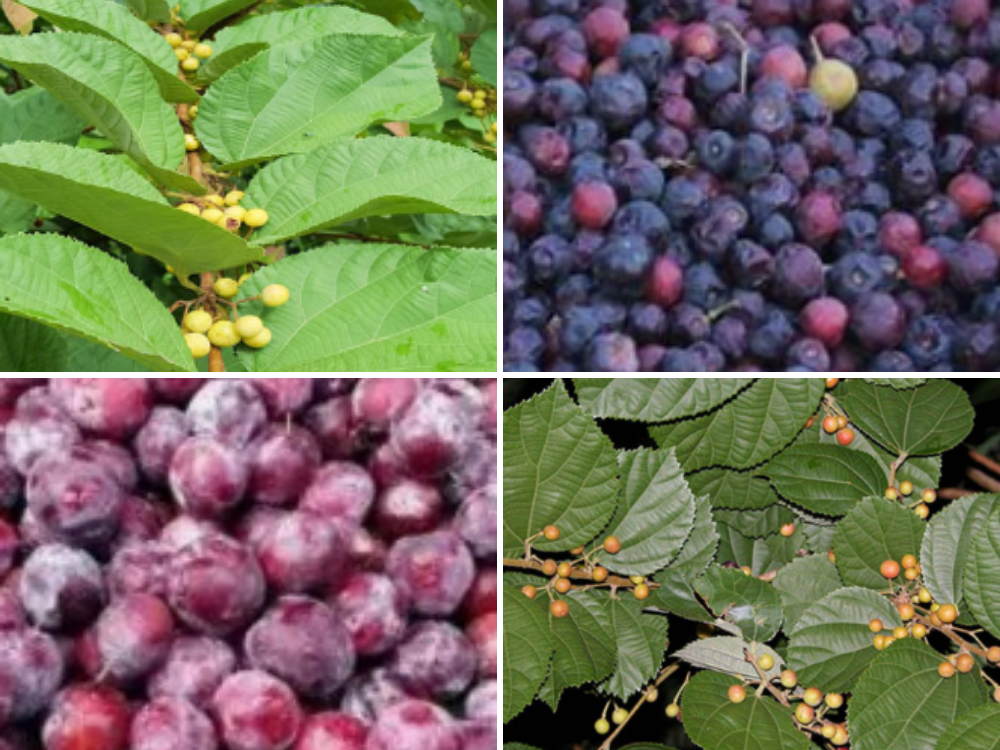
Falsa Sharbati is a small plant or tree that generally grows to a height of approximately 2–6 feet. Its fruit is initially tart but later becomes sweet, juicy, and succulent, with a high water content. This variety is commonly used for preparing syrup.
Falsa Shukri
Falsa Shukri grows into a larger tree resembling the mulberry and may reach approximately 7–8 yards in height. Its fruit contains less water than the Sharbati variety. It initially has a sweet-and-sour taste and becomes fully sweet when mature. Both the bark and fruit are traditionally used.
Fruit
When unripe, the fruit is approximately the size of a wild jujube (ber). It is green and astringent in taste. As it begins to ripen, it turns reddish-black and develops a sweet-and-sour flavor. When fully mature, it becomes sweet.
The leaves resemble mulberry leaves but are somewhat larger and have serrated margins.
Flowers
The flowers are yellowish-red.
Habitat and Season
Grewia asiatica is cultivated in Bihar, Odisha, Uttar Pradesh, Punjab, the hilly regions of Bengal, and the orchards of northern India.
The plant generally bears fruit from late March through August, while flowering occurs approximately one month before fruiting.
Chemical Constituents
The fruit contains organic acids and glucose, while the bark contains a small amount of mucilage.
Temperament
Cold and moist (second degree).

Actions
Traditionally, Falsa is described as having the following actions:
- Relieves bilious heat
- Soothes excessive heat and agitation of the blood
- Beneficial for fainting, vomiting, and nausea
- Acts as an intestinal astringent
- Strengthens the heart, stomach, and liver
- Alleviates bilious fever
Traditional Uses
Bilious Disorders and Fever
Because of its traditionally described ability to counteract excessive heat in the blood and bile, Falsa is consumed in the form of a syrup. It is traditionally used for conditions associated with bilious disorders, including bilious nausea, vomiting, and fever.
Heart, Stomach, and Liver
Due to its traditional tonic properties, Falsa is used to support weakness of the heart, stomach, and liver.
Gonorrhea and Dysuria
An infusion prepared from the root bark and seeds is traditionally used for gonorrhea and dysuria (burning or painful urination). It is also described as helping to relieve excessive thirst and reduce the bilious agitation of blood.
Diarrhea and Diabetes
Because of its astringent properties, Falsa is traditionally used to help control bilious diarrhea. It has also historically been administered in traditional preparations for diabetes.
Specific Benefits
- Traditionally used for palpitations
- Traditionally used for bilious disorders
Harmful Effects
Falsa may cause flatulence in some individuals.
Corrective
Jawarish Kamuni is traditionally mentioned as its corrective.
Traditional Dosage
water ≈ 58.3 g


