




Introduction
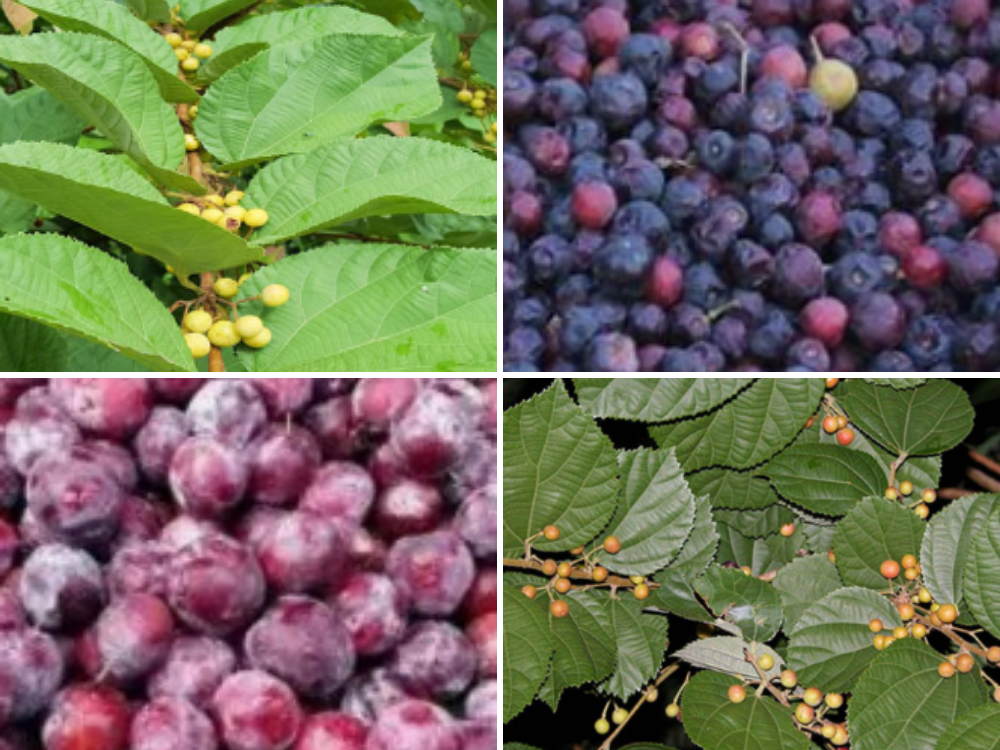
Rubia cordifolia is a climbing plant belonging to the Rubiaceae family. It grows on trees, with branches that spread extensively. Groups of four leaves appear at intervals along the branches. The leaves are kidney-shaped but pointed, with small spines along their margins.
Root
The root is round, slender, and soft. When broken, it is red inside and becomes wrinkled upon drying. The roots can grow several yards in length, and dried segments are commonly available in the market.
The plant grows in the mountainous regions of the northwestern Himalayas, including Shimla-Kalka, Nainital, Kullu, and Kangra. The root has a bitter taste.
Chemical Constituents
The root contains resinous substances, a small amount of sugar, calcium salts, and a yellow-colored active principle.

Temperament
Hot and dry (second degree).
Actions
Traditionally, Rubia cordifolia is described as
- Detergent and cleansing
- Warming
- Diuretic
- Emmenagogue
- Blood-purifying
- Deobstruct, helping to resolve obstructions of the liver, stomach, and spleen
Traditional Uses
Urinary and Menstrual Uses
Because of its traditionally described diuretic and emmenagogue properties, the root is used to promote the flow of urine and menstruation. Excessive use, however, has traditionally been associated with a risk of hematuria (blood in the urine).
Liver, Spleen, and Digestive Obstructions
As a cleansing and deobstruent herb, it is traditionally used with Sakanjabeen (oxymel) for flatulence believed to be associated with internal obstructions. It is also traditionally used to help resolve obstructions of the liver and spleen.
The herb may be used both externally, in the form of a poultice, and internally, as a syrup or decoction, particularly in traditional preparations for cold-natured ailments.
Skin Conditions
As a detergent or cleansing agent, the root is finely ground with vinegar and applied externally as a paste. Traditionally, this preparation has been used for various skin conditions, including:
- Bahaq—pityriasis
- Baras—vitiligo
- Jhaayin—melasma or pigmentation spots
Blood-Purifying Uses
Traditionally, Rubia cordifolia is regarded as a blood purifier. Its decoction has historically been used for conditions associated with itching, syphilis, and wounds.
Primary Benefit
Traditionally regarded as a blood purifier.
Traditional Dosage
- Powder: 2.9–4.9 g
- Decoction: 11.7–23.3 g