





Introduction
Long Pepper (Piper longum), known as Pippali, is traditionally used in Unani medicine in both its root form, Pipla Mool, and its fruit or spike, Filfil Daraz. Both forms are described as having similar properties, although the root is traditionally considered more potent.
Pippali Ghee for Joint and Rheumatic Pain
Take 100 g of pippali (long pepper) and boil it thoroughly in 250 mL of milk (approximately one pao). Continue boiling until the milk has evaporated.
Separate the Pippali and process the remaining milk solids (khoya) to obtain butter, which is then traditionally clarified into ghee.
This preparation is traditionally used for joint pain and rheumatic pain, particularly as a massage oil or ghee.
Pippali and Rock Candy for Digestion and Vitality
Grind the prepared Pippali into a fine powder and mix it with 100 g of powdered rock candy (Kooza Misri).
Traditional sources describe taking 4 Mashas (approximately 3.9 g) of this mixture, followed by warm cow’s milk. It is traditionally regarded as beneficial for sexual vitality and digestion.
Pippali for Phlegmatic Asthma
A traditional decoction prepared from pippali and garlic is used for phlegmatic asthma. It is traditionally believed to provide relief and assist in the expulsion of accumulated phlegm.
Pippali and Jaggery Pills
Mix 1 Tola (approximately 11.66 g) of Pippali powder with 2 Tolas (approximately 23.32 g) of jaggery (Gur) and prepare the mixture into pills.
Traditionally, these pills are used for:
- Cough
- Asthma
- Loss of appetite
- Aversion to food
- Intestinal worms
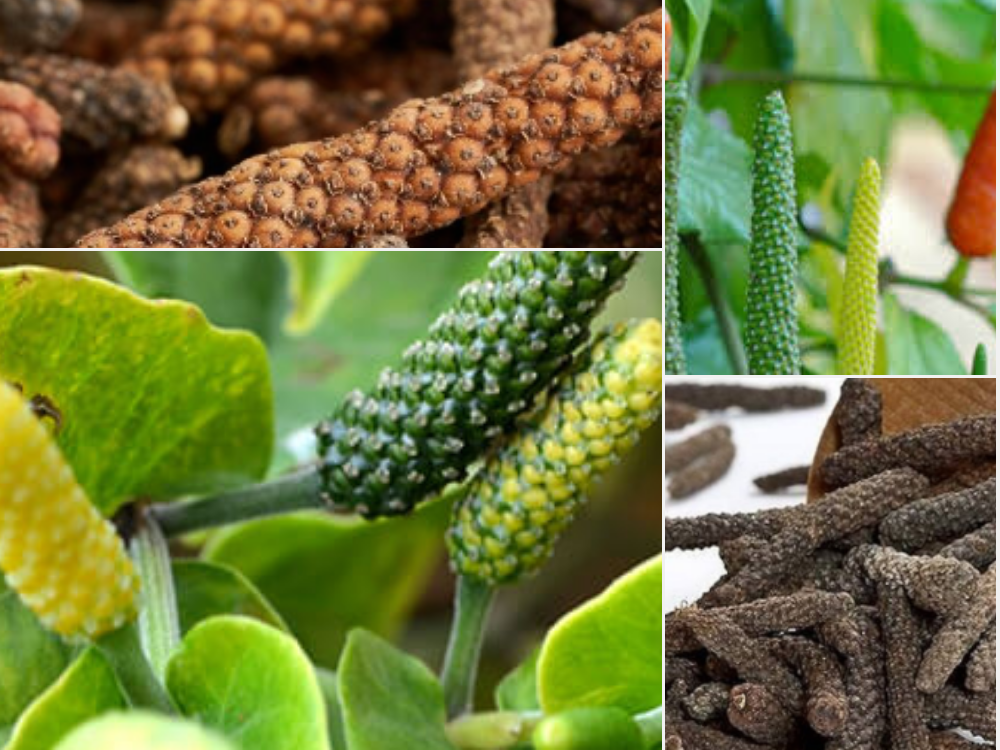
Pippali in Trikuta
Pippali is one of the three ingredients in Trikuta, a traditional combination consisting of:
- Dried ginger
- Black pepper
- Long pepper
Trikuta is traditionally used as a warming and digestive preparation.
Traditional Pippali and Ras Sindoor Formulation
A traditional formulation consists of:
- Pippali – 10 g
- Ras Sindoor – 60 g
The ingredients are thoroughly ground together. Traditional sources describe a dose of 1 Ratti (approximately 0.12–0.125 g) in the morning and evening with lukewarm milk.
Historically, this preparation has been described for rheumatism, sciatica, other rheumatic disorders, poor appetite, and sexual weakness.
Important Safety Note
Ras Sindoor is a traditional mineral preparation that may contain mercury compounds and can be toxic. The historical dosage above should not be interpreted as a recommendation for self-treatment. Mercury-containing preparations should only be considered under the supervision of a qualified practitioner who can verify the formulation, purity, and safety.
Key Benefits
Traditionally regarded as:
- Stomach tonic
- Digestive aid
Traditional Dosage
0.97–1.94 g (approximately 1–2 g).
This dosage represents a traditional measurement and is not an established modern therapeutic dose.


