



Introduction
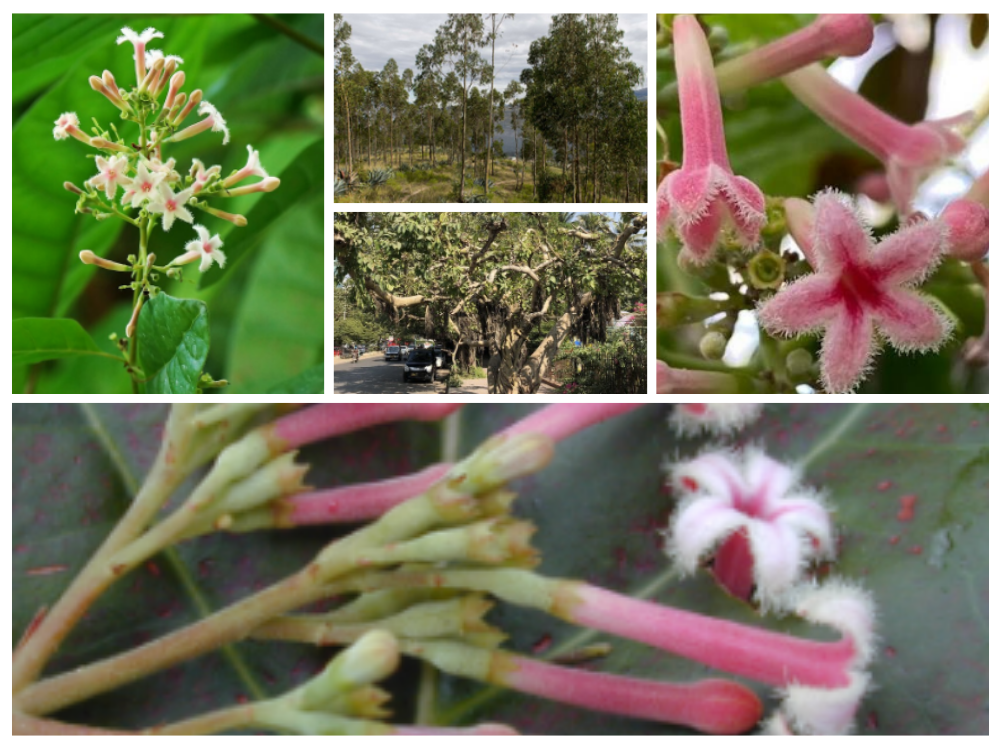
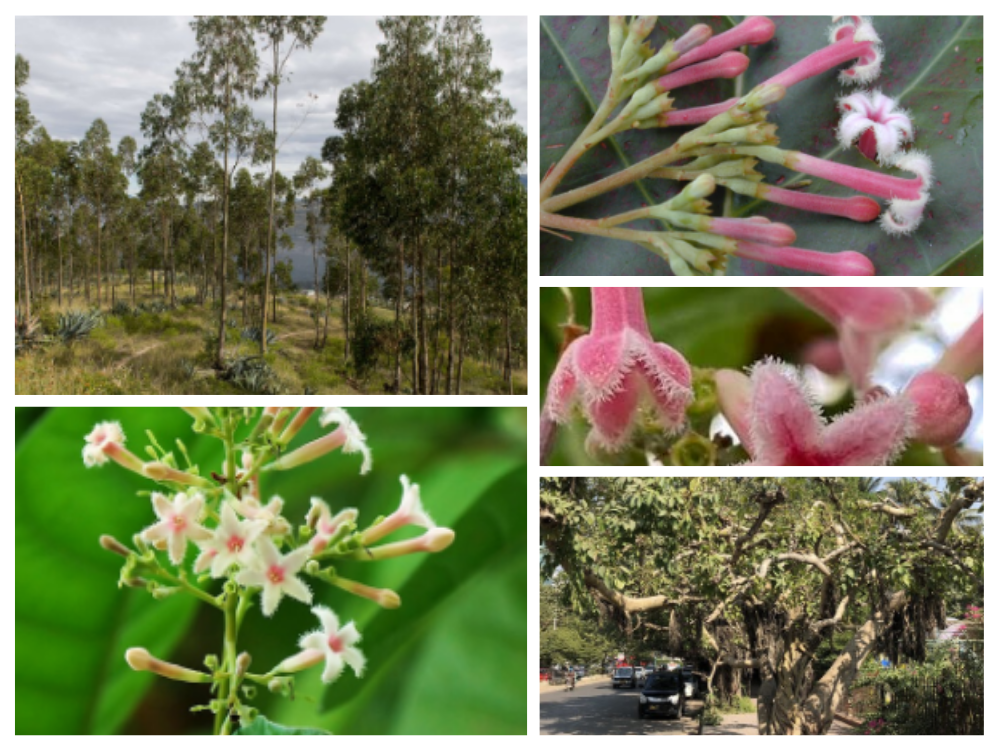
Cinchona Cortex refers to the medicinal bark obtained from several species of the Cinchona tree, from which the active principle quinine is derived. The tree remains evergreen for a long period and reaches a height of approximately 30–40 feet (9–12 meters). It has a long, cylindrical trunk.
The outer surface of the bark is grayish, while the inner surface is yellow. Young branches are smooth and soft. The leaves are green and measure approximately 3–4 inches (7.5–10 cm) in length. The flowers grow in clusters along the branches and are reddish-white in color.
Fruit and Seeds
The fruit measures approximately 1.5–3.5 inches (3.8–8.9 cm) in length and contains small, grayish seeds. When mature, the fruit splits open, allowing the seeds to be dispersed by the wind.
There are approximately 30–40 varieties of Cinchona.
Cinchona calisaya
Cinchona calisaya, also known as yellow cinchona, is a large tree with leaves approximately 3–7 inches (7.5–17.8 cm) long. Its flowers are similar to those described above, and it bears fruit between January and April.
Cinchona ledgeriana
Cinchona ledgeriana generally reaches a height of approximately 20–40 feet (6–12 meters), although some trees may grow to 60–70 feet (18–21 meters).
Numerous other varieties of Cinchona are also known.
Habitat and Distribution
Cinchona trees originally grew only in the mountainous regions of South America. Because of high demand and extensive felling of the trees, cultivation was subsequently introduced to Java in 1854 and to Assam and the foothills of the Himalayas in 1860.
The trees generally grow at elevations ranging from approximately 3,000 to 12,000 feet (914–3,658 meters).
The name “Cinchona” is traditionally associated with the story of the wife of a Spanish colonial viceroy who was reportedly cured of an illness using the bark of the tree.
Medicinal Part
The bark is the part used medicinally. Its important active principle is quinine, which has historically been used as a highly effective treatment for malarial fever.
Chemical Constituents
Cinchona bark contains several important alkaloids, including
- Quinine
- Cinchonine
- Hydroquinine
- Cinchonidine
- Quinidine
It also contains:
- Quinic (Chinic) acid
- Chinovic acid
- Cinchotannic acid
- Chinovin, a glycoside that readily decomposes into chinovic acid and glucose
The bark also contains a coloring substance known as Cinchona Red, which is insoluble in water. A volatile oil is present as well and imparts the bark its faint characteristic aroma.
The medicinal bark is processed to obtain its active principle, quinine.
Temperament
Hot and dry (second degree).
Traditional Actions
Traditionally, Cinchona bark and quinine are described as having the following properties:
- Antipyretic, particularly for intermittent fevers
- Anthelmintic
- Abortifacient
- Body and nerve tonic
- Analgesic
- Emmenagogue
- Sialogogue
- Stomachic
- Antiseptic
It may irritate the stomach lining. The traditional source also states that quinine inhibits the movement of white blood cells and, in high doses, may destroy red blood cells. It is also described as stimulating labor pains.
External Use
Cinchona bark is traditionally regarded as a desiccant (drying agent).
Because of its traditionally described anthelmintic, germicidal, and antiseptic properties, washing foul-smelling wounds with its liquid extract is said to promote healing and accelerate drying.
Internal Use
Intermittent Fever and Malaria
Historically, quinine was used as a specific treatment for intermittent fevers associated with malaria. The traditional source states that it should be administered three to four times daily, at least two hours before the expected onset of fever. According to this traditional practice, it may stop the fever or considerably reduce its severity.
In malaria, quinine was traditionally administered after the fever had subsided, two to three times daily. Combining it with stimulants was believed to enhance its effectiveness.
In some cases, quinine has historically been administered by intramuscular injection, while intravenous administration has also been used in clinical settings. It has additionally been used as a prophylactic agent against malaria.
Enlarged Spleen
A combination of quinine and iron is traditionally described as beneficial for an enlarged spleen associated with malaria.
Labor
The traditional source states that quinine may intensify labor pains when contractions are weak during childbirth.
Nerve and Body Tonic
Because of its traditionally described tonic properties, Cinchona is considered beneficial for certain neurological disorders when used in combination with strychnine.
Dosage
- Cinchona bark: approximately 0.97–1.94 g
- Quinine: approximately 0.12–0.49 g
Contraindications
The traditional source considers Cinchona harmful for individuals with a hot temperament.
Corrective Agent
Sanjkeen.