



Introduction
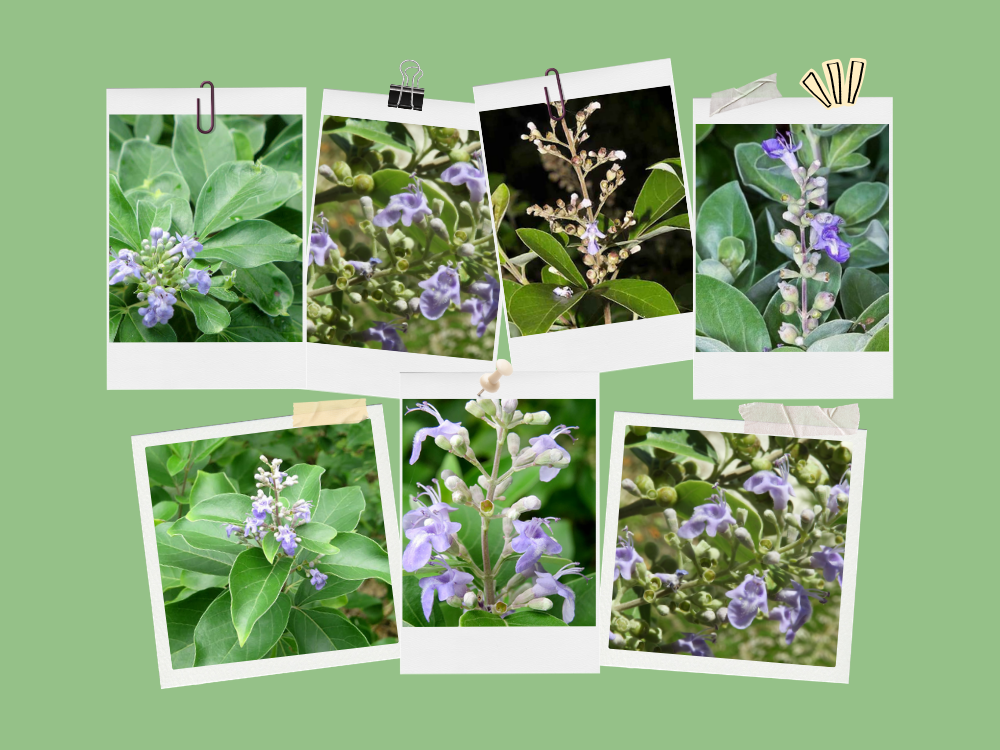
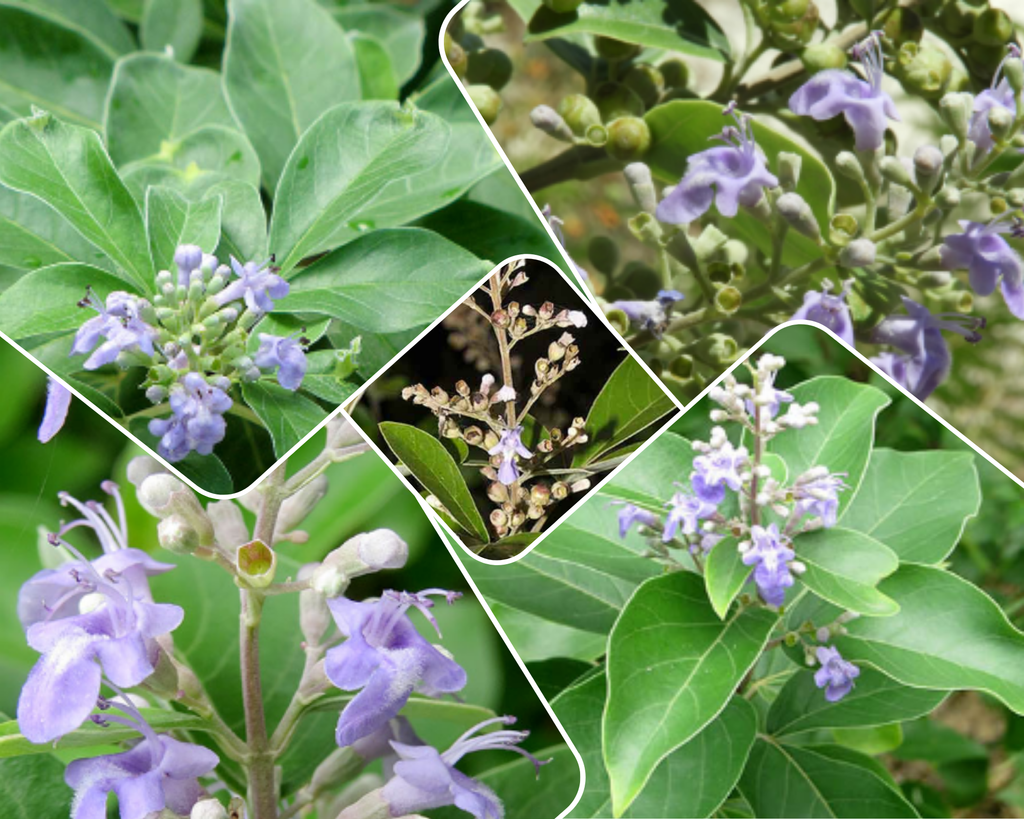
It is a shrub-like plant that grows approximately 1.2–3 meters in height. Its stem may reach about 46 cm in diameter and has numerous branches.
Leaves:
The leaves resemble those of pomegranate or arhar. They are lanceolate, long, smooth, and covered with white hairs on the underside. They are approximately 3.8–5.1 cm long and green on the upper surface. Each branch bears five-part or three-part, claw-shaped leaves. The leaves fall in autumn. When crushed, they release a distinctive aroma.
Wood and Bark:
The wood and bark are thin, smooth, and bluish in color.
Flowers:
The flowers are white with reddish tinges, while some may have a yellowish-blue color.
Fruits:
The fruits are small and round achenes. Some are black, while others are white.
Place of Growth:
It is found in almost all parts of the country, including Kangra, Punjab, Uttar Pradesh, Saharanpur, Haridwar, the Deccan region, Nagpur, Bihar, Burma, and Pakistan. It commonly grows wild along the banks of rivers and canals.
Second Type:
Another type is Vitex trifolia, whose leaves are not wrinkled. Both types are considered to have similar functions and properties.
Chemical Constituents:
The leaves contain coloring substances, a volatile oil with a distinctive aroma, and a type of resin. The fruit contains resin acid, malic acid, and some other salts.
Temperament:
The leaves are hot and dry, second degree.
Actions:
It is traditionally considered anti-inflammatory, pain-relieving, soothing, calming, and useful for helping eliminate intestinal worms.
Uses:
For Sore Throat and Mouth Sores:
Gargling with a decoction of its leaves is traditionally used for sore throat and mouth ulcers.
For Pain and Swelling:
For pain and swelling of the uterus, testicles, and anus, the patient may sit in a bath prepared from a decoction of its leaves. The decoction may also be taken internally according to traditional practice.
The leaves may be boiled, soaked in ghee, and applied to swellings associated with the conditions mentioned above. Traditionally, this is believed to help reduce the swelling.
For Wounds, Sores, and Boils:
Its leaves may be burned in oil or ghee to prepare an ointment. The resulting ointment is traditionally described as white and may be applied to serious wounds and swellings. It is also traditionally used for sores and boils.
For Headache and Fever:
A decoction of its leaves is traditionally given for headache, fever, and swelling or inflammation of the ear. The leaves may also be placed on the bed or used as a poultice.
For Testicular Inflammation:
It is traditionally considered useful for inflammation of the testicles associated with gonorrhea.
During Pregnancy:
According to traditional practice, bathing with its leaves during pregnancy is believed to help relieve harmful gases or discomfort attributed to the uterus.
For Cold and Nasal Discomfort:
When symptoms of illness begin with a cold, steaming with the leaves is traditionally used to provide relief.
For Intestinal Worms:
The juice of its leaves is traditionally used to help eliminate intestinal worms. If fresh juice is unavailable, dried leaf powder is considered to have a similar traditional effect.
Special Benefit:
Soothing and calming effect.
Quantity:
- Fresh leaf juice: approximately 5.8–11.7 g
- Dried leaf powder: approximately 0.97 g
Chaste Tree Seeds
Temperament:
Hot and dry, second degree.
Actions:
Astringent, demulcent, emollient, and expectorant.
Uses:
The seeds are traditionally used in cases of excessive seminal discharge. They may be used alone or in combination with other medicines.
The seeds are also considered useful for swellings and inflammation of the spleen. For this purpose, they are traditionally soaked in vinegar before use. They are also believed to be beneficial for other types of swelling and inflammation.
Some traditional practitioners recommend their use for urinary disorders, menstrual problems, and difficulties related to urination.
Dosage:
To be taken two to three times a day.