



Introduction
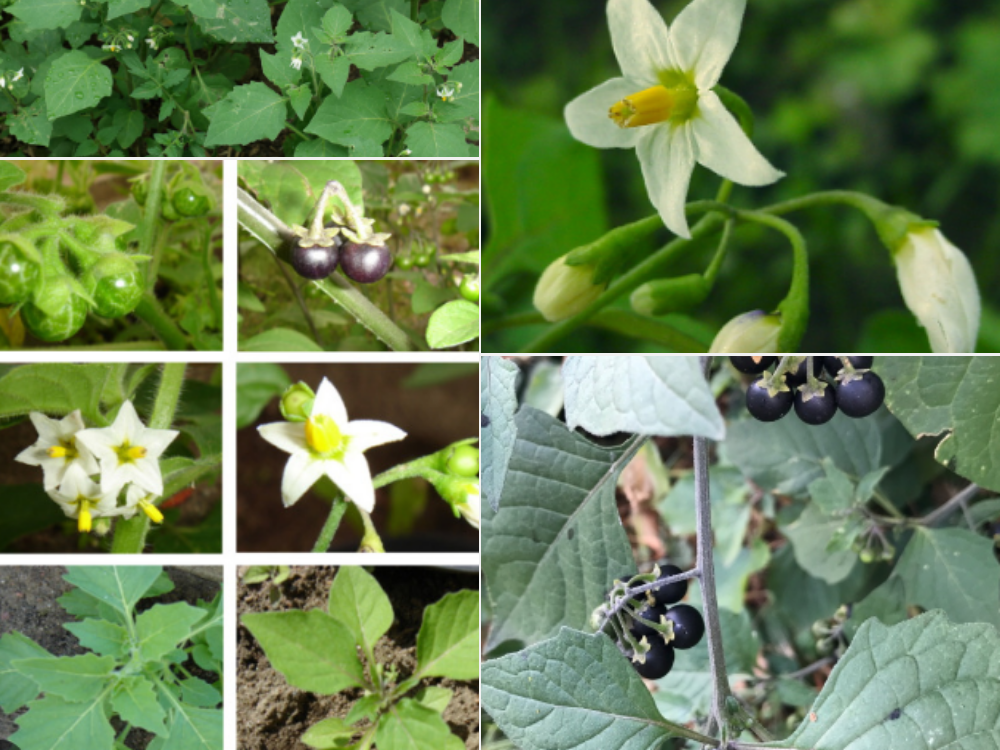
Solanum Nigrum, commonly known as Black Nightshade, is a bushy plant that grows approximately 1–3 feet in height. It is highly branched and generally thornless. The stems are dark green to blackish-green. The plant has a slightly bitter taste.
It is found in Pakistan, India, Turkestan, Iran, Europe, and North America, and it is also cultivated in some regions. The plant commonly grows during the rainy season.
Leaves
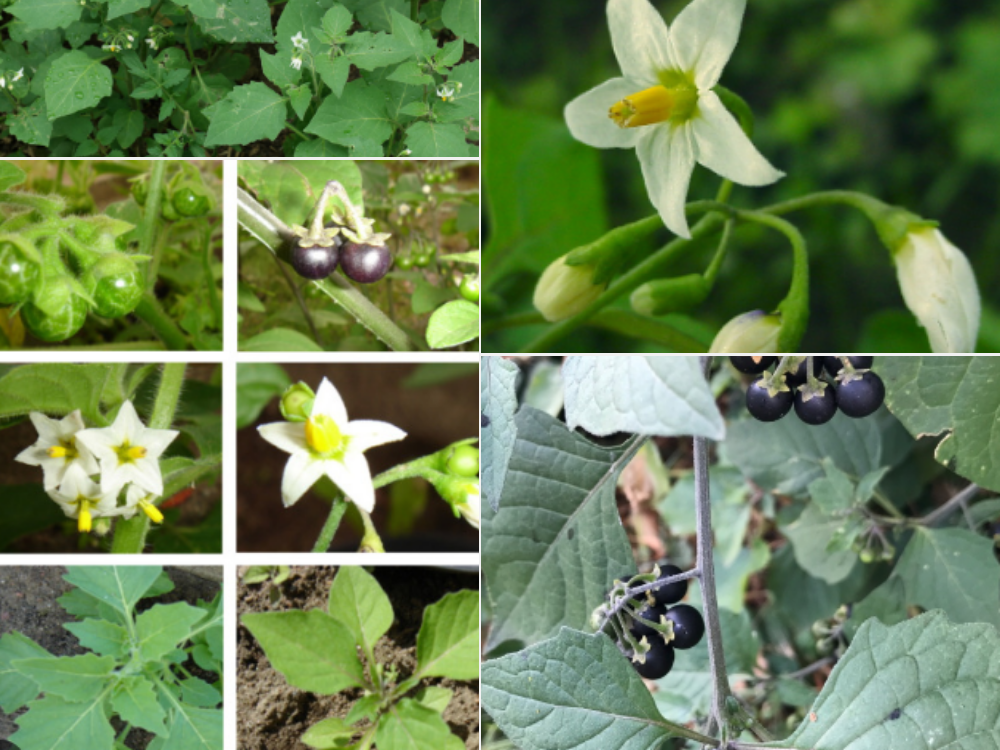
The leaves are approximately 1–3 inches long and ovate in shape, somewhat resembling the leaves of red pepper. Their margins are serrated or slightly curved.
Flowers
The flowers are small and whitish to reddish in color. Each flower has five petals and a five-toothed calyx, with serrations along the edges.
Fruits
The fruits occur in clusters. They are initially green or blackish-green, later becoming slightly yellowish, and finally turning red when fully ripe. The fruits contain numerous tiny seeds enclosed within a thin covering.
Chemical Constituents
Solanine and certain mineral salts are present in different parts of the plant, particularly in the fruit.
Temperament
Cold and dry, second degree.
Actions and Properties
Traditionally, Solanum Nigrum is described as having the following properties:
- Resolvent
- Astringent
- Sedative
- Analgesic (pain-relieving)
- Soothing
- Desiccative (drying)
- Anti-inflammatory
Traditional Uses
The leaves and fruits are commonly used in traditional medicine.
Because of its traditionally described anti-inflammatory and resolvent properties, it is used for various inflammatory conditions, particularly those involving the internal organs. It has traditionally been used for liver swelling, gastritis, and dysentery, both internally and externally.
For these conditions, the extract or water prepared from the leaves has traditionally been taken orally, while poultices made from the plant may be applied externally.
Because of its resolvent properties, it is traditionally considered useful for swelling and edema. Its cooling, soothing, and pain-relieving properties have also led to its traditional use for burns and inflammatory conditions.
It is traditionally used for smallpox lesions and canker sores. When swelling occurs in the tongue and mouth, the plant’s water may traditionally be combined with tamarind and used as a gargle. Traditional sources also describe its use for conditions such as diphtheria.
The prepared water has also traditionally been used as ear drops for swelling and pain in the ear canal. Direct application inside the ear should not be undertaken without appropriate medical supervision.
Special Benefit
Mahalal-e-Auram (Resolvent of Swelling and Inflammation).
Traditional Dosage
- 4.9–6.8 g
- water ≈ 46.6–81.6 mL
These dosage conversions represent traditional measurements, not established modern therapeutic doses.