



Introduction
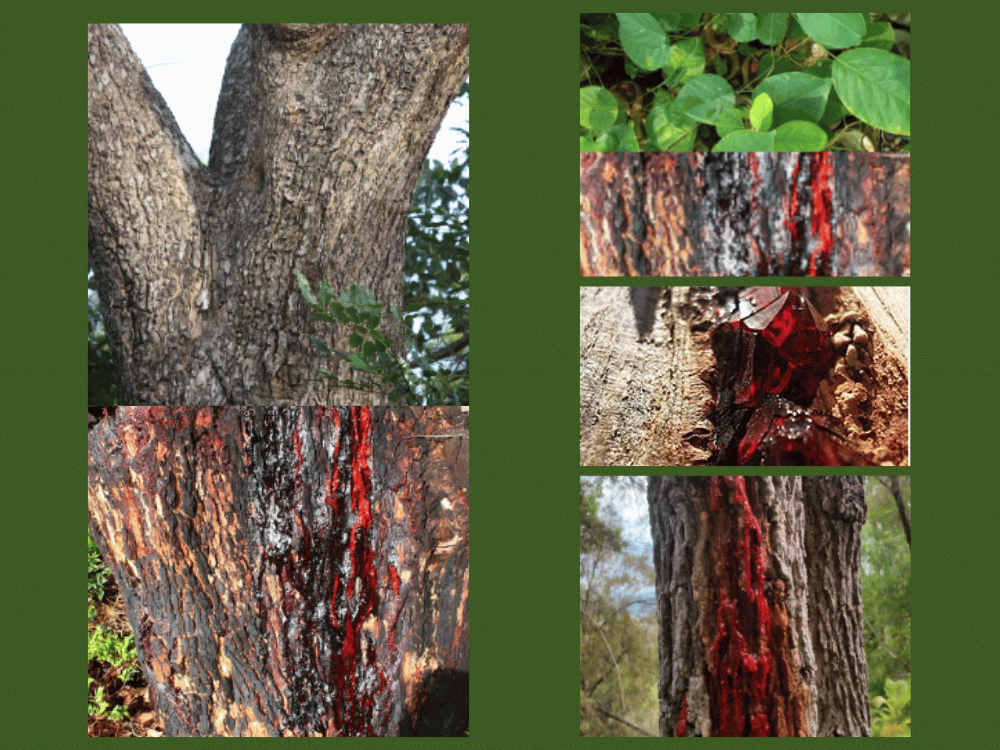
Pterocarpus marsupium is a medicinal tree well known for producing a valuable gum called Vijaya Sar or Kino gum. This gum is obtained by making small incisions in the trunk of the tree, after which a reddish sap exudes and is collected and dried.
In traditional medicine systems such as Unani and Ayurveda, this gum has been highly valued for its strong astringent properties and its use in treating bleeding disorders, digestive issues, and hemorrhoids.
Source and Physical Nature
The gum of Pterocarpus marsupium is obtained by:
- Making small cuts or cracks in the tree bark
- Collecting the exuded sap
- Drying it into solid pieces
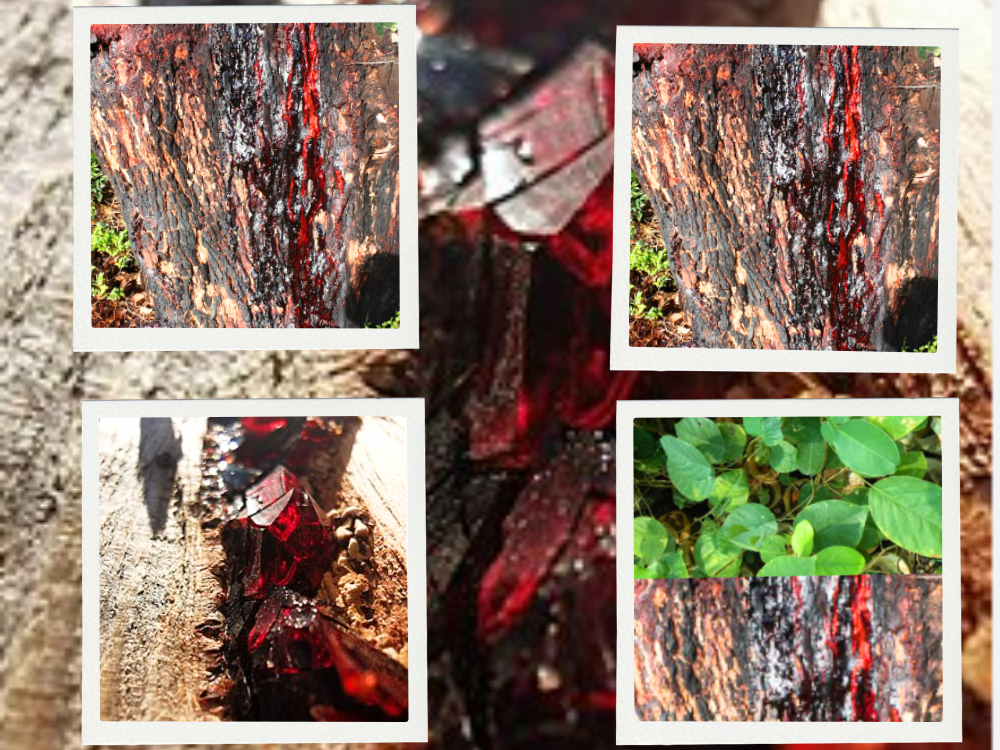
The final product appears as:
- Small angular fragments
- Shiny and brittle pieces
- Reddish-black in color
- Brown or dark edges
The gum is generally odorless and tasteless.
When chewed, it may temporarily turn saliva reddish, resembling blood. It dissolves easily in both water and alcohol.
Place of Origin and Distribution
Pterocarpus marsupium is mainly found in:
- Central India
- Deccan region
- Parts of Africa
- Some tropical regions of Asia
Historically, high-quality gum was sourced from specific regions of India and exported for medicinal use.
Due to its similarity, gum from other trees such as Butea monosperma is sometimes used as a substitute.
Chemical Constituents
The gum contains several active compounds, including:
- Kino tannic acid (around 75%)
- Neutral resinous substances
- Various plant-derived gum constituents
These compounds are responsible for its strong astringent and healing properties.
Temperament in Unani Medicine
According to Unani classification, this gum has:
- Cold and dry in the third degree
Because of its strong drying effect, it is mainly used in conditions involving excessive discharge or bleeding.
Medicinal Properties
Traditional physicians describe the gum of Pterocarpus marsupium as having the following actions:
- Strong astringent
- Absorbent (drying agent)
- Hemostatic (stops bleeding)
- Anti-diarrheal
- Strengthening agent for tissues
Its primary function is to reduce excessive fluid loss from the body.
Traditional Uses
Digestive Disorders
It is commonly used in:
- Diarrhea caused by intestinal weakness
- Dysentery
- Intestinal irritation
Its strong astringent action helps reduce bowel discharge and strengthen intestinal tissues.
Hemorrhoids and Rectal Disorders
Pterocarpus marsupium gum is highly valued for:
- Hemorrhoids (piles)
- Bleeding piles
- Rectal inflammation
It helps reduce bleeding and strengthens rectal tissues.
Menstrual Disorders
It is traditionally used in cases of:
- Excessive menstrual bleeding
- Irregular heavy flow
Its cooling and astringent nature helps control abnormal bleeding.
Wound Healing and Bleeding Control
The gum is also applied internally and externally to:
- Stop bleeding from fresh wounds
- Promote clotting
- Aid tissue healing
Its strong astringent effect helps contract tissues and reduce blood flow.
Special Benefit
The most important traditional benefit of this gum is:
- Effective treatment of hemorrhoids
Traditional Dosage
The commonly recommended dosage is:
- One to one and a half grams
Dosage may vary depending on formulation and patient condition.
Common Formulations
The gum is often used in traditional compound medicines such as:
- Sunoon Saqori
- Pak Karsas
- Kakanj-based formulations
These are typically prescribed for digestive and bleeding disorders.