



Introduction
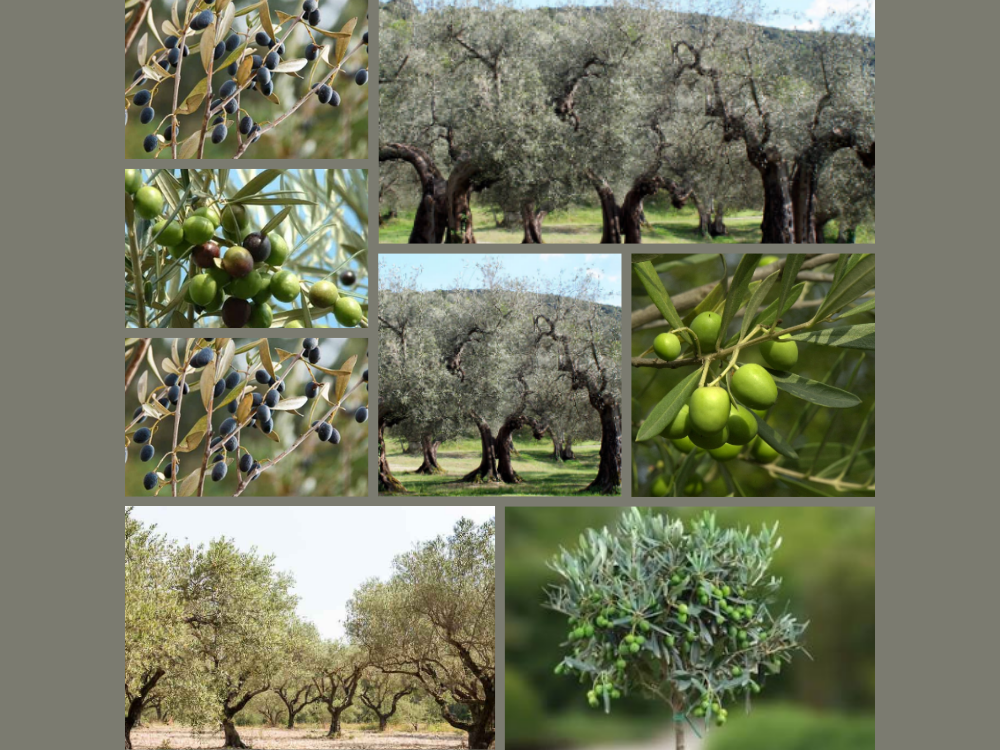
The olive is a medium-sized evergreen tree, although wild olive trees are somewhat larger.
Leaves
The leaves resemble guava leaves but are somewhat more rounded.
Fruit
The fruit is round and resembles a thick plum. It is green when unripe and becomes blue-red when ripe. The fruit contains oil, which is used medicinally. Unripe fruits are also used for making vegetables and pickles.
Olive Oil
To extract the oil, the ripe fruits are collected and ground in a mill in such a way that the kernels remain intact while the pulp is separated. The pulp is then placed in stacks, where it produces a thick oil that is subsequently drained.
The oil is collected in a tank, where it separates from the watery portion and other substances. The lighter oil floats on the water and is collected for medicinal use. The remaining foam produces a second-grade oil, which is used for other purposes. Oil is also present in the kernels.
Place of Origin
The olive tree is found in Southern Europe, California, Algeria, Australia, Asia, Palestine, Greece, Cochin (India), the Nilgiri Hills, Sindh (Pakistan), and the foothills of the Himalayas.
Olive oil is light yellow in color and has a slightly greenish odor and taste. It has an oily consistency. Its specific gravity is approximately 0.914, and it freezes at about 32°F.
Chemical Properties
Olive oil contains:
- Olein: A liquid oil consisting mainly of glycerides of oleic acid — approximately 93%
- Linolein: A mixture of glycerides of linoleic acid — approximately 7%
- Palmitin: A thicker oil consisting of palmitic acid and glycerin
- Other components
In the market, olive oil may sometimes be adulterated with other oils, such as betel-nut oil and peanut oil.
Temperament
Warm.
Actions
Internally:
- Moisturizing
- Mild laxative
- Tonic
- Promotes nourishment and body weight
Externally:
- Nourishing
- Mild
- Softening
- Smoothing
Uses
Massage with olive oil makes the skin smooth and soft. It softens stiff joints and is traditionally used for dry skin conditions, paralysis, gout, and sciatica.
It is also applied to itching, psoriasis, baldness, and similar conditions. Applying it to burns caused by fire helps soothe inflammation.
Weak adults and children are traditionally massaged with olive oil to help reduce thinness and weakness. It is also incorporated into various ointments.
Internally, olive oil is traditionally given to help reduce the effects of irritating substances and poisons such as arsenic and other harmful substances. After vomiting, it may be given for constipation, ulcers, anal ulcers, and other related conditions.
It is also traditionally believed to help dissolve and expel gallstones.
Famous Preparations
Olive oil is used in various traditional preparations, including:
- Oil Seer
- Oil Qast
- Oil Shifa
- And other preparations
Special Benefits
- Nerve tonic
- Promotes nourishment and body weight
Substitute
Almond oil.
Dosage
5.83 to 11.66 grams
The next entries can be formatted in the same consistent Nature → Chemical Components → Temperament → Actions → Uses → Dosage style.