



Introduction
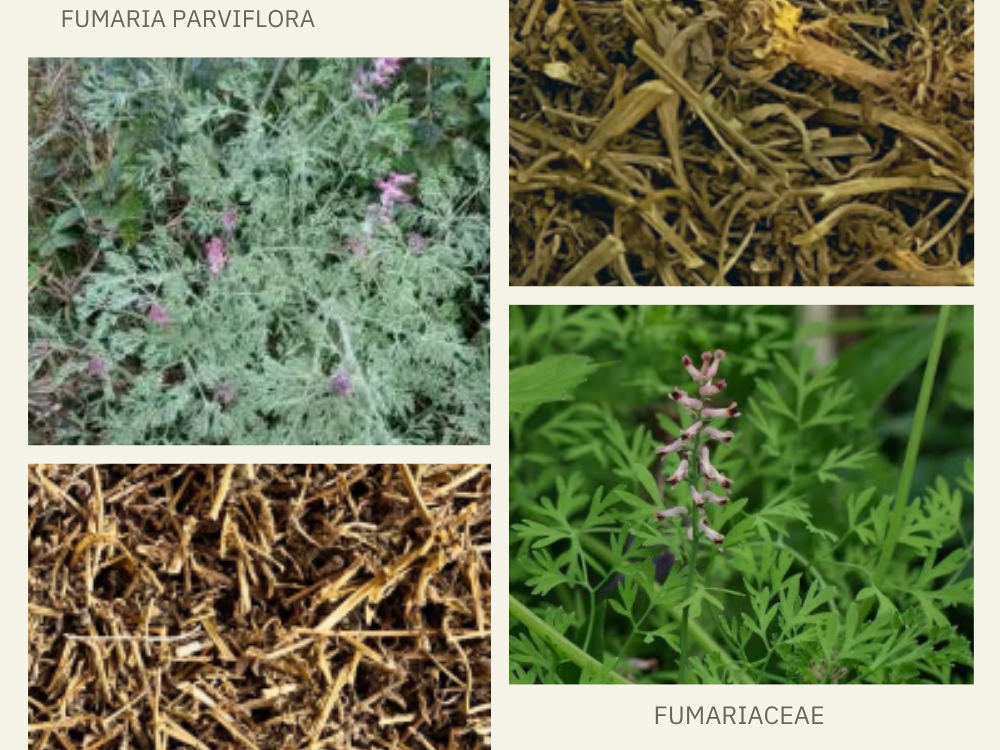
Fumaria parviflora is a delicate herb that generally grows from approximately 6 inches to 1½ feet in height. Its stem is slender and delicate, ranging in color from whitish-green to yellowish-green.
The plant has a distinctly bitter taste and is widely recognized in traditional medicine.
Leaves
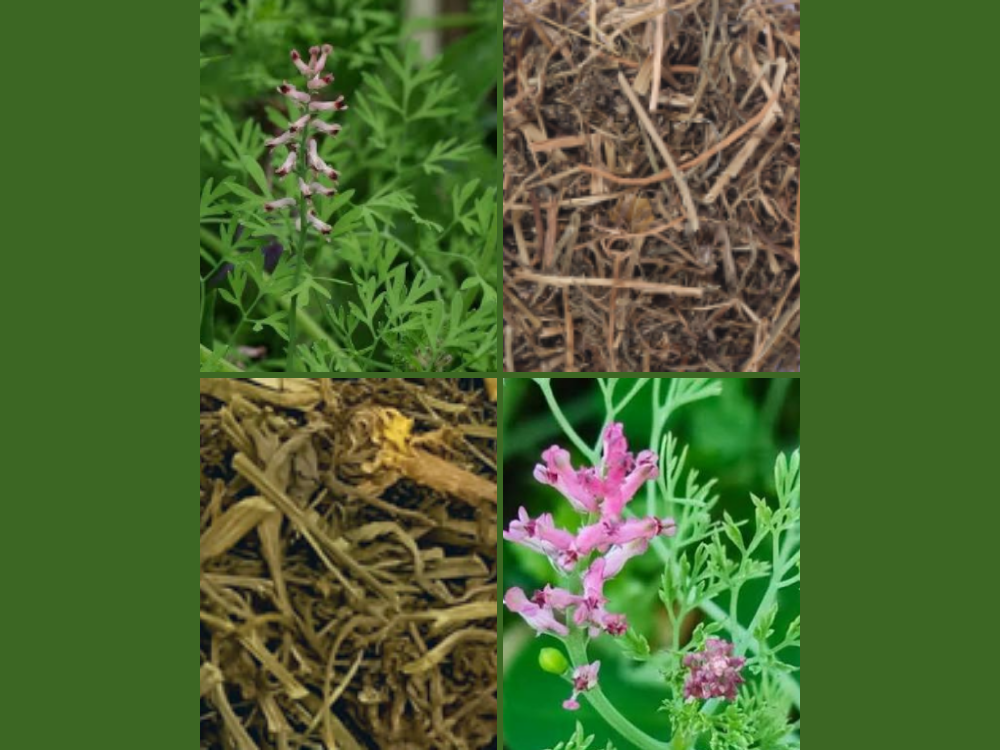
The leaves resemble those of coriander or carrot. They are finely divided and range from approximately ½ inch to 2½ inches in length, with a width of about ½ inch.
Flowers
The flowers are small and may be white or pink, with purplish tips. Traditionally, the pink-flowered variety is considered more beneficial.
Fruit
The fruit is small, round, shiny, and smooth. When dried, it may become bluish or brownish in color.
Distribution and Habitat
Fumaria parviflora grows widely throughout the region, particularly in wheat and barley fields during winter. The aerial parts dry up during summer, while the roots remain capable of producing fresh growth during the monsoon season.
It is particularly common in Punjab (Pakistan and India), Delhi, Uttar Pradesh along the Ganges, the foothills of the Himalayas, and the Nilgiri Hills. Numerous varieties of the plant are also described.
Chemical Constituents
The plant contains:
- Fumaric acid, an important acidic constituent.
- Fumarine, an alkaloid reported in the traditional source at approximately 6%.
Temperament
Murakkab-ul-Quwa (compound nature): balanced with respect to heat and cold, but dry, second degree.
Actions
Traditionally, Fumaria parviflora is described as:
- Blood purifier
- Diuretic
- Stomach tonic
- Appetizer
- Febrifuge — traditionally used to reduce fever
- Laxative
- Deobstruent — traditionally used to remove obstructions of the liver and spleen
The seeds are traditionally regarded as a tonic for eyesight.
Traditional Uses
Skin Disorders and Blood-Related Conditions
Fumaria parviflora is traditionally considered beneficial for ailments attributed to impurities of the blood, including scabies, eczema, ringworm, syphilis, and boils or pimples.
It may traditionally be administered as a decoction, infusion, distilled water (Arq), or fresh juice.
Liver and Spleen
The plant is traditionally used to help clear obstructions of the liver and spleen.
Fever
Sharbat-e-Papra (Fumaria syrup) is traditionally administered in a quantity of approximately 11.7–35 g. and is described as promoting sweating and urination.
Traditional texts describe it as useful for high fevers attributed to intestinal worms or blood impurities.
Digestive Health
Fumaria parviflora is traditionally regarded as a stomach-strengthening agent and is also described as beneficial for diarrhea.
Hemorrhage
Traditional literature also describes the plant as beneficial for certain forms of hemorrhage.
Jaundice
It is traditionally used for jaundice, particularly when administered with black pepper.
Dosage
(approximately 11.7–35 g)