



Introduction
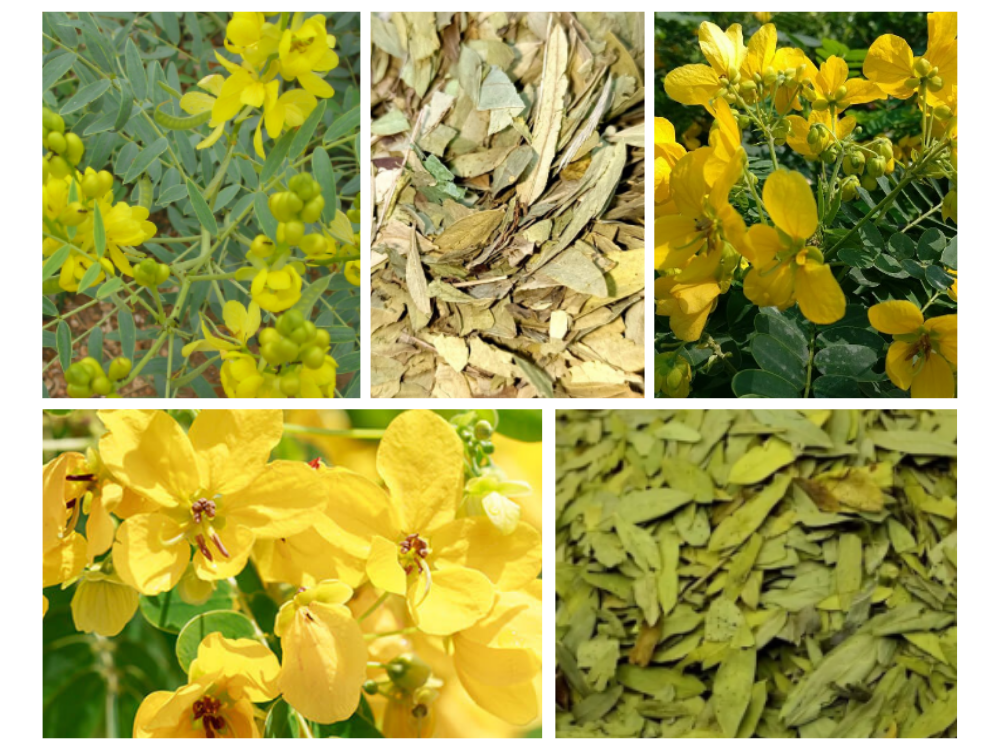
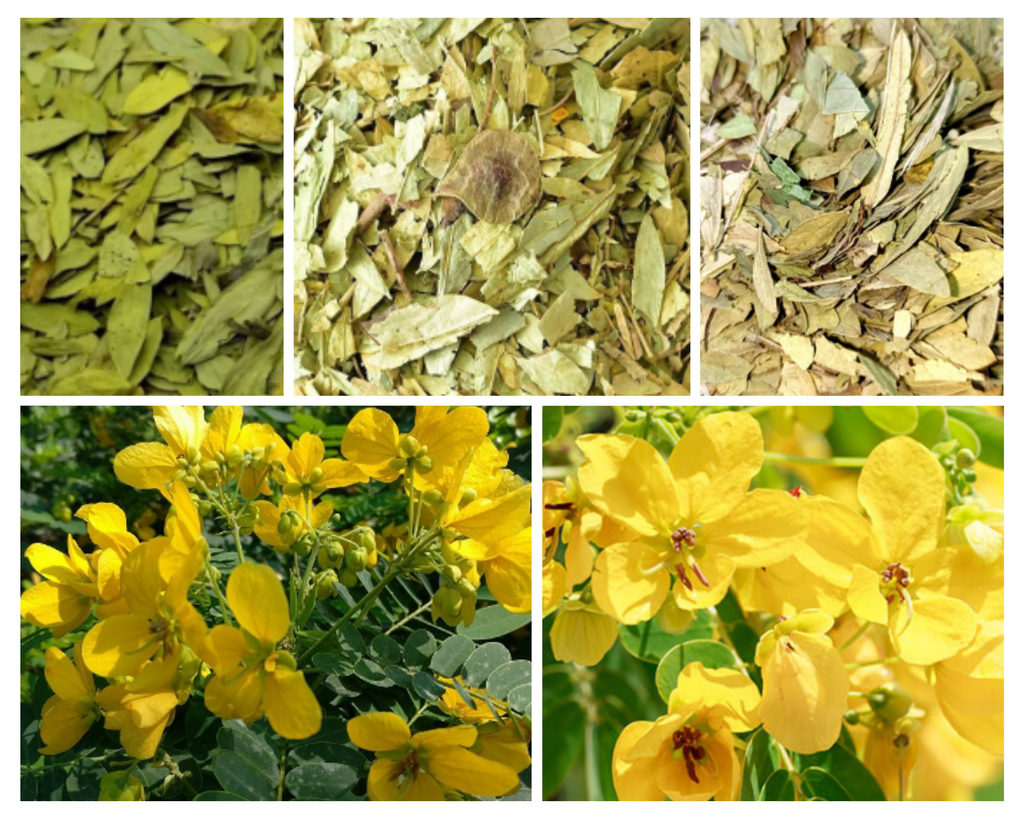
It is a bush that grows to a height of approximately 2.5 to 4 feet. Its leaves are about 1 to 2 inches long, smooth, shiny, and yellowish-green in color.
There are two types of cassia:
- Cassia acutifolia: It has small leaves and is mainly produced in Egypt and the southern parts of Arabia. It is produced in relatively small quantities.
- Cassia angustifolia: It has larger leaves and is produced more extensively in the Tanavali region and the Madras area. It is also cultivated in the districts of Madurai, Trichy, and some areas of Bombay. It is sometimes called Desi Cassia, which is considered of little medicinal value and was formerly used for adulteration.
The plant is originally associated with Arabia, which is why it is known as Sana Makki. It is now also cultivated in India. Its flowers are blue, its leaves resemble henna leaves, and its pods are flat. Each pod contains small, oblong, slightly curved seeds. It is produced in India, Egypt, the Hejaz, and Syria.
Chemical Constituents:
- Cathartic acid (a laxative glycoside)
- Emodin
- Chrysophanic acid
Temperament:
Hot and dry, first degree.
Actions:
It is laxative, deodorant, mucus-cleansing, stimulant, astringent, and cleansing. It is also traditionally considered to have blood-purifying and decongestant properties.
Uses:
Due to its laxative properties, it helps expel accumulated mucus and is traditionally used in various types of fever, including malaria, as well as for lower back pain, gout, backache, and chest discomfort. It is also used for itching, dryness, boils, and abscesses because of its traditionally recognized laxative and blood-purifying properties.
Worm Expelling:
Because of its laxative properties, it is traditionally used to help eliminate intestinal worms. It also helps relieve colic and is traditionally considered beneficial for cleansing the brain.
For Dry and Irritated Skin:
Due to its properties, it may be mixed with vinegar and used traditionally for dry, itchy, and irritated skin.
Absorbent Property:
According to traditional medicine, when given to breastfeeding mothers, its effects may pass through the blood and into the breast milk, potentially helping relieve constipation in infants. It is traditionally recommended for use over a period of three months for this purpose.
Note:
The stalks of senna should be removed before use. When taken alone, it may cause nausea, nervousness, twitching, and restlessness. It is traditionally recommended to combine it with rose petals, anise, star anise, and ginger to reduce these effects.
Special Benefit:
Helps relieve accumulated mucus.
Disadvantage:
May cause heartburn and nausea.
Alternative: Turmeric
Corrective: Almond oil and rose petals
Dosage:
- General dosage: 3–4 grams per dose
- As a laxative: 7–9 grams