



Introduction
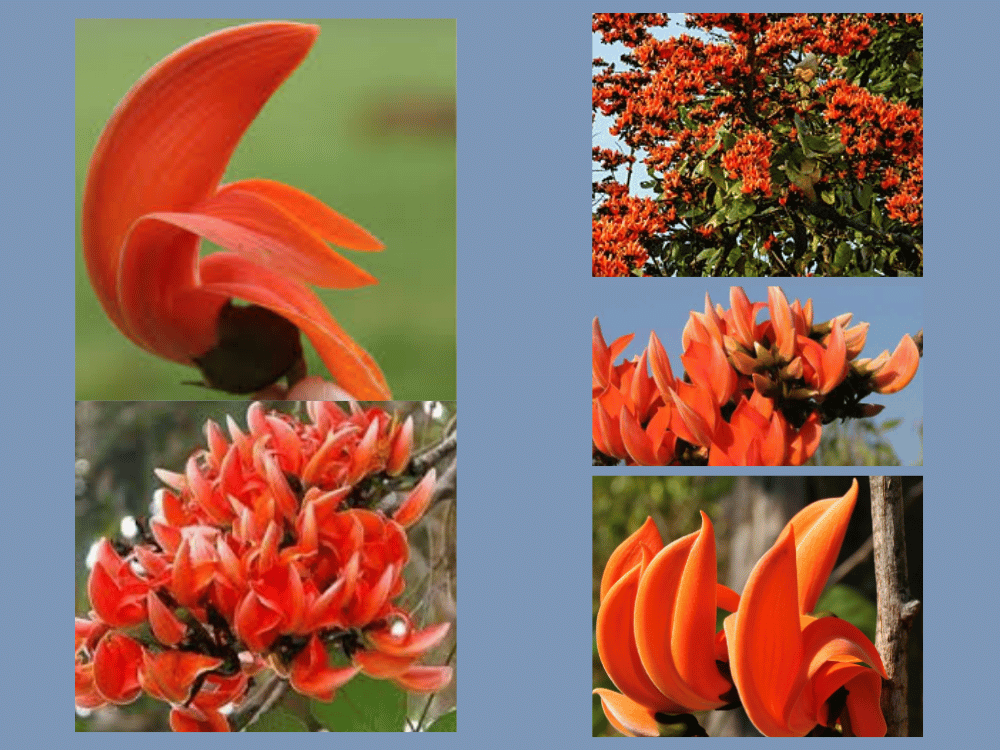
Butea frondosa (commonly known as Dhak or Palash) is a widely distributed tree in North India and Punjab. It typically grows to a height of 5–20 feet. The bark is rough, cracked, gray in color, and about ½ to 1 inch thick. The most commonly used parts for medicinal purposes are its gum, seeds, flowers, bark, and leaves. The flowers are popularly known as Gul Tesu.
Leaves
The leaves are trifoliate (three-leafed) and resemble banyan leaves but are comparatively thicker, harder, and rough. They are round in shape and are traditionally used as natural plates for serving food.
Flowers
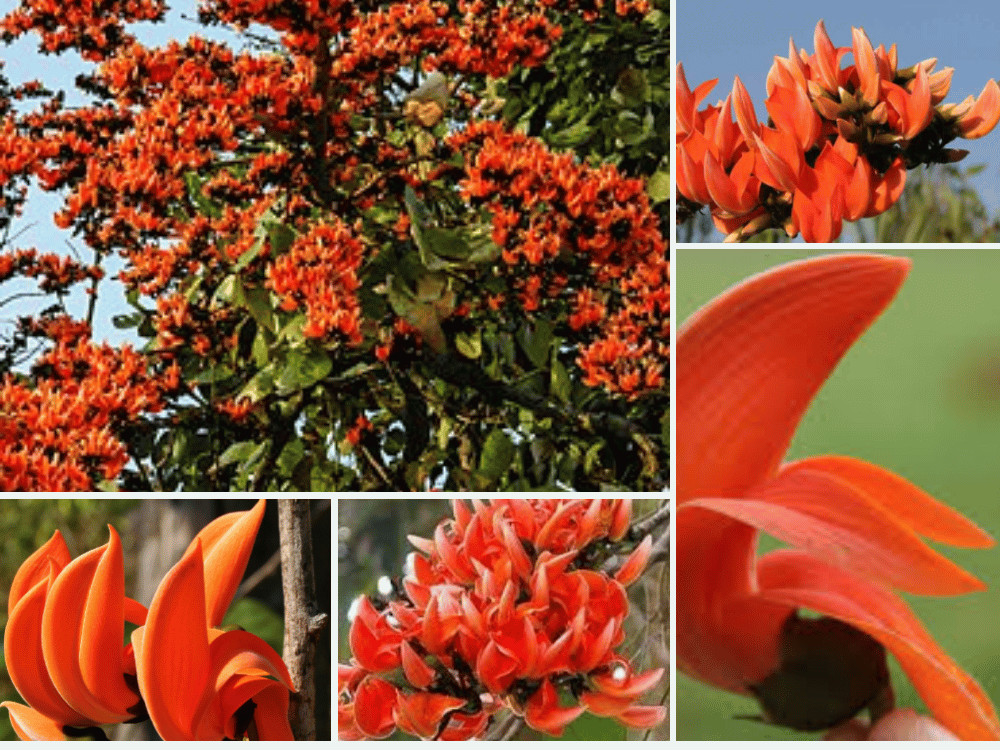
The flowers are bright red with a dark (blackish) spot in the center. The buds initially resemble a parrot’s beak, and upon blooming, they become very attractive with shades ranging from red to yellow. They possess a mild fragrance and have significant medicinal value.
Gum (Gond / Kamarkas)
When the bark is injured, a juice exudes which solidifies into a blackish-red gum, known as Chuniya Gond or Kamarkas. This gum is widely used in traditional medicine.
Seeds
The seeds are thin, round, and flattened, enclosed in a thin seed coat. They are light in weight and resemble small, flat discs. The internal pulp is yellowish-white. Seeds are medicinally important and contain oil.
Chemical Composition
- Bark and Gum: Kinotannic acid, kinotanic acid, glycolic acid (approx. 20–50%)
- Seeds: About 18% fixed oil (known as Madu Gaia Kino Oil), along with albuminoids and sugars
- Leaves: Contain glycosides
- Flowers: Contain a yellow coloring matter
Temperament (Unani Concept)
Cold and dry in the second degree
Actions (Pharmacological Effects)
- Anthelmintic (kills intestinal worms)
- Astringent
- Semen thickening agent
Uses
- Leaves: Used traditionally and medicinally
- Bark: Due to its astringent nature, useful in diarrhea and excessive discharges
- Uterine discharge (Leucorrhea): Beneficial
- Decoction: Used for washing in rectal and uterine conditions
- Local application: Used in vaginal treatments and sitz baths
- Sometimes used in traditional preparations (e.g., halwa)
Special Benefits
- Strong astringent
- Acts as a general tonic
Dosage (Dimensions)
- Soft leaves: 3–5 grams
- Bark: 5 grams to 1 tola