



Introduction
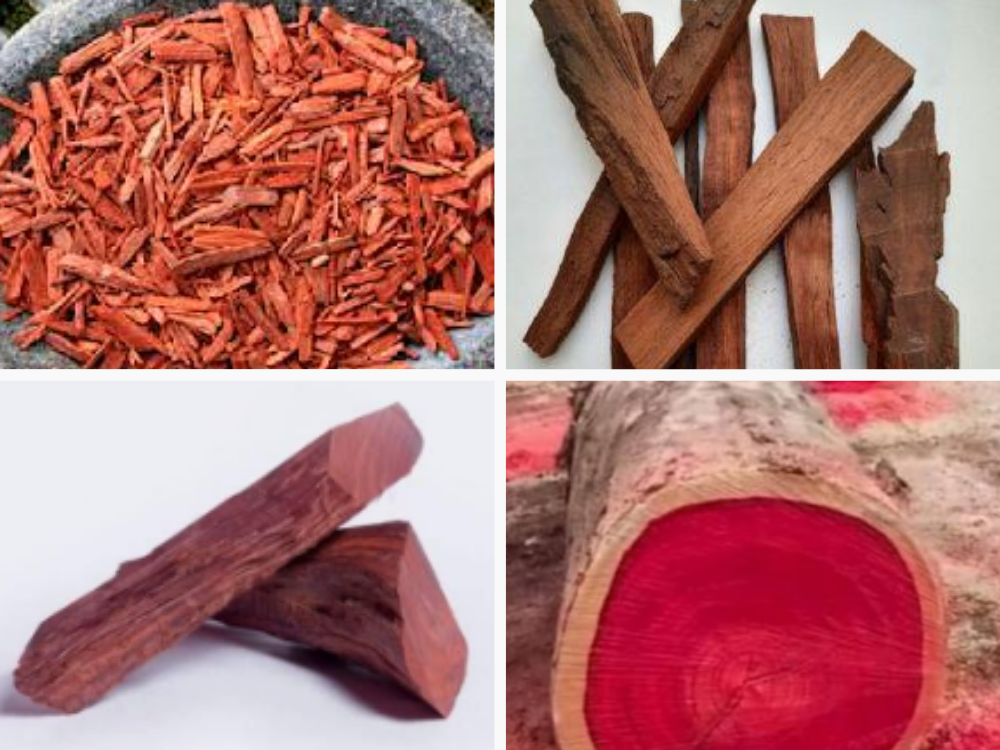
Pterocarpus santalinus, commonly known as red sandalwood, grows both wild and cultivated in regions such as Kurnool, Bombay, Madras, the Bengal Presidency, and parts of the Deccan. It is somewhat smaller than the white sandalwood tree and thrives in hot, dry, and rocky terrain. The wood is characteristically red.
The tree reaches a height of approximately 15–25 feet. Its bark is dark grayish-black. The branches, leaves, flowers, and fruits have a distinctive appearance characteristic of the species.
In terms of medicinal actions and properties, red sandalwood is considered less potent than white sandalwood, although it possesses many of the same traditional properties.
Leaves
The leaves are oval-shaped, approximately 1.5 inches long, with rounded tips. They grow in clusters of three along the stem.
Flowers
The flower stalk is relatively long, with yellowish-white flowers arranged around it. The flowers generally appear during the summer.
Pod and Seeds
The pod is approximately 2–3 inches long and curved, containing red-colored seeds. Both the flowers and pods appear during the summer season.
Medicinal Part
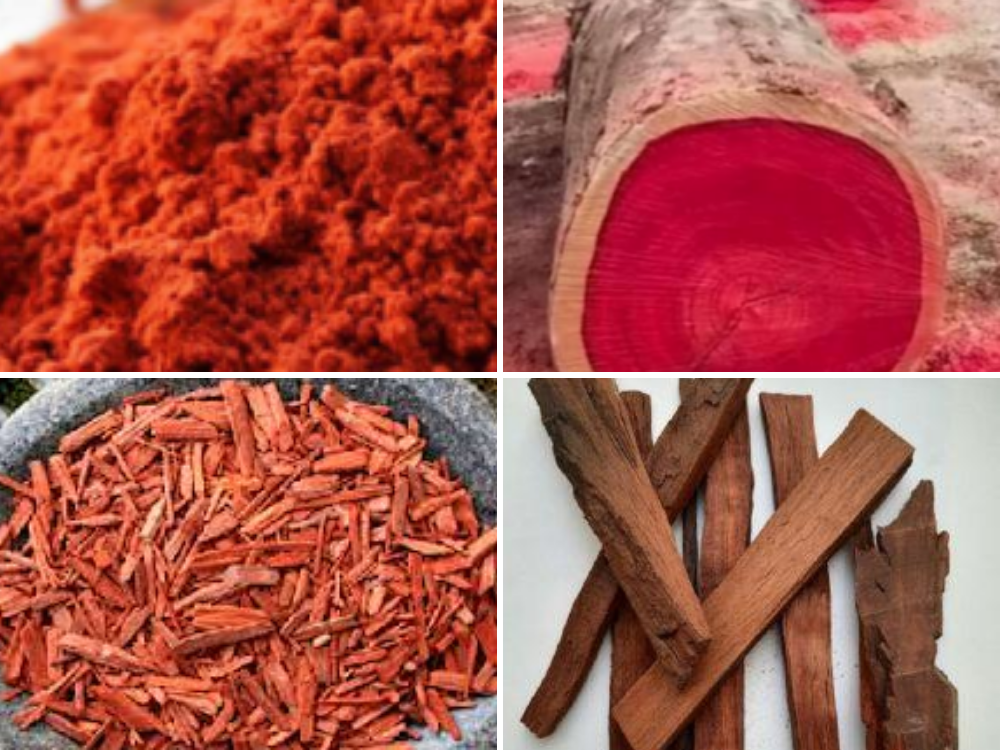
The red-colored wood shavings are commonly used in traditional medicinal preparations.
Chemical Constituents
Red sandalwood contains several chemical constituents, including
- Santalin, a red pigment
- Santalic acid
- Pterocarpin
- Homopterocarpin
- Glucosides
Temperament
Cold in the second degree and dry in the third degree.
Actions and Properties
Traditionally, red sandalwood is described as having the following actions:
- Exhilarant and mood-lifting
- Tonic for the heart and brain
- Tonic for the stomach and intestines
- Blood purifier
- Intestinal astringent
- Repellent of morbid humors
- Heat-sedative
- Sedative for cold-type headaches
Traditional Uses
Red sandalwood is traditionally considered to possess many of the properties of white sandalwood, although its effects are regarded as somewhat less potent.
It is particularly valued when used externally as a liniment or poultice, as its astringent and sedative properties are considered more pronounced in these applications.
Traditionally, it has been used for conditions similar to those treated with white sandalwood. It has also been described as beneficial for hematuria (blood in the urine) and nocturnal emissions.
Dosage
Approximately 2.9–5.8 grams.
Sandalwood Oil
Introduction
Sandalwood oil possesses a strong, pleasant, and characteristic sandalwood aroma. It is extracted from sandalwood and is traditionally valued for its medicinal properties.
Temperament
Cold and moist in the second degree.
Actions
Traditionally, sandalwood oil is described as having the following actions:
- Antiseptic for the urinary tract
- Sedative
- Expectorant
- Antiseptic for the respiratory tract
Traditional Uses
Sandalwood oil is traditionally considered beneficial for inflammation and burning sensations in the urinary tract. It has been particularly used in traditional medicine for gonorrhea.
It is also traditionally used for chronic and foul-smelling (putrid) coughs, where its expectorant and antiseptic properties are considered beneficial.
Dosage
The traditional dosage is 5–20 drops