



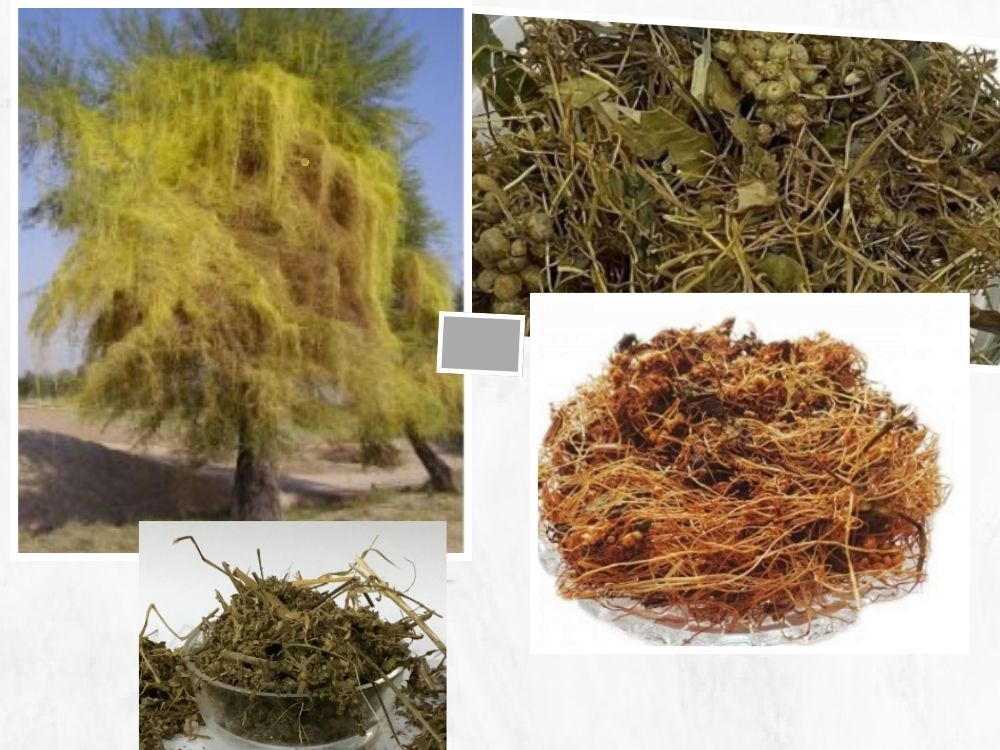
Aftimoon, commonly known as dodder (Cuscuta), is a parasitic medicinal herb widely used in traditional Unani and Ayurvedic medicine. Although different regional varieties exist, their benefits, functions, and properties are largely similar, with variations mainly due to climate and habitat.
Plant Description and Characteristics
Aftimoon is a unique parasitic vine with no true leaves and a distinctive thread-like structure.
- It is usually golden-brown, yellow, or slightly reddish in color
- The plant consists of thin, thread-like stems that spread over host trees
- It commonly grows on trees such as berry, acacia, mango, and arusa
- The finer and thinner the threads, the higher the quality of the plant
This plant survives by absorbing sap from the host plant, often weakening or even drying it out completely. It spreads rapidly by forming a dense network over the host, sometimes covering the entire tree.
Aftimoon thrives in spring and summer, while it typically dries up in winter. During the rainy season, it may also grow on fences and small plants.
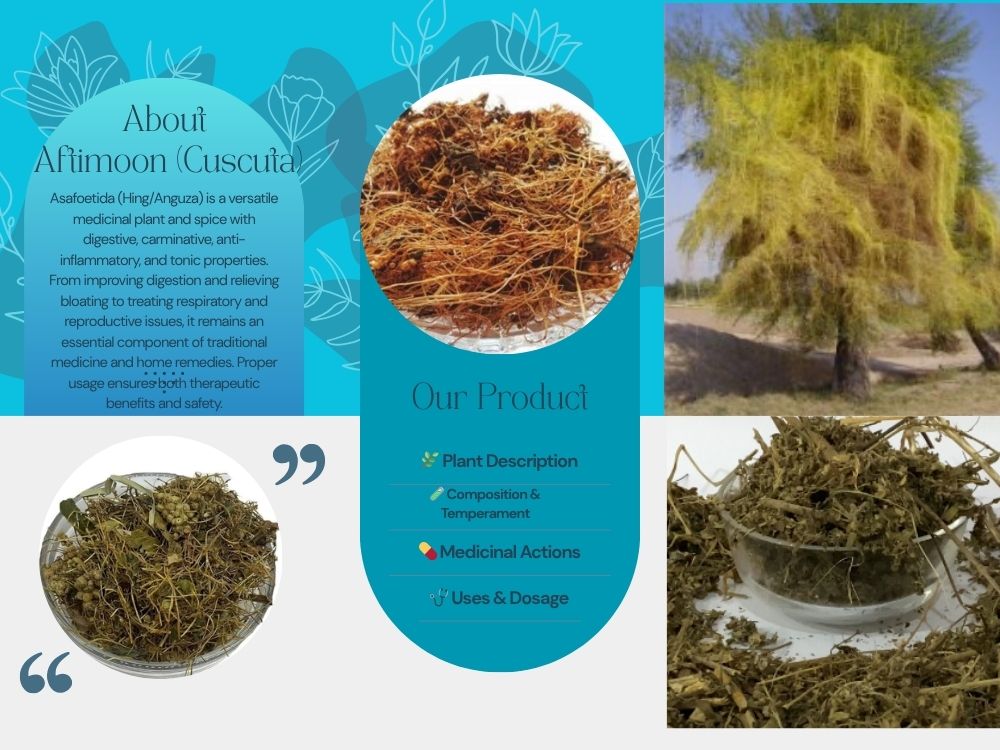
Leaves, Flowers, and Seeds
Leaves
- Aftimoon does not have visible leaves
- Small leaf-like structures may appear along the thin stems
Flowers
- Small, thin, and slightly swollen in shape
- Rough at the tips and about the size of a mung bean
Seeds
- Each fruit contains four small seeds, commonly known as “kathus.”
Habitat and Distribution
Afternoon is commonly found in hot and humid regions of the subcontinent, including
- Punjab
- Uttar Pradesh (UP)
- Bengal
- Chittagong
- Deccan
- Southern regions of South Asia
Chemical Composition
Aftimoon contains several bioactive compounds:
- Cystine (a type of salt)
- Quercetin-like compounds
- Resins
- Slightly bitter substances, soluble in ether and chloroform
These components contribute to its wide range of medicinal effects.
Temperament
According to traditional Unani medicine:
- Hot in the third degree
- Dry in the second degree
This quality makes it especially useful for balancing cold and moist conditions in the body.
Medicinal Actions
Aftimoon possesses multiple therapeutic properties:
- Antipyretic (reduces fever)
- Stomachic (strengthens digestion)
- Astringent
- Mild laxative
- Phlegm and bile regulator
- Blood purifier
- Wound healer and ulcer healer
- Spermatogenic (supports reproductive health)
Uses and Health Benefits
Neurological and Mental Health
- Traditionally used in epilepsy, madness, and melancholy
- Helps reduce nightmares and mental disturbances
Blood and Skin Disorders
- Acts as a blood purifier
- Useful in treating boils, chronic wounds, and ulcers
- Helps in healing old and non-healing wounds when applied externally
Digestive Health
- Strengthens the stomach, intestines, and spleen
- Used in jaundice and chronic digestive weakness
- Beneficial in old fevers
Hair and External Use
- Root extract cooked in sesame oil:
- Helps prevent hair loss
- Strengthens hair roots
Swelling and Inflammation
- Helps reduce swellings
- Applied as ointment for inflammatory conditions
Eye and General Use
- Syrup preparations may be used in eye discomfort
- Juice extracts are administered for internal cleansing and healing
Special Benefit
- Particularly effective in expelling harmful substances from the body, aiding detoxification and purification
Dosage
- Recommended dose: 3 to 5 grams
Common Preparations
Aftimoon is used in various traditional formulations, including
- Herbal extracts and decoctions
- Ointments for external application
- Syrups such as Ahmad Shahi syrup
- Preparations like:
- Lavender extract
- Dedan and Ghadavi extracts
- Fennel extract
- Najah ointment
- Blood-purifying formulations
Precautions
- Should be used in moderate doses
- Best taken under professional guidance, especially for internal use
- Overuse may disturb the body’s natural balance due to its strong temperament.