



Introduction
Sweet almond is a highly valued tree known for its nutritious kernels and medicinal oil. It has been widely used in traditional systems such as Unani medicine for strengthening the brain, improving digestion, and enhancing overall vitality.
Botanical Description
The sweet almond tree is medium in height with bark that may appear reddish, bluish-green, or brown. It is commonly cultivated in orchards and gardens.

Leaves
- Shaped like a blade (lanceolate)
- Initially light green, later becoming pale
- Long and broader in the middle
- Shed during the autumn season
Flowers
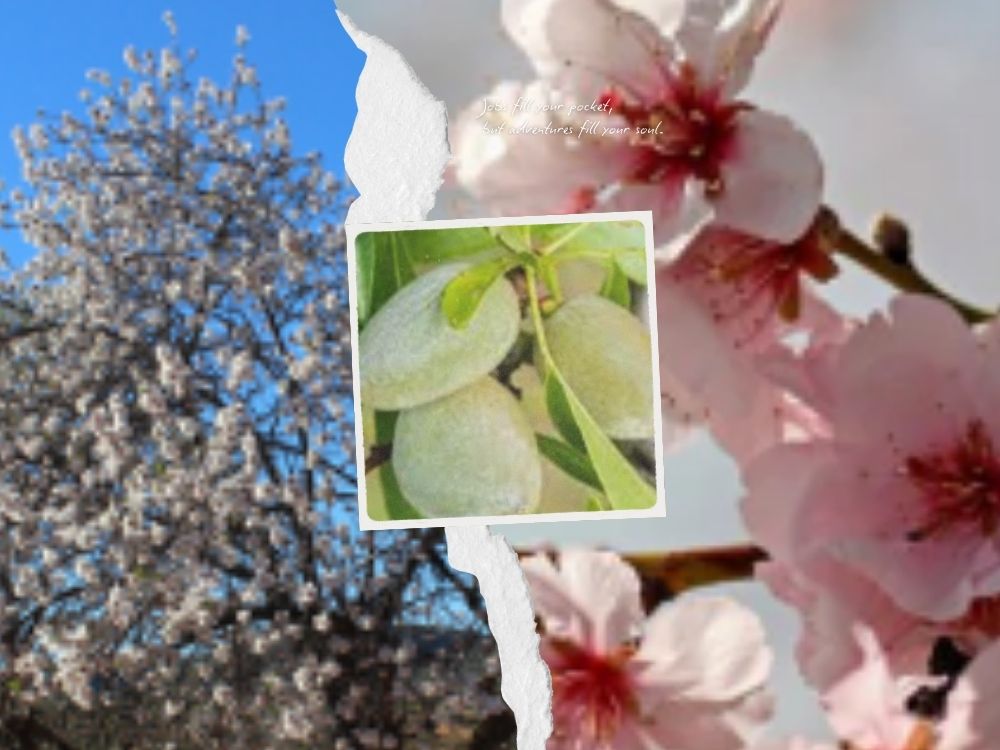
- Appear as white or light pink/red blossoms
- Usually grow singly or in pairs
- Each flower has five petals
- Known for their delicate appearance and mild fragrance
Fruit and Kernel
The almond fruit undergoes several stages:
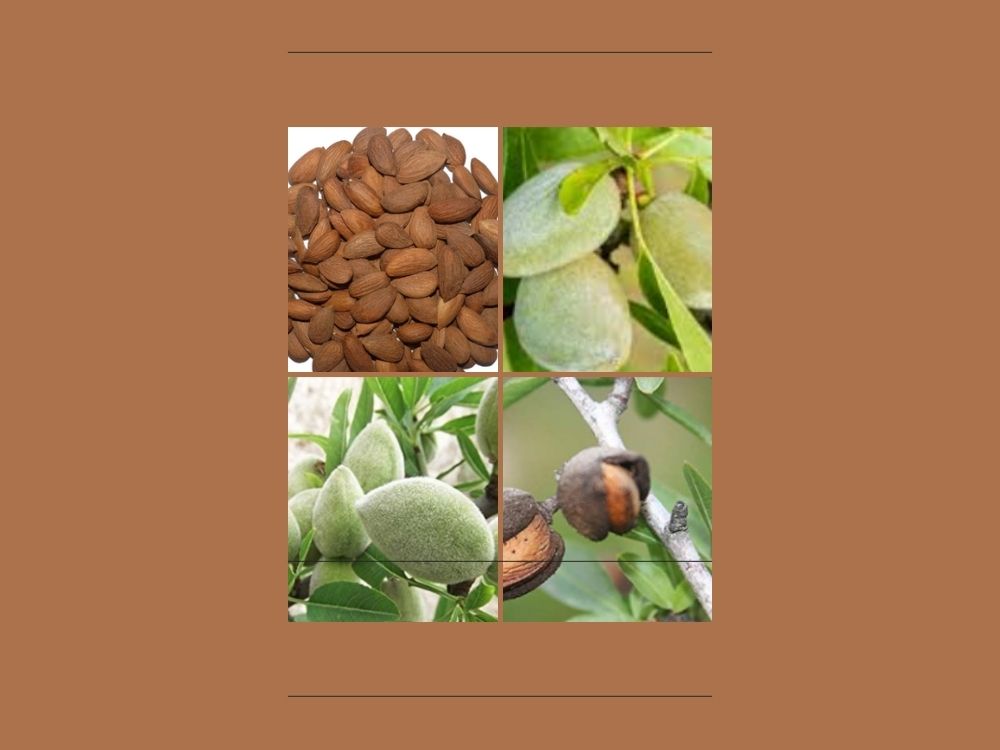
- Unripe stage:
- Covered with a green, velvety, hairy outer layer
- The kernel inside is soft, slightly sour, and astringent
- Ripe stage:
- Outer layer dries and splits open
- Inside is a hard, porous shell
- The edible kernel is brown, wrinkled, and striped
Almonds are of two main types:
- Soft-shelled (paper almonds)—easy to break, rich and flavorful
- Hard-shelled almonds – more difficult to crack
Geographical Distribution
Sweet almond trees are found in the following places:
- Afghanistan
- Western Asia and Turkey
- Kashmir and parts of Punjab
- Iran, Syria, Morocco, Sicily, and France
Among these, almonds from cool mountainous regions are often considered superior.
Chemical Composition
Sweet almonds are rich in nutrients and beneficial compounds, including the following:
- Fixed oils (healthy fats)
- Proteins
- Natural sugars and gum (about 10%)
- Mineral salts (potassium, magnesium, calcium)
- Vitamins A, B, and C
- Small amounts of emulsin and amygdalin (non-toxic in sweet almonds)
Temperament (Unani Perspective)
- Moderately warm (first degree)
Pharmacological Actions
Sweet almonds possess several beneficial properties:
- Brain and nerve tonic
- Nutritive and restorative
- Mild laxative
- Body-strengthening and fattening agent
- Demulcent (soothing effect)
- Cooling and moisturizing for tissues
Medicinal Uses
Brain and Nervous System
Sweet almonds are famous for the following:
- Enhancing memory and brain function
- Strengthening the nervous system
- Promoting mental clarity and vitality
Digestive Health
- Act as a mild laxative, relieving constipation
- Improve digestion when taken regularly
- A combination with figs helps regulate bowel movements
Respiratory Health
- Useful in dry cough
- Soothes irritation due to its demulcent nature
Urinary and Reproductive Health
- A mixture of almonds and figs helps relieve urinary irritation
- Supports reproductive strength and vitality
Skin and Complexion
- Improves skin tone and complexion
- Used in herbal applications for glowing skin
Dental Health
- Charred almond shells are traditionally used to:
- Strengthen gums
- Whiten teeth
Other Uses
- Fresh leaves may help expel intestinal worms
- The fragrance of flowers can uplift mood and stimulate the mind
Almond Oil
Properties
- Mildly warm and suitable for use in both summer and winter
- Easily digestible and highly nourishing
Uses
- Relieves constipation when taken at night
- Strengthens the brain and nervous system
- Ear drops may help with ear noise (tinnitus)
- Application on the head helps the following:
- Reduce headaches
- Promote sleep
- Combined with ispaghula, it helps relieve diarrhea and cramps
- Body massage improves circulation and relaxation
- Regular use may ease childbirth (traditional belief)
- Applied to hair to reduce dryness and improve texture
- Traditionally used in managing urinary stones (with other remedies)
Dosage
- Kernels: 5 to 11 grams
- Almond oil: Moderate use, depending on condition
Formulations and Preparations
Sweet almonds are used in various traditional formulations, including the following:
- Almondöl (Roghan Badam)
- Hab-e-Surfa
- Hab-e-Luab Behdana
- Hab-e-Muzbadam
- Other classical Unani preparations