





Introduction
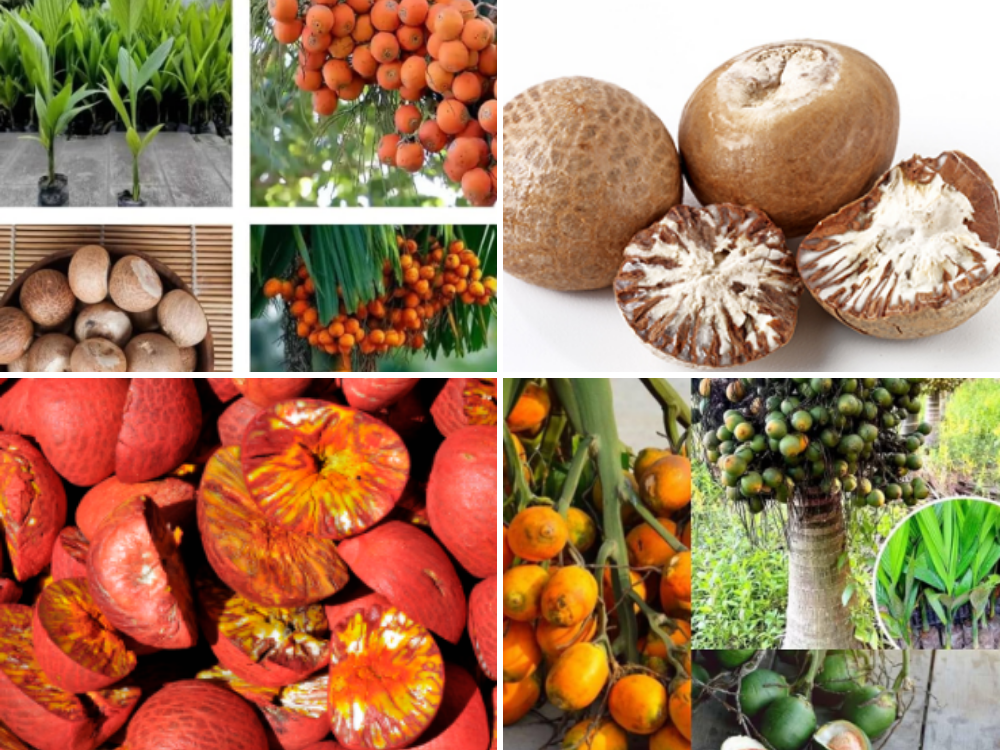
Areca catechu, commonly known as the Betel Nut Tree, is a slender palm that generally grows 15–30 feet in height, although some specimens may reach approximately 60 feet. The trunk may measure around 1–2 feet in thickness.
The leaves resemble those of the coconut or date palm, although they are somewhat smaller.
Branches
The branches or fronds arise from the crown of the tree. They resemble those of the coconut palm but are generally smaller than the corresponding fronds of date and coconut palms.
Fruit
The fruit grows in clusters resembling dates. It is green when unripe, turns red when mature, and becomes blackish when dried.
The fruit is traditionally harvested before it reaches full maturity. It is boiled in water, after which the outer husk is removed. The firm kernel obtained from inside is known as Supari (betel nut).
Varieties of Betel Nut
Chetti
This variety is reddish-black and slightly astringent. It is also known as Chikni Supari (smooth betel nut) and is traditionally consumed with Paan (betel leaf).
Chakki
Chakki is reddish-black and conical in shape. It has an astringent and slightly bitter taste.
Conical Variety
This variety is conical in shape, relatively soft, and has a taste resembling coconut. Its husk also resembles that of a coconut. It is known as Supari Khopra and is less commonly available.
Other traditional varieties include Manak Chandi, Jahazi, Huna, and Chewal.
Geographical Distribution
The betel nut tree is primarily cultivated in the Deccan, Bengal, Assam, Java, Sri Lanka, Sumatra, the Philippines, Burma (Myanmar), and Mysore.
Chemical Composition
The fruit contains:
- Protein
- Fats
- Carbohydrates
- Alkaloids, including arecoline
Temperament
Cold and dry, second degree.
Actions and Properties
Traditionally, areca nut is described as
- Astringent
- Radi (traditionally described as repellent or anti-inflammatory)
- Resolvent of hot swellings
- Binding or constipating
Traditional Uses
Oral and Dental Uses
Areca nut (Supari) is traditionally consumed with betel leaf, lime, cardamom, and catechu.
Traditional sources also describe burning the nut, grinding it, and incorporating it into tooth powder to strengthen the teeth and gums and help reduce gum bleeding.
Eye Uses
Historically, finely powdered areca nut was sometimes prepared in a manner resembling Surma (kohl) and applied to the eyes for conjunctivitis and ocular inflammation.
This historical practice should not be followed by applying areca nut powder directly to the eyes, as unsterile or abrasive substances can cause eye irritation, infection, or injury.
Swellings
Because of its traditionally described repellent and resolvent properties, a poultice prepared from the nut has historically been applied to hot swellings.
Digestive Uses
Because of its astringent and binding properties, areca nut has traditionally been used to help control diarrhea.
Traditional Reproductive Uses
Traditional sources describe areca nut as being used for Sailan-ur-Rahm (leukorrhea) and for conditions referred to as Jaryan (spermatorrhea) and Ehtilam (nocturnal emission).
Specific Benefits
Traditionally regarded as:
- Astringent
- Tonic
- Anthelmintic (traditionally used to expel intestinal worms)
Traditional Dosage
2.9–4.9 g.
This is a conversion of the traditional Unani dosage and should not be interpreted as an established modern therapeutic dose.


