



Introduction
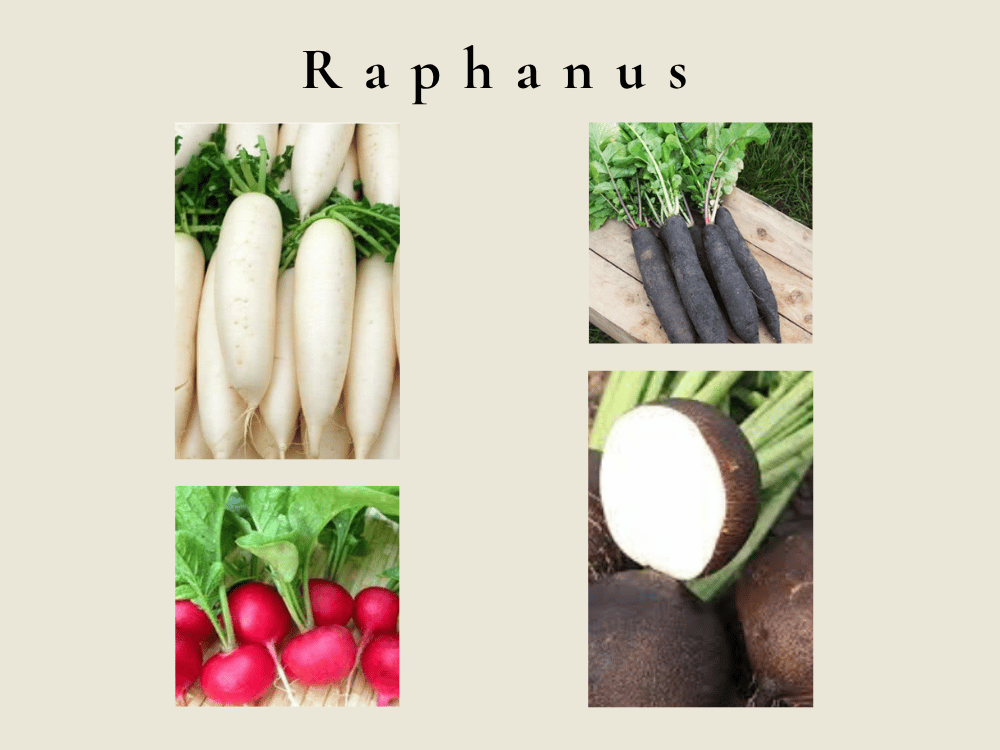
Raphanus, commonly known as radish, is a well-known plant in the subcontinent and is widely used as both a vegetable and a medicinal herb. The plant typically grows up to one to two feet in height. Its leaves are broad and spreading, while the root grows straight underground.
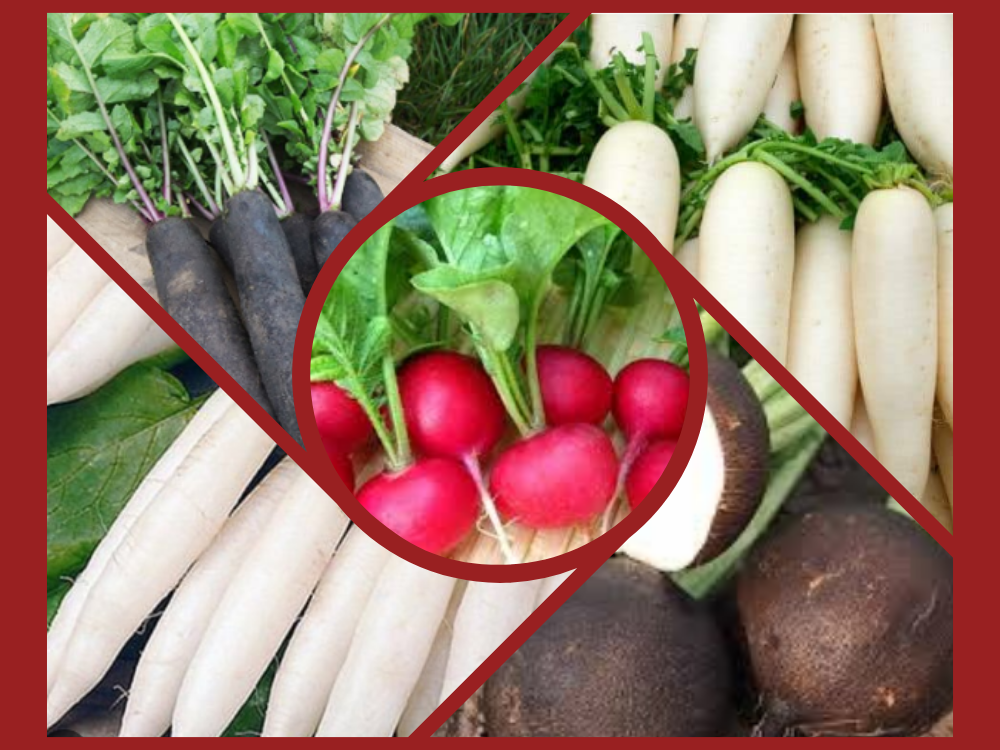
Radish roots are usually white, but some varieties may appear greenish-red or red with a bluish tinge. There are also different shapes, including long varieties and small, round, turnip-like forms. The plant produces small white flowers in clusters, followed by pods containing brown seeds.
All parts of the plant are edible, while the seeds and juice are commonly used for medicinal purposes.
Chemical Constituents
Radish seeds contain:
- Fixed oil with a characteristic radish-like smell and taste
- Volatile oil
- Sulfur-containing compounds
Temperament
Seed Temperament
- Hot and dry
Radish (Root) Temperament
- Hot in the first degree
- Dry in the second degree
Actions (Pharmacological Properties)
- Digestive
- Diuretic (Mudir-e-Baul)
- Carminative (expels gas)
- Emetic (induces vomiting)
- Emmenagogue (stimulates menstruation)
- Lithotriptic (breaks stones – Kasir-e-Hisah)
- Mild astringent (especially pods)
Radish possesses dual properties:
- A dense, earthy component that is slow to digest
- A subtle, (hot) essence that stimulates digestion and metabolism
Medicinal Uses
Uses of Seeds
- Used in phlegmatic disorders to induce vomiting
- Helps in promoting menstruation and urination
- Assists in expelling gas (flatulence)
- Used in combination with other medicines for skin diseases
Uses of Radish Root
- Consumed both raw and cooked as a digestive food
- Taken with vinegar to help reduce spleen enlargement
- Supports liver function and helps in opening liver obstructions
- Promotes urination and benefits bladder health
- Its juice is used in anti-hemorrhoid formulations
Other Therapeutic Uses
- Radish oil (especially when mixed with turmeric) is used in the ear to relieve the following:
- Earache
- Tinnitus (ringing in the ears)
- Helps in managing:
- Jaundice
- Gastric acidity
Pods (Horned Fruits)
- Digestive
- Astringent
- Heavy to digest
Special Benefits
- Acts as a digestive food
- Helps relieve gastric acidity
- Breaks urinary stones (lithotriptic action)
- Promotes urination and detoxification
Adverse Effects
- May cause:
- Nausea
- Foul-smelling belching
Correctives
To reduce its side effects, it is commonly used with:
- Turmeric
- Salt
- Black pepper
Dosage
- Seeds:1.0–2.9 grams (up to 5.8 grams for emetic purposes)
- Juice: 46.6–70.0 gram
- Root: As much as can be easily digested
Compound Preparations
Radish is used in several traditional formulations, including:
- Anti-hemorrhoid pills (using radish juice)
- Herbal pastes with onion and lovage
- Marham-ul-Arwah
- Turmeric oil preparations