



Introduction
According to Ayurvedic principles, a mixture of white cumin (Zeera Safed), black cumin (Zeera Siyah), and Nigella (Kalonji) is collectively referred to as Trit-Jeer. However, white and black cumin belong to the Umbelliferae family (the fennel family), whereas Nigella has distinct actions and properties and is therefore considered separate from cumin.
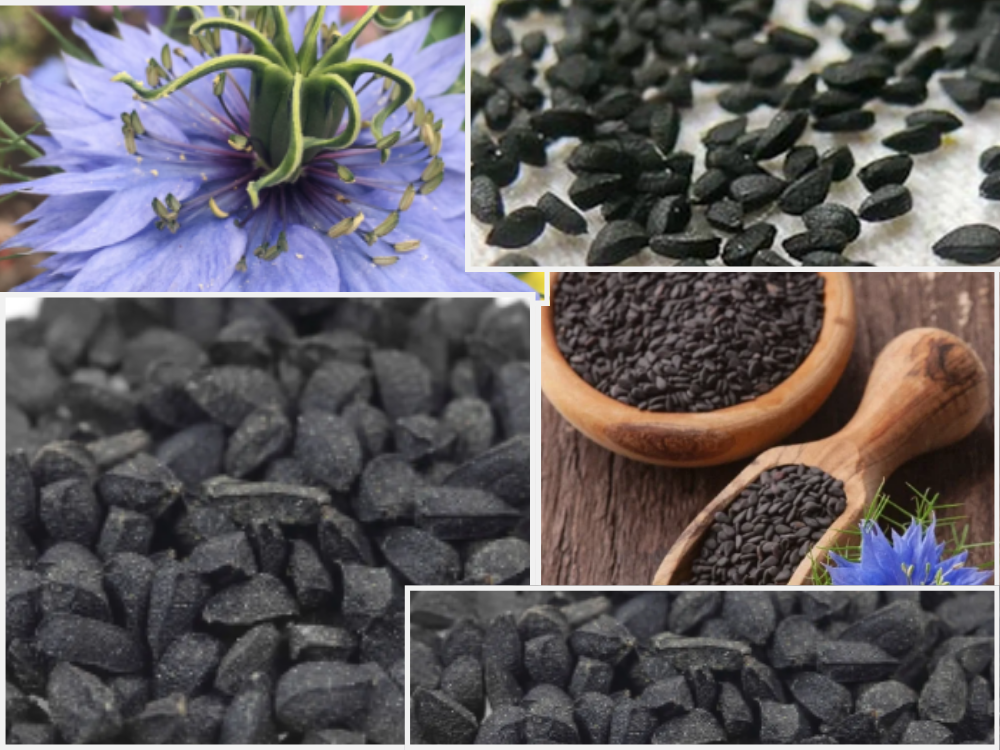
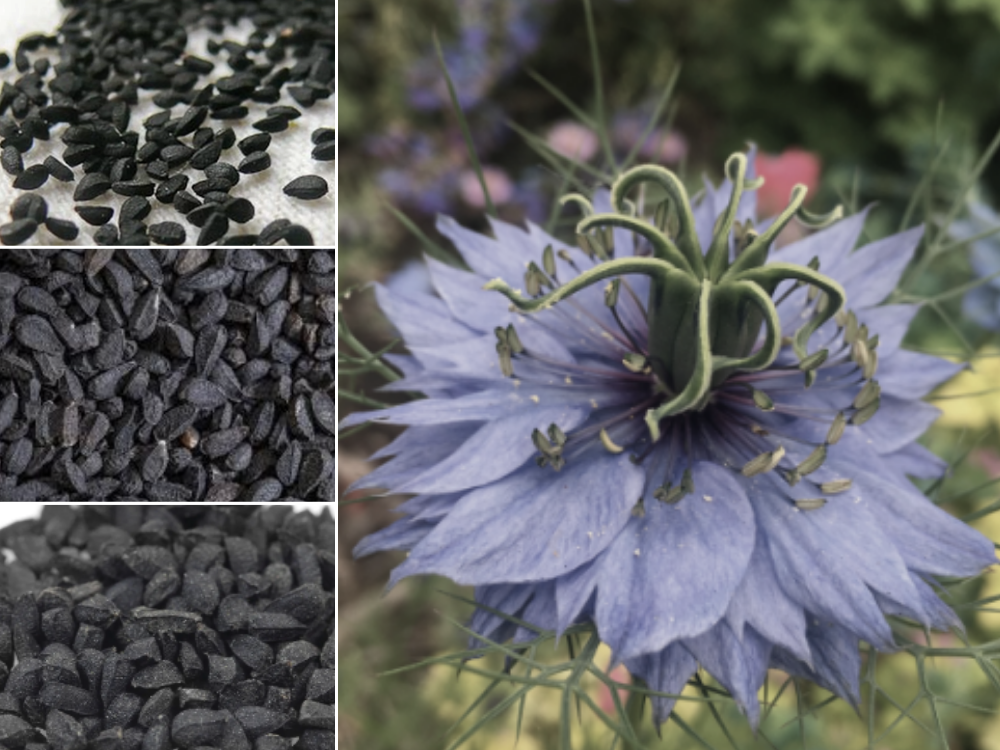
The plant resembles fennel but is somewhat smaller. Its leaves are similar to fennel leaves but are slightly thinner and broader. The flowers are yellowish-white or sometimes yellowish-blue. During winter, pods approximately half an inch long appear. These pods contain black, triangular seeds with a distinctive aroma.
The plant is typically sown near water bodies during the monsoon season and is commonly cultivated in regions such as Punjab, Bengal, and Bihar in India.
Chemical Composition
The seeds contain approximately:
- 1.5% volatile oil
- 3.75% fixed (non-volatile) oil
- Melanthin
- Arabic acid
- Albumin
- Starch
Temperament
Hot and dry, second degree.
External Actions
Nigella has traditionally been described as having detergent (Jali) and blood-drawing (Jazib-e-Khoon) properties. Inhaling its scent is traditionally believed to draw cerebral secretions toward the nasal cavity.
Internal Actions
Its traditional internal actions include:
- Expectorant
- Carminative
- Stomachic
- Mild laxative
- Anthelmintic
- Emmenagogue
- Analgesic
Medicinal Uses
Skin Disorders
Because of its detergent and blood-drawing properties, Nigella is traditionally ground with vinegar, sometimes together with other suitable medicines, and applied topically. It is used traditionally for alopecia (Ganj), vitiligo (Bars), pityriasis (Bahaq), acne (Mahasa), and other skin diseases.
Jaundice and Nasal Disorders
Because of its traditionally described ability to absorb cerebral moisture and relieve pain, it is ground in breast milk and instilled into the nostrils for jaundice.
Roasted Nigella seeds may be placed in a cloth sachet and inhaled for relief from cold-related catarrh and the common cold.
Grinding it in vinegar and administering it as a nasal preparation (Sa’oot) is traditionally used to alleviate migraines and chronic pain.
Digestive and Respiratory Disorders
As a traditional stomach tonic, anthelmintic, carminative, and analgesic, Nigella is administered in powdered form for chest pain and shortness of breath.
It is also traditionally considered beneficial for:
- Gastric weakness
- Bloating
- Abdominal pain
- Dropsy (ascites)
- Jaundice
- Joint pain
- Backache
- Cold-phlegm disorders
- Intestinal worms
Menstrual Disorders
Because of its emmenagogue properties, Nigella powder or decoction is traditionally used for menstrual irregularities.
An oil prepared from Nigella may be massaged onto painful areas to provide relief.
Hiccups
For hiccups, the powder is traditionally administered with buttermilk or licked repeatedly with honey.
Postpartum Uses
Nigella is traditionally considered beneficial for postpartum ailments. Applying its paste to the umbilical area is also described as beneficial.
Culinary Uses
Nigella is also commonly used in the preparation of pickles and chutneys.
Special Benefit
Stomach tonic.
Dosage
(approximately 0.97–1.94 grams)