



Introduction
Mint is a widely known and popular herb that grows similarly to basil. It is valued for its refreshing aroma, cooling taste, and medicinal properties. Mint exists in many varieties, including both wild and cultivated types, and is used across the world in cooking, medicine, and beverages.
Botanical Description (Mentha viridis)
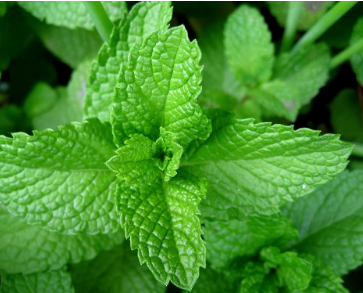
Mint (Mentha viridis) is a fragrant, vine-like herb. Its leaves are smooth, dark green, and have serrated edges with visible veins. The leaves are typically oval to slightly elongated with pointed tips.
Flowers
The flowers are small, light blue in color, and grow in clustered, spike-like formations.
Growth and Cultivation
Mint does not usually grow from seeds. Instead, it is propagated through cuttings or branches that are planted in the soil, where they quickly develop roots and spread. It is commonly grown in gardens and moist environments.
This plant is widely cultivated in countries such as India, Pakistan, and many parts of Europe.
Plant Structure
- Stem: Branched and soft
- Height: Up to 1 foot
- Blooming Season: June to July
Chemical Composition
Mint contains approximately 1% volatile oil, which gives it its distinctive aroma and flavor.
Peppermint (Mentha piperita)
Origin and Distribution
Peppermint is grown in Europe, North America, Asia, Tibet, Iran, India, Pakistan, and Africa. It is considered one of the most valuable mint varieties.
Characteristics
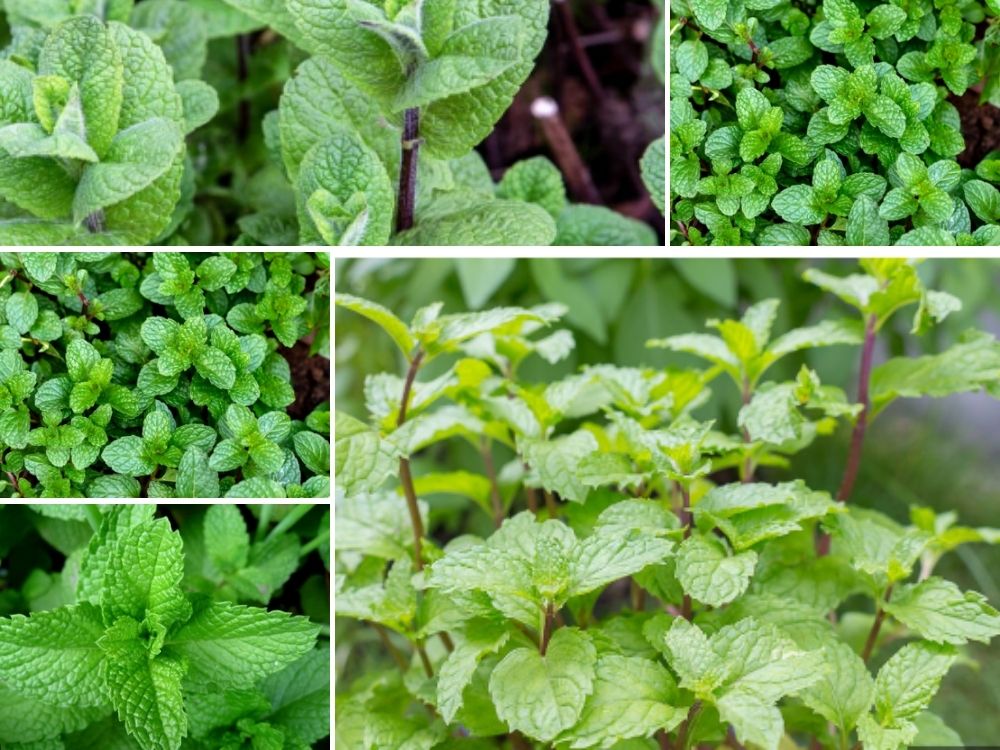
- Stem: Square-shaped and upright
- Leaves: Oval and slightly hairy
- Flowers: Purple in color
- Aroma: Strong and sharp
- Taste: Pungent, slightly bitter, and cooling (similar to camphor after consumption)
Chemical Composition
Peppermint contains about 2.5% volatile oil, along with tannins and resin, contributing to its medicinal value.
Japanese or Mountain Mint (Mentha arvensis)
This variety is also known as field mint. It has been historically mentioned by the famous physician Ibn Sina (Avicenna). It is widely used for extracting menthol, an important compound used in medicines, oils, and cosmetics.
Wild Mint (Mentha sylvestris)
Habitat
Wild mint grows naturally in open and moist regions of Europe and Asia.
Characteristics
- Stem: Square, hairy, and whitish
- Height: About 1 foot
- Leaves: Oval with toothed edges
- Flowers: Reddish in color
- Blooming Season: July to August
Water Mint (Mentha aquatica)
Habitat
Water mint grows abundantly along rivers, canals, and water banks in India and Pakistan.
Characteristics
- Stem: Square, straight, and branched
- Height: About 1.5 feet
- Leaves: Broad, round, and toothed without pointed tips
- Color: Green
- Blooming Season: July to August