



Introduction
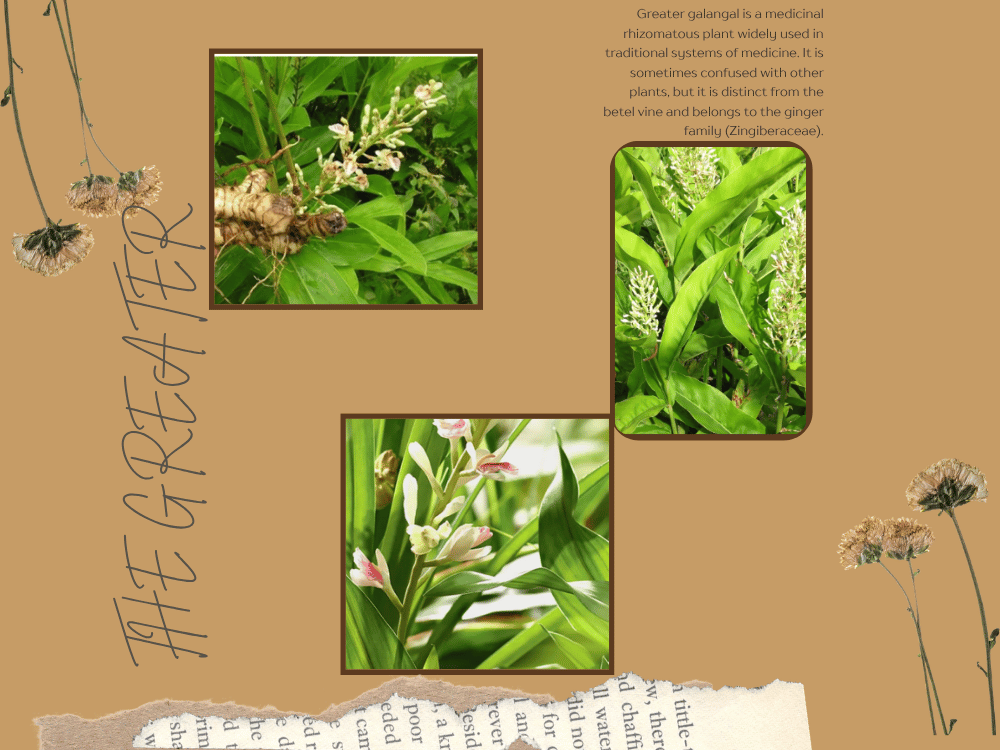
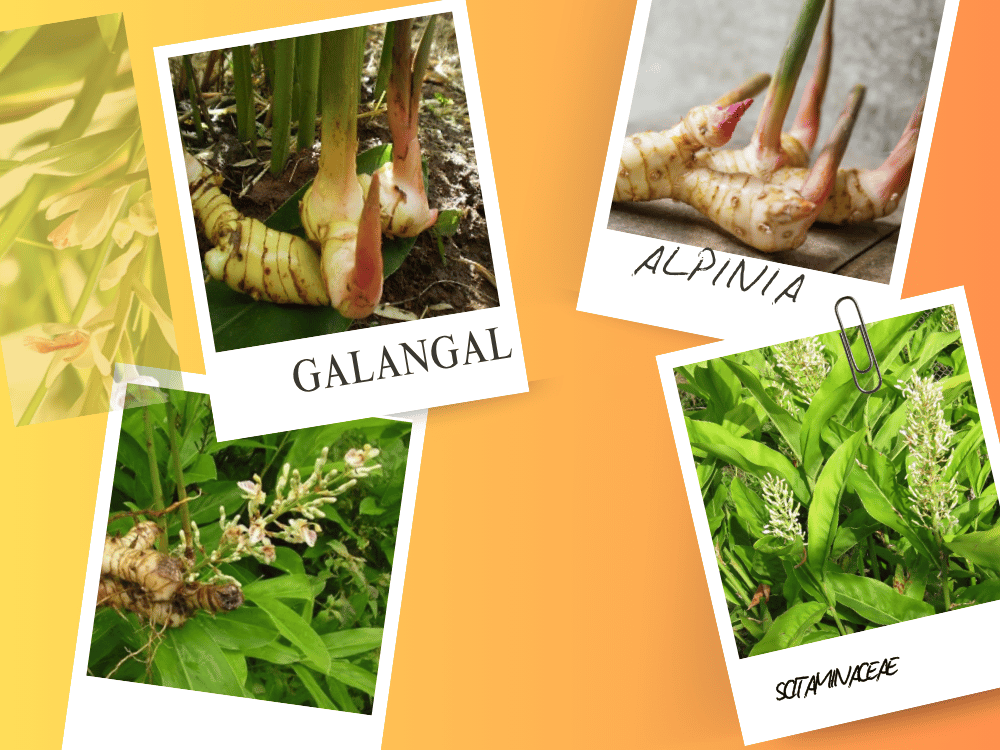
Greater galangal is a medicinal rhizomatous plant widely used in traditional systems of medicine. It is sometimes confused with other plants, but it is distinct from the betel vine and belongs to the ginger family (Zingiberaceae).
Botanical Description
Plant
- Grows up to 6–7 feet in height
- Herbaceous plant with an underground rhizome (rootstock)
Leaves
- Leaves are:
- 1–2 feet long
- About 4 inches wide
- Lanceolate (pointed)
- Green on the upper surface and lighter underneath
Flowers
- Small and white
- Appear during the hot season
Fruit
- Small, round berries
- Reddish-yellow, resembling small lemons
Root (Rhizome)
- Long, smooth, and pinkish-brown
- Has a bitter and aromatic taste
- Medicinally the most important part
Distribution (Origin)
- Originally from:
- China
- Java and Sumatra
- Now cultivated in:
- Coastal regions of South India
Chemical Composition
- Volatile oil (yellow)
- Galangin
- Alpin (Alpinol compounds)
- Camphor-like substances
- Components of volatile oil include:
- Methyl compounds
- Cineole (approx. 20–30%)
- Dipinene
Temperament (Unani System)
- Hot and Dry – Second Degree
Pharmacological Actions
- Mouth freshener (Mu’attir)
- Cardiac tonic (Muqawwi Qalb)
- Analgesic (pain reliever)
- Anti-diarrheal
- Expectorant (expels phlegm)
- Digestive (Muqawwi Meda)
- Liver tonic
- Anti-inflammatory
- Reduces excessive salivation
Medicinal Uses
Respiratory Disorders
- Useful in:
- Chronic cough (especially in elderly)
- Cold and flu
- Phlegm accumulation
- Method:
- Kept in the mouth or taken with honey and ginger juice
Digestive System
- Strengthens:
- Stomach
- Liver
- Useful in:
- Indigestion
- Colic (abdominal pain)
- Diarrhea and dysentery
Oral Health
- Chewing helps:
- Remove bad breath
- Act as a mouth freshener
- Used in:
- Mouthwashes
Anti-inflammatory and Pain Relief
- Useful in:
- Arthritis
- General body pain
- Paste or extract applied for:
- Skin blemishes
Urinary and Other Uses
- Helpful in:
- Urinary disorders
- Kidney pain
Special Benefits
- Warms the heart (cardiac stimulant)
- Strong digestive and carminative agent
Dosage
- 2–3 grams (or as prescribed)