



Introduction
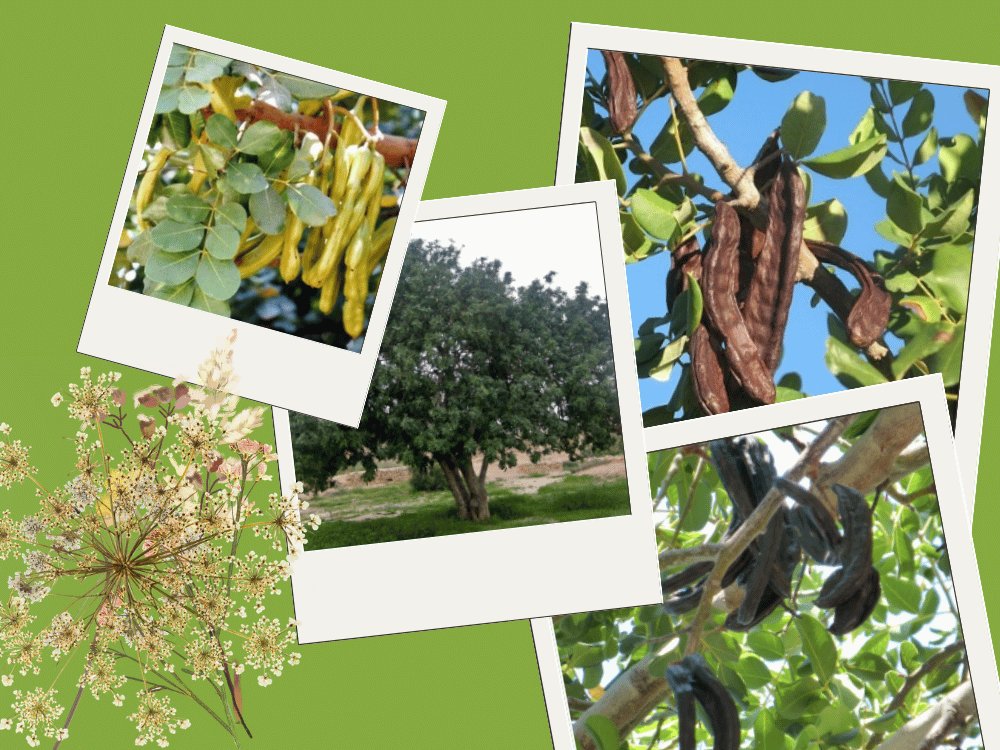
Carob is a well-known tree with medicinal and nutritional importance. It exists in two main types:
- Garden (cultivated) carob
- Wild carob (Carob bunti)
Both types are valued for their astringent and therapeutic properties.
Botanical Description
Tree
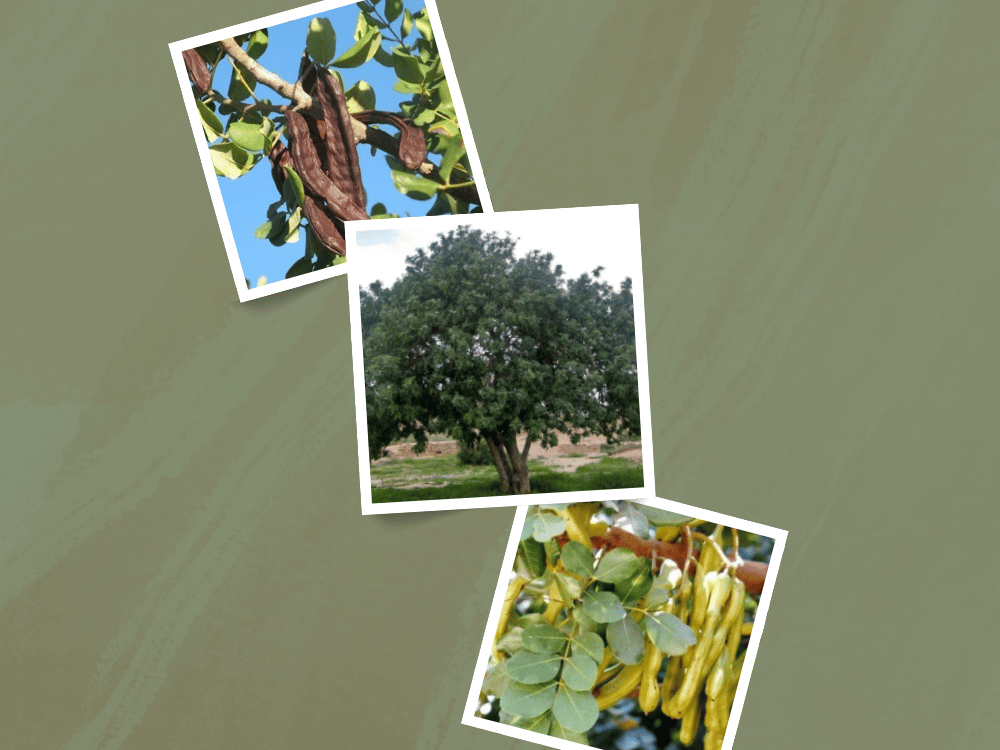
- A medium-sized tree found in cultivated and wild forms
- Branches are:
- Smooth in cultivated type
- Thorny and scattered in wild type
Leaves
- Leaves are:
- Round and thick
- Deep green in color
- Arranged opposite each other on branches
Flowers
- Flowers are yellow in color
Fruit (Pods)
Garden Carob
- Pods are:
- 8–9 inches long
- Thick and fleshy
- Contain:
- Seeds like beans
- Taste:
- Sweet
Wild Carob
- Fruits are:
- Smaller
- Kidney-shaped
- Branches have:
- Thin, sharp thorns
Temperament (Unani System)
Garden Carob
- Cold – First Degree
- Dry – Second Degree
Wild Carob
- Cold and Dry – Second Degree
Pharmacological Actions
- Astringent (Qabiz)
- Hemostatic (blood-suppressant)
- Tonic for stomach and intestines
- Constipating (in higher doses)
- Sedative (mild)
Medicinal Uses
Bleeding Disorders
- Due to its hemostatic properties, it is useful in:
- Internal bleeding
- Bleeding from different organs
- Decoction is used to control bleeding
Digestive System
- Strengthens:
- Stomach muscles
- Intestinal tissues
- Useful in:
- Diarrhea
- Weak digestion
- Acts as a tonic and astringent
Wound Healing
- Used as a poultice:
- Reduces pain
- Helps in healing wounds
Respiratory and Rectal Uses
- Useful in:
- Cough
- Rectal prolapse
Gynecological Uses
- Helps control:
- Excessive menstruation
- Due to its astringent and constricting properties
Hemorrhoids
- Effective in:
- Bleeding piles (hemorrhoids)
- Helps stop bleeding from affected areas
Oral Health
- Gargling with its decoction:
- Relieves toothache
- Strengthens loose teeth
Hair Care
- Mixed with henna and applied:
- Helps in darkening hair
Dietary Use
- Consumed as a nutritious food
- Especially the sweet pods of cultivated carob
Dosage
- 11.664 grams to 5 grams