



Introduction:
The Ashoka tree is a well-known medicinal and ornamental plant widely cultivated in the Indian subcontinent. It holds an important place in traditional Ayurvedic medicine because of its therapeutic properties, especially in women’s health. Apart from its medicinal value, the tree is admired for its dense foliage, fragrant flowers, and attractive appearance throughout the year.
Characteristics
The Ashoka tree is commonly grown in India and neighboring regions. It is a small to medium-sized evergreen tree that usually grows about 10 to 15 feet in height. The tree has numerous branches that spread outward, creating a thick and shady canopy. Because it remains lush and green throughout the year, it is often planted in gardens and around homes as a decorative tree.
The leaves resemble mango leaves in shape. They are typically 3 to 6 inches long, soft, smooth, and green with a slightly wavy margin. When the leaves dry, they turn a reddish color, which adds to the ornamental beauty of the tree.
Flowers
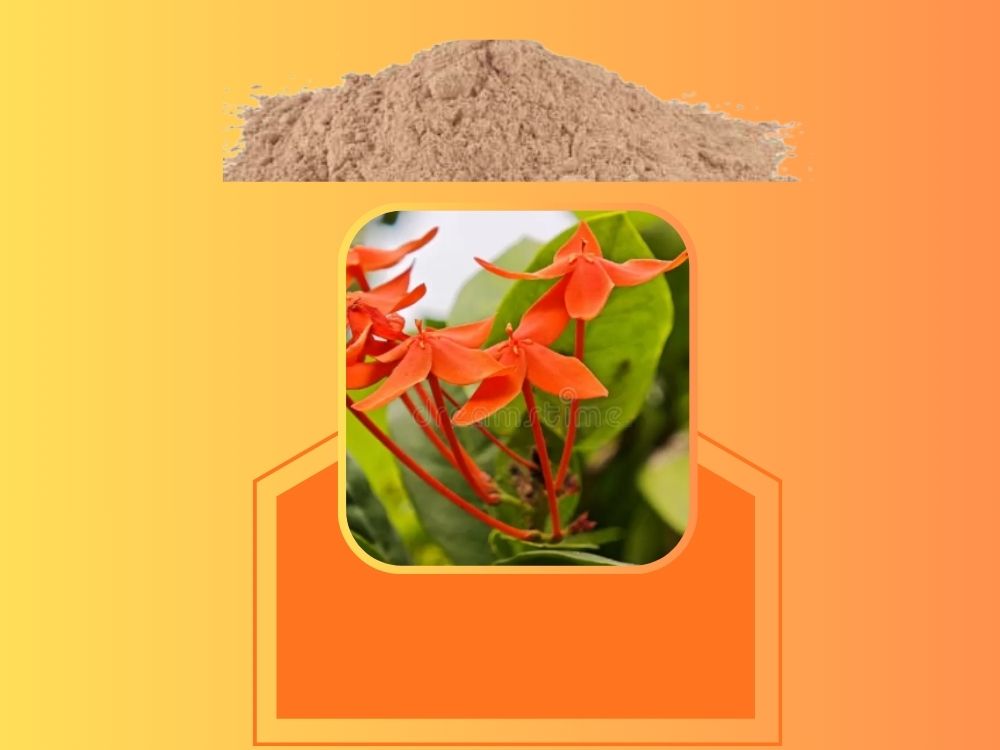
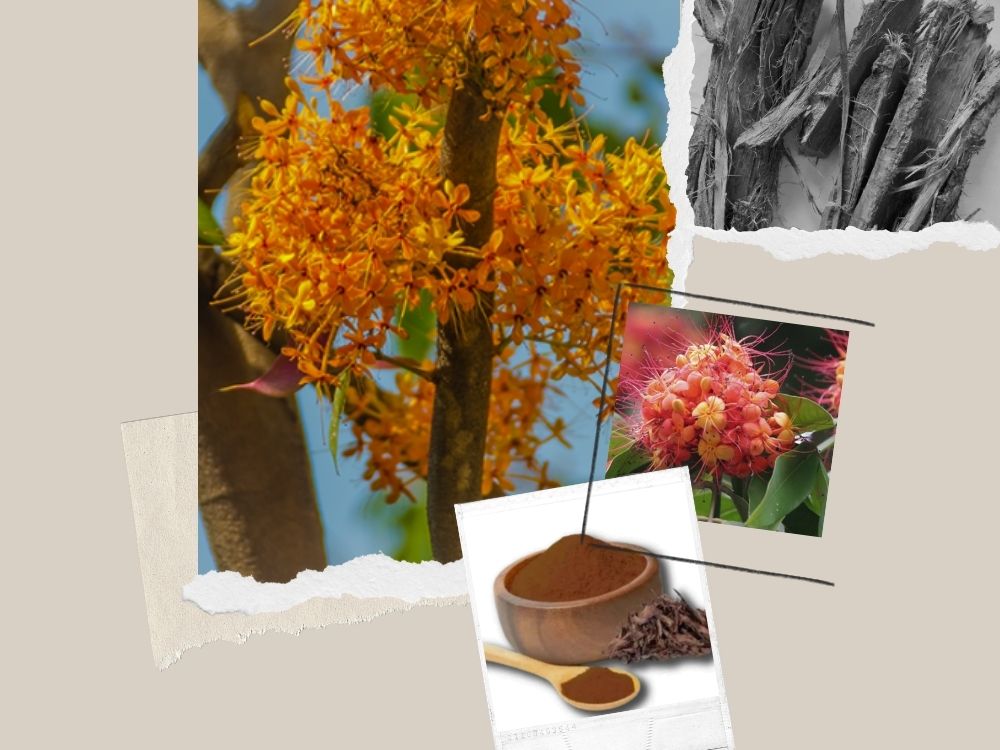
The Ashoka tree produces clusters of bright red, fragrant flowers that are highly attractive. These flowers bloom abundantly from spring until the rainy season. The blossoms appear in dense clusters, making the tree visually striking during its flowering period.
Seeds and Pods
The seeds of the Ashoka tree are about one to one and a half inches long and somewhat flat in shape. They grow inside red-colored pods that measure approximately 4 to 10 inches in length and 1 to 2 inches in width, resembling mustard pods in appearance. These pods are usually planted during the months of Baisakh and Jeth (roughly April to June).
Bark
The bark of the Ashoka tree has significant medicinal value. It appears grey on the outside and reddish on the inside. For medicinal use, the bark is removed and dried in the shade, which helps preserve its beneficial properties.
The Malabar variety of Ashoka bark is considered the most pure and effective, whereas bark from the Bengal region is sometimes mixed with that of similar but less effective trees. The gum obtained from the tree initially appears white but gradually turns red.
Chemical Properties
The bark contains certain active compounds that dissolve in hot water extracts, indicating the presence of bioactive substances responsible for its medicinal effects.
Medicinal Actions
In traditional medicine, Ashoka bark is valued for several therapeutic properties. It is considered:
- Astringent
- Sedative
- Bone-strengthening
- Thirst-relieving
- Stomach pain reliever
- Nervine tonic
- Anti-hemorrhoidal
- Gynecological tonic
- Uterine strengthener
- Supportive in preventing miscarriage
- Mild diuretic
Because of these actions, it is especially regarded as an important herbal remedy for women’s reproductive health.
Traditional Uses
Ashoka bark is commonly used in various Ayurvedic preparations, including:
- Herbal syrups
- Sweet medicinal decoctions
- Safuf (herbal powder mixtures)
- Arishta (fermented herbal preparations)
- Medicated ghee
Boiled preparations of the bark, particularly when taken with milk, are traditionally used to help manage:
- Uterine discharge
- Weakness of the uterus
- Heavy menstrual bleeding
- Various uterine disorders
Several classical Ayurvedic formulations, such as Ashokarishta and Ashoka-based syrups, include this bark as a key ingredient.
Dosage (Traditional References)
Traditional herbal texts recommend the following approximate doses:
- Ashoka bark powder: 1–3 tolas
- Herbal syrup: 2–4 tolas mixed with water
- Safuf (powder mixture): about 4–6 tolas
(Note: Traditional measurements such as “tola” are historical units and modern medical guidance should be consulted before use.)
Ashoka
Characteristics: It is usually grown in India. It has many branches; it is a very shady tree. And it remains green and lush for twelve months. Its height is up to ten to fifteen feet. Its leaves are like mango leaves, 3 to 6 inches long, round-pointed, soft, and green. The edge is wavy. And the leaves turn red when dry. The flowers are red in clusters, beautiful, fragrant, and last from spring to the rainy season. This tree blooms a lot.
Seeds: One to one and a half inches long, some flat, with red pods on top, which are four to ten inches long and one to two inches wide, like mustard pods. The pods are planted in the months of Baisakhi and Teeth.
Bark: It is greyish on the outside and red on the inside. If you remove the bark of this tree in a sack and dry it in the shade, it is more useful. The bark of the Malabar is good and pure. The bark of the Bengal side has mixed with the bark of the fake ashoka. Its gum first turns white and later turns red.
Temperature: Moderate in summer, dry in winter, second degree.
Chemical properties: Its bark and a small amount of Al-Lahak extract dissolve in hot water; a substance is found in it.
Actions: Astringent, sedative, bone-binding, thirst-quenching, stomachache killer, stomachache reliever, nerve tonic, hemorrhoid-repelling, gynecological disease tonic, uterine tonic, abortion-preventing, and diuretic. Major Baton has also praised it.
Use: This syrup is used in the forms of sweet liquor, safuf, and arsht ghee.
Its boiled milk is useful in all types of uterine discharge, uterine weakness, heavy menstruation, and most uterine diseases.
Ashok Ghar: Aso, Arsht, Arsht, Auliya Syrup, etc. Their recipes are in Ayurvedic books. These are mixtures with others.
Dosage: Ashok Ghar: One to three tolas.
Sherbet: Two to four tolas with one tola of asa in a glass of water. Safuf is six to four tolas.