



Introduction to Indrayan
Indrayan (also known as Hanzal, Tama, or Mahakal Fruit) is a medicinal plant widely used in Unani, Ayurvedic, and traditional medicine. It is famous for its strong laxative properties and is commonly used for treating chronic constipation, liver congestion, dropsy, asthma, and arthritis.
The fruit pulp is known in English as Colocynth pulp, while in Greek medicine it is called Shaham Khanzal. Both the fruit and root of the plant are extremely bitter but possess powerful medicinal effects.
Botanical Characteristics of Indrayan
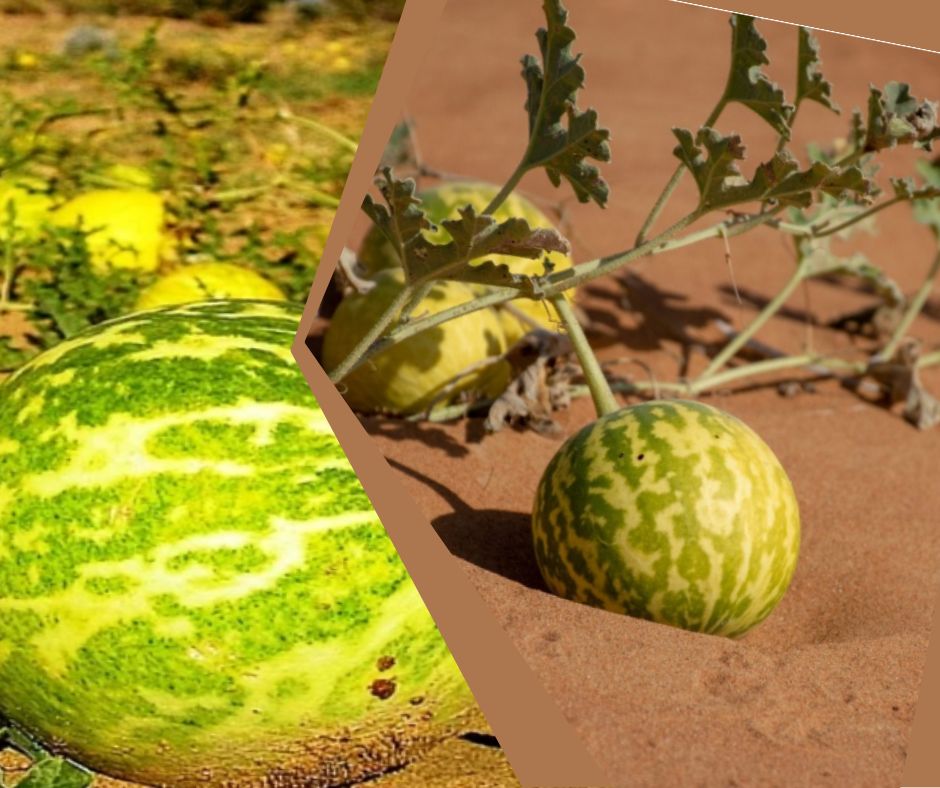
Indrayan is a creeping vine that grows abundantly during the rainy season, especially in sandy soil near rivers and streams.
Plant Structure
- The plant has a very long root system that helps protect it underground.
- It regrows naturally during the monsoon season.
- There are several varieties including:
- Large Indrayan
- Small (Wild) Indrayan
- Red Indrayan
- Thorny varieties
The large variety produces bigger fruits and longer vines compared to the smaller variety.
Leaves of Indrayan
- The leaves resemble watermelon leaves, but they are smaller.
- Average size is about 2.5 inches in circumference.
- Leaf edges are serrated.
- The upper surface of the leaves and stems are soft and smooth.
Flowers and Fruits
When the vine grows about two to three hands long, it begins to produce flowers and fruits.
Flowers
- Yellow flowers appear near the leaf stalks.
Fruit
- The fruit is small and round, similar in shape to an apple.
- Initially green, it turns yellow when ripe.
- Inside the fruit are black seeds.
- The pulp has a fresh, fatty consistency.
The fruit pulp is widely known as Colocynth pulp in English herbal medicine.
Distribution and Habitat
Indrayan grows naturally in sandy and riverbank soils.
Common Regions
It is commonly found in:
- Punjab
- Sindh
- Bengal
- Bihar
- Uttar Pradesh
- South India
- Madhya Pradesh
It is particularly abundant along the banks of the Yamuna River.
Global Distribution
The plant is also found in:
- Portugal
- Greece
- Syria
- North Africa
- Japan
Temperament (Unani Classification)
According to Unani medicine, Indrayan has the following temperament:
- Hot: Third degree
- Dry: Second degree
Medicinal Actions
Indrayan is known for several therapeutic properties:
- Strong laxative
- Reduces phlegm
- Abortifacient
- Hair-darkening oil (from seeds)
Internal Effects on the Body
In Small Doses
- Acts as a stomach tonic
- Increases gastric juice secretion
- Improves appetite
In Moderate Doses
- Stimulates:
- Salivary glands
- Muscle fibers
- Liver function
- Salivary glands
It also stimulates the intestines, leading to bowel movements and expulsion of bile.
In Large Doses
Excessive use can cause serious side effects:
Severe stomach irritation
- Inflammation of internal organs
- Loss of appetite
- Bladder irritation
- Bloody diarrhea
- Extreme weakness
Traditional Uses of Indrayan
Indrayan is used in Unani, Ayurvedic, and traditional medicine to treat:
- Chronic constipation
- Liver congestion
- Cerebral congestion
- Fluid retention in the abdomen (dropsy)
- Asthma
- Arthritis
- Phlegm disorders
- Female infertility
- Paralysis
- Leprosy
It is often combined with other herbs to reduce side effects.
Common Herbal Combinations
It is usually given with:
- Ajwain Khorasani
- Bekh Lafah
- Elvapara
These combinations improve its effectiveness as a laxative and liver stimulant.
Safety and Precautions
Indrayan is a potent medicinal herb, so caution is required.
Do NOT use in:
- Pregnant women
- Patients with hemorrhoids
- People suffering from diarrhea
- Dysentery patients
- Individuals with stomach or intestinal ulcers.
How to Reduce Side Effects
When using fenugreek seeds with Indrayan, adding the following helps reduce harmful effects:
- Almond oil
- Lemon juice
Recommended Dosage
The typical dosage is
1 to 2 Masha (traditional unit of measurement)
It is also used in certain traditional formulations such as
- Atrifal Dedan
- Jab Ayarij
- Matbukh Irq
These preparations are usually taken for about seven days under professional supervision.