



Introduction
Turbud (Operculina turpethum) is a medicinal climbing vine widely used in traditional systems of medicine, especially in Unani and Ayurvedic practices. It is valued for its strong purgative properties and its role in cleansing the body.
Botanical Description
Turbud is a vine plant that spreads along the ground. It exists in two main types:
- One with a black outer root
- One with a white outer root
However, both types have white inner roots.
Stem and Growth
- Each branch is three-angled (triangular)
- The plant spreads through both seeds and creeping branches
- During the rainy season, seeds germinate, and new vines develop
- Branches can also root into the soil and expand the plant further
Leaves
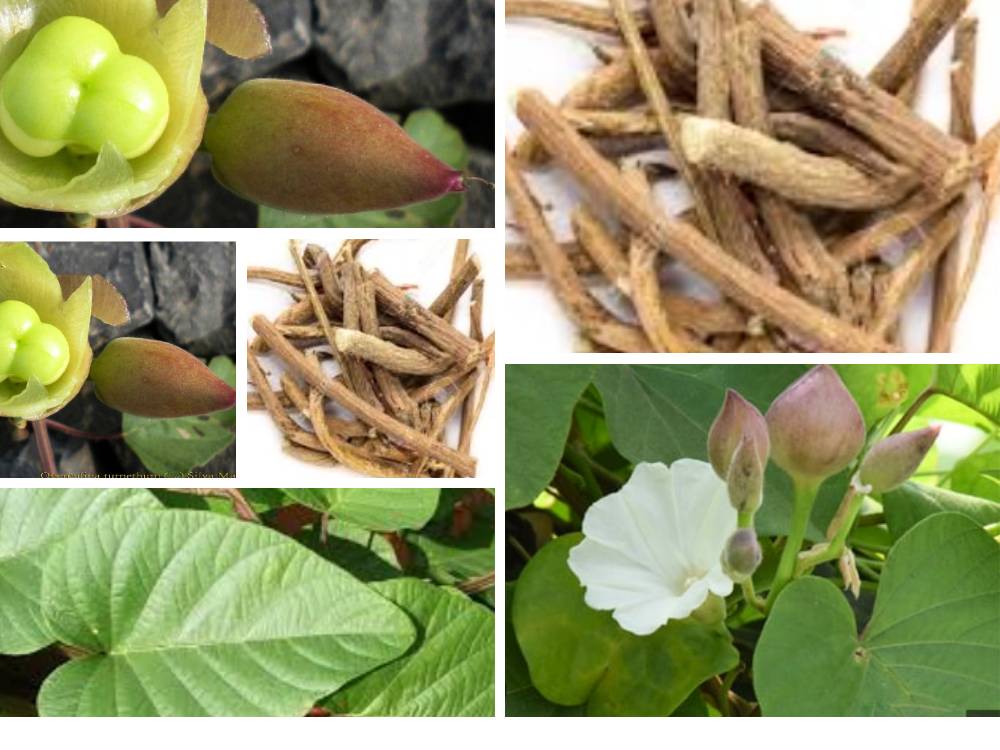
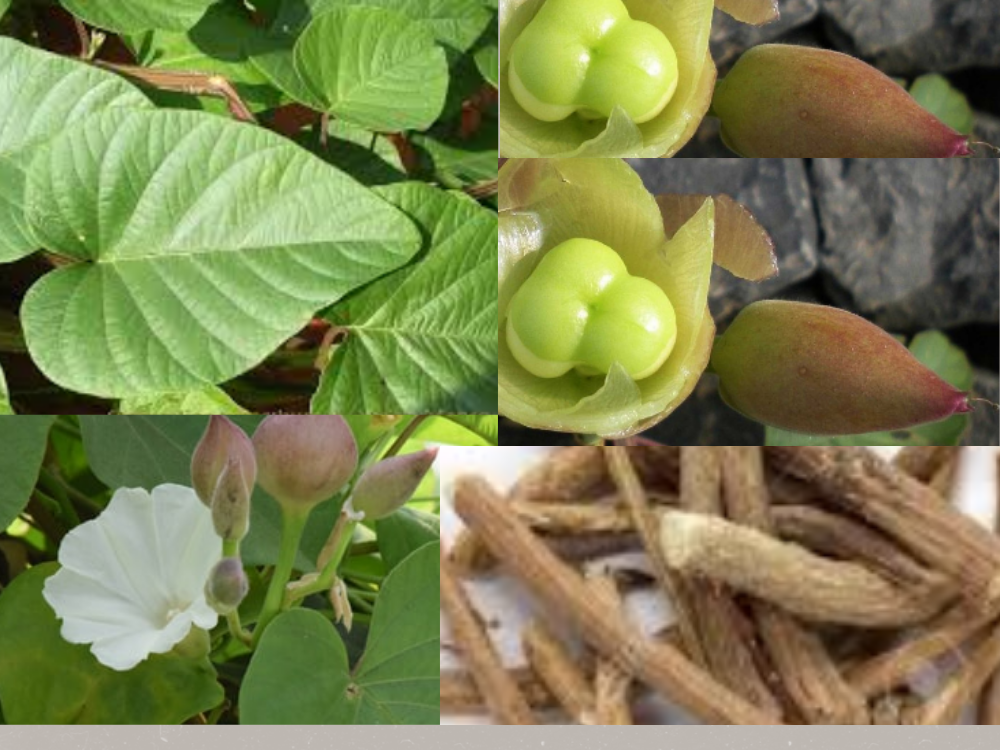
The leaves are:
- Round with slightly pointed tips
- Arranged in pairs along the vine
Flowers and Seeds
- The white variety produces white flowers
- The black variety produces bluish flowers
- Each flower has five petals
The fruit (pod) contains four to five black seeds.
Root and Resin
The root is the most important medicinal part of the plant.
Root Characteristics
- Outer surface: Brown
- Inner part: White when peeled
- Contains a central woody portion
- Taste: Initially bland, later slightly bitter and sharp
A milky juice is extracted from the roots, which hardens into a resin-like substance. This resin is known for its strong medicinal effects, especially as a laxative.
In traditional medicine, the processed root is called “Turbud Majoof Kharashida.” However, in the market, it is sometimes adulterated with other types of wood.
Habitat and Distribution
Turbud is commonly found in:
- India
- Sri Lanka (Lanka)
Historically, a high-quality variety was produced near Akbarabad (Agra region), known as Turbud Akbarabadi.
Chemical Composition
The root bark contains 5–10% resin, which includes:
- Turpethin
- Turpethine
- Jalapin-like compounds
- Convolvulin (a glucoside)
- Waxy substances
- Starch
- Yellow pigments
- Ferric oxide and lignin
These compounds contribute to its strong purgative action.
Temperament (Traditional View)
In traditional medicine, turbud is considered hot and dry in the second degree.
Pharmacological Actions
Turbud exhibits the following medicinal actions:
- Strong purgative (induces bowel movement)
- Expectorant (removes phlegm)
- Detoxifying agent
- Mild stimulant
Medicinal Uses
Digestive and Detoxification Uses
Turbud is mainly used to
- Induce bowel movements
- Remove excess fluids from the body
- Help in conditions like ascites (fluid accumulation)
- Reduce obesity
Respiratory Conditions
Due to its expectorant properties, it is useful in:
- Cough
- Asthma
- Phlegm-related disorders
Joint and Nervous System Disorders
It is traditionally used in the following:
- Gout
- Joint pain
- Paralysis
When combined with ginger and Terminalia chebula (halila), it is believed to help in the following:
- Melancholia
- Epilepsy
- Mental disturbances
- Brain cleansing (in traditional concepts)
Special Benefits
- Helps remove excess phlegm
- Acts as a body cleanser, especially for the digestive system
Side Effects and Precautions
- May cause dryness in the body
- Should be used carefully due to its strong purgative nature
- Always use under professional supervision
Correctives (To Balance Effects)
To reduce its harsh effects, it is commonly used with:
- Almond oil
Substitutes
- Black seed (Nigella sativa) may be used as a substitute in some formulations
Dosage
The typical recommended dose is 3 to 5 grams, depending on the preparation and medical advice.
Traditional Formulations
Turbud is used in several traditional herbal preparations, including the following:
- Herbal powders and decoctions
- Compound Unani formulations such as Jawarish preparations
- Syrups and tablets for digestive and respiratory conditions