



Nature
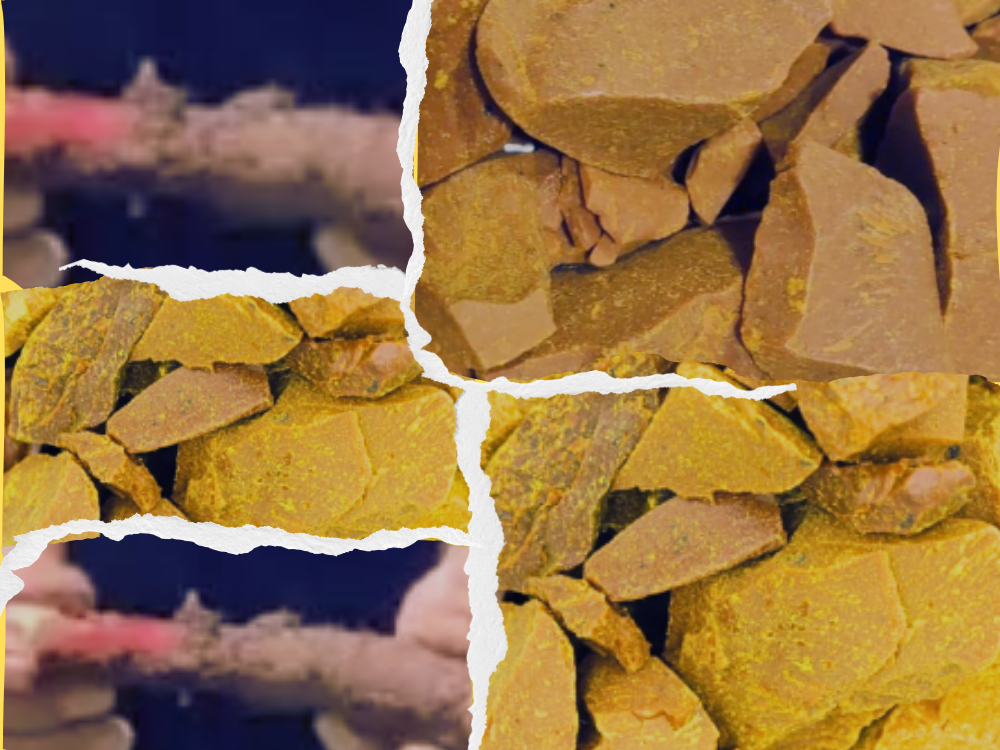
Rupa Mukhi is a white, shiny, silver-like stone with a reddish-yellow, shiny, gold-like appearance. Its specific gravity is 983, and its atomic weight (compound weight) is 30.207. It melts at 507°F (approximately 264°C).
Arab doctors say that it is obtained from gold, silver, copper, and iron mines. This stone is of four types:
- Marqashiya Fazi
- Rupa Mukhi
- Marqashiya Mind
- Sona Mukhi Nakhashi Hadidi
These are not used internally, but Ayurvedic practitioners prepare a decoction of them and use it internally. In particular, the decoction of Sona Mukhi is used in Ayurveda. Its use began in the seventeenth century.
Temperament
Rupa Mukhi: Cold and dry, second degree.
Sona Mukhi: Hot and dry, second degree.
Functions
- Dehumidifier
- Astringent
- Strengthens eyesight
Uses
Rupa Mukhi and Sona Mukhi are finely ground like Surma and applied to the eyes for weak eyesight.
It is applied to the nails and Sibalis, etc. It removes rotten flesh from wounds and is added to ointments to dry out excessive or foul moisture.
It is finely ground with vinegar and used to remove skin blemishes.
Special Benefits
- Tonic
- Soothing
- Astringent
Dosage
Rupa Mukhi is not used internally. In Ayurveda, its decoction is prepared and used internally. It is used for jaundice, leprosy, diabetes, epilepsy, stones, stomach diseases, swelling, vomiting, and other conditions.
Dosage: (approximately 0.06–0.12 grams).
For reference:
- approximately 0.1215 grams
- approximately 0.972 grams
- approximately 11.66 grams
Compounds
Rupa Mukhi is used in preparations such as suppositories, green suppositories, Dunyar, and others.