



INTRODUCTION
Spindle harmala (commonly associated with Sokhtani seeds in traditional medicine) is a wild-growing medicinal shrub known for its strong therapeutic effects, particularly on the respiratory system, nervous system, and blood purification.
The plant typically grows 1 to 3 feet tall and is commonly found in:
- North India
- Punjab
- Pakistan
- Delhi and Uttar Pradesh
- South India
It usually grows naturally in graveyards, ruins, and uncultivated areas, although some people cultivate it.
Botanical Description
Plant Structure
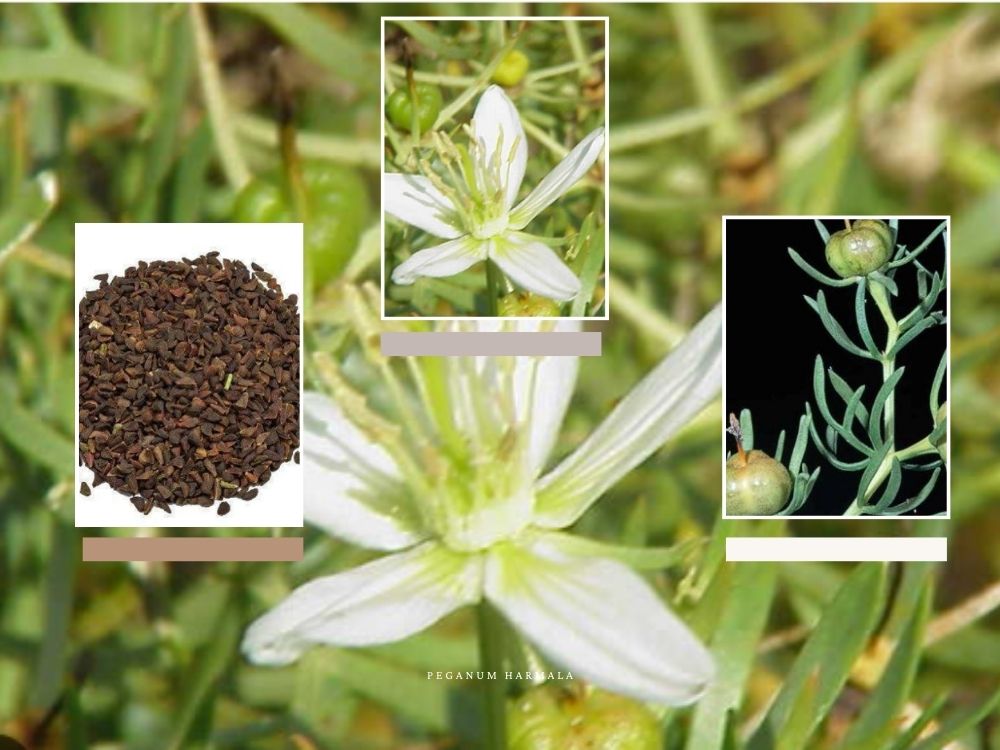
- A small shrub with multiple thick, leafy branches arising from the root
- Height: 30–90 cm (1–3 feet)
Leaves
- Bright green in color
- About 5 cm (2 inches) long
- Pointed and slightly rough or irregular at the edges
Flowers and Fruit
- Flowers develop into round capsules
- Each capsule has three compartments
- Contains small dark brown seeds
- Fruit size is similar to a gram seed
Seeds (Sokhtani Seeds)
The black seeds are known as Sokhtani seeds. When burned:
- They release a distinct aroma
- Produce smoke that may irritate the eyes
- Traditionally used for fumigation and fragrance
Chemical Composition
The plant contains important alkaloids and compounds, including:
- Harmine
- Harmaline
- Harmalol
- Essential oils
These compounds are responsible for its medicinal and neurological effects.
Temperament (Taseer)
- Hot (Grade III)
- Dry (Grade II)
Key Medicinal Properties
The spindle harmala is known for the following actions:
- Anthelmintic (kills intestinal worms)
- Blood purifier
- Expectorant (removes phlegm)
- Nervine stimulant
- Anti-inflammatory
- Deobstruent (removes blockages)
Top Health Benefits
1. spindle harmala for Respiratory Health
- Helps treat asthma and cough
- Clears mucus from the lungs
- Improves breathing
2. spindle harmala for Digestive Health
- Acts as a stomach cleanser
- Helps eliminate intestinal worms
- Improves digestion
3. spindle harmala for Blood Purification
- Cleanses the blood
- Supports detoxification
4. spindle harmala for Joint Pain and Swelling
- Reduces inflammation and swelling
- Useful in rheumatism
- Oil preparations help relieve joint pain and muscle aches
External Uses
1. Eye Care (Traditional Use)
- Paste made with saffron may help strengthen eyesight
2. Ear Treatment
- Seeds burned in sesame oil and used as drops may help:
- Earache
- Mild hearing problems
3. Swelling and Hard Lumps
- Paste made with gooseberry (amla) helps:
- Dissolve thick mucus
- Reduce hard swellings
Traditional Preparation Method
A traditional paste can be prepared as follows:
- Soak seeds in water for 10 minutes
- Heat gently for another 10 minutes
- Extract juice and make a paste
- Dry and repeat heating four times
This produces a potent medicinal paste.
Dosage (Converted to Modern Units)
- General dosage: 2 to 4 mashas ≈ 2–4 grams
- For rheumatism: 2–3 grams with warm milk, twice daily
- For menstrual support: small pills made with pulp and jaggery, taken morning and evening
Due to its potency, it should be used only under professional supervision.
Traditional Formulations
The spindle harmala is used in various herbal compounds, including:
- Hab Madar
- Sur Najani
- Hab Aspand
- Traditional formulations by herbal practitioners in Pakistan and India