



Introduction
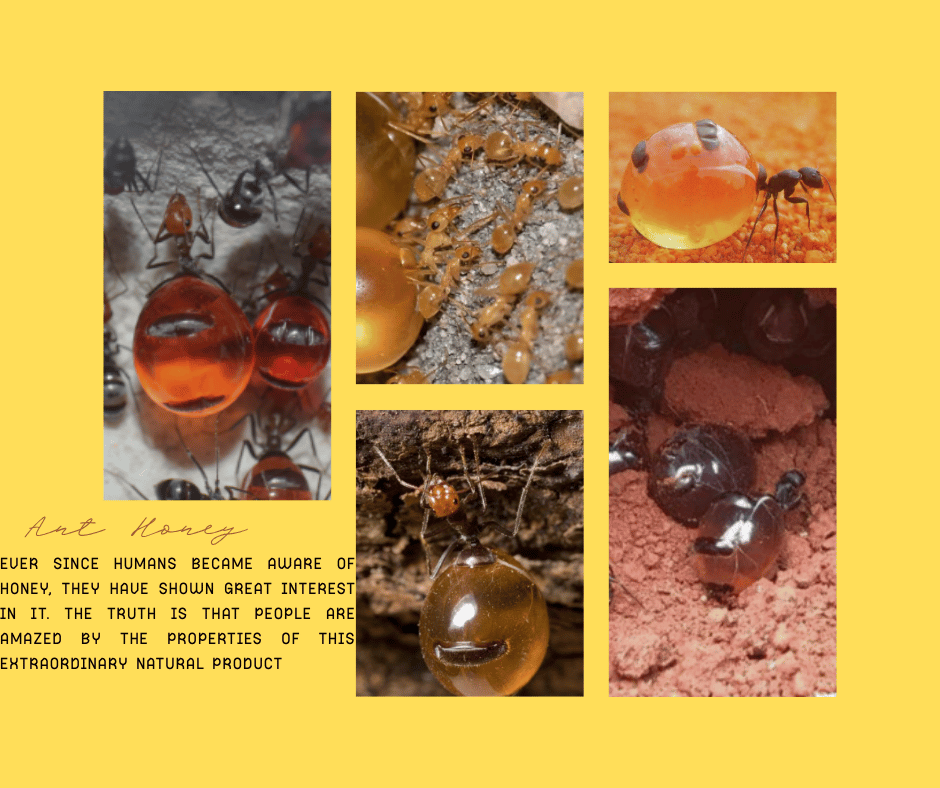
Ever since humans became aware of honey, they have shown great interest in it. The truth is that people are amazed by the properties of this extraordinary natural product. Books have been written about it, numerous experiments have been conducted, and many mythological traditions have been created around it. Information has been widely shared, and many stories have been told. However, whenever one of its secrets is revealed, a new perspective emerges—often more astonishing than before and entirely different from previous knowledge—making it difficult to confirm earlier beliefs. Whatever new discoveries come to light are carefully recorded.
Some of the most interesting traditions about honey were first discovered in Australia. Among the ancient inhabitants of Australia was a painter named Albert, some of whose paintings were even displayed in the palace of the Queen of Great Britain. However, when he abandoned his natural diet and began consuming white flour bread and sugar, his unique artistic abilities seemed to decline. He became extremely obese, reaching a weight of one hundred and twenty kilograms, and was eventually unable to even use his paintbrush.
In such a condition, only Allah knows what he was going through. Doctors and modern medical treatments failed to reduce his obesity. Deeply disappointed, he began to recall his past lifestyle with great intensity, and a strong sense of regret arose within him.
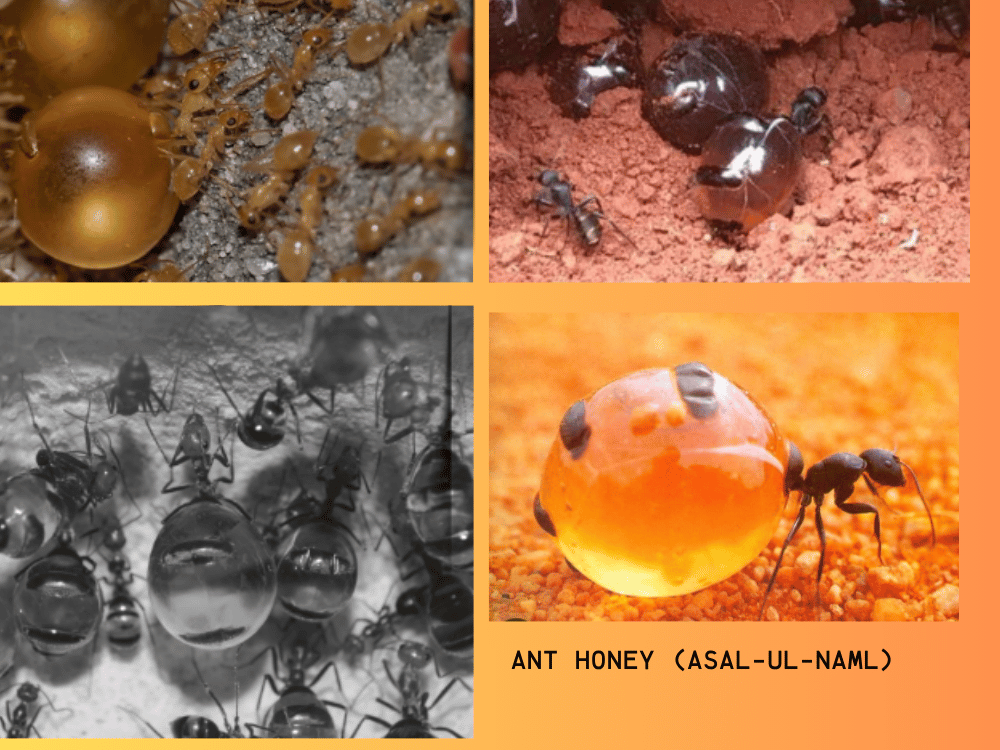
Eventually, he abandoned imported European foods and returned to his traditional diet—the same diet his ancestors had followed for generations. Surprisingly, this special food consisted of honey made from ants. This honey was not only a source of nutrition but also a powerful natural remedy. Albert Namatjira completely gave up European foods and began consuming several kilograms of ant honey daily, without eating anything else. Gradually, his excess weight decreased, his health improved, and he was once again able to paint.
Types of Honey
Due to seasonal variations and the diversity of plant life across different regions of the world, honey produced by bees varies significantly. Each region has its own unique plants, and the flowers and nectar of these plants possess distinct characteristics.
Bees collect nectar according to their environment, producing specific types of honey that are unique to their region and not commonly found elsewhere. Allah Almighty has blessed the earth with diverse climates and seasons and has endowed bees with the instinct to work efficiently according to these conditions. Among the hundreds of honey varieties found worldwide, some well-known types are described below.
Orange Blossom Honey
This transparent, golden honey has a slightly sour taste. It is produced in orange orchards of South Africa, Israel, Spain, and the United States. Due to its citrus origin, it naturally carries a mild tangy flavor. It is widely used in cooking and is especially valued in honey-based dishes.
Acacia Honey
This honey is very light and mild. It is ideal for sweetening both hot and cold beverages. One of its unique properties is that it does not crystallize easily and remains in liquid form for a long time, making it convenient to use.
Heather Honey
Heather honey is popular for its strong, woody flavor. It is usually available in a creamy form but becomes liquid when stirred. Its ease of use and distinctive taste make it highly preferred.
Eucalyptus Honey
Originating mainly from Australia, this thick honey comes in various types. Its appearance sometimes resembles peanut oil, although it is not oil. It has a rich quality and a flavor similar to milk toffee.
English Set Honey
As the name suggests, this honey originates from Britain. It naturally thickens and turns into a jam-like consistency over time. It is widely enjoyed and commonly used in England.
Manuka Honey
This is a rare and expensive type of honey produced in New Zealand. It is made by bees that feed exclusively on Manuka flowers. It is darker in color and is stored in dark glass containers to preserve its quality, aroma, and taste.
Cut Comb Honey
This is a unique form of honey that is taken directly from the hive in intact pieces and sold in its natural comb structure.
Clover Honey
Common in North America, clover honey is widely used by local people. It is yellow in color and has a slightly creamy thickness.
Honeycomb Honey
This is another popular form of honey, especially in America. It is delicate and soft, usually stored in wooden frames and sold in solid comb form. It is edible as a whole piece.
Nature and Temperament of Honey
Fresh honey is considered hot in the second degree and dry in the first degree. Slightly aged honey is hot and dry in the second degree, while very old honey becomes hot in the third degree. Light-colored and thin honey is less intense in heat, whereas raw honey is sharper and hotter in nature. Honey water (after removing foam) has reduced heat and sharpness but is considered more nutritious.
Honey Water (Honey Water)
It is also called honey water. In terms of taste, it is hot and slightly sour. Honey water is prepared in a simple way: it is placed on gentle heat and boiled until one-third of its water evaporates. After that, it is removed from the fire and used; this preparation is known as honey water.
If honey is boiled in a suitable liquid instead of plain water, it can produce very beneficial effects. Similarly, when honey is prepared by mixing certain herbs, it is called “mixed honey.” When honey is boiled in rose water, it is considered to have laxative properties (rose water preparation).
Honey water produces a warming sensation, acts as a laxative, expels thick and viscous secretions, opens the sinuses, and helps to loosen and expel dense mucus. It is particularly useful for conditions involving cold organs such as muscles, the brain, and diseases of the head. It is beneficial in joint pain, arthritis, and similar conditions.
It helps remove flatulence, prevents vomiting, and relieves cough. It is useful in lung congestion or edema and is suitable for individuals with a cold stomach temperament. It nourishes the body, increases appetite, and is helpful in colic. However, it must be properly boiled and the foam removed so that it does not produce excess phlegm in the stomach. It also reduces the harmful effects of poisonous medicines. If weakness is caused by excessive sexual activity, its use can help restore strength.
Purified Honey
Doctors generally use purified honey in the preparation of medicines, as it is considered more suitable for medicinal purposes. The method of preparation is as follows: a specific amount of honey is taken and subjected to a water bath, meaning it is gently heated using steam from hot water. When it becomes soft, it is filtered through a flannel cloth using hot water. The filtered product is called purified honey.
Refined Honey for External Use
This form of honey is also used by physicians and traditional healers, especially in ointments. The preparation method involves adding a small amount of soap to the honey and applying gentle heat. Special care is taken to ensure that the honey does not burn.
If water is not added, the foam that appears (which contains impurities) cannot be removed effectively. This foam is carefully skimmed off with a spoon until it stops forming. The honey is then removed from heat and allowed to cool. It is important not to overheat it, as burnt honey becomes unusable. Also, it should not be removed from heat until all excess water has evaporated.
Dry Honey (Dry Ginger Honey)
This type of honey is known as “dry ginger honey.” It is very dry in nature and has a strong aroma. It may appear in green, yellow, white, black, or red colors and is commonly found in the mountainous regions of Iran. In Tabaristan, it is known as Asp Dandan honey.
This honey is considered hot and dry in the second degree, although some physicians classify it as hot and dry in the fourth degree.
It has astringent properties, helps purify bodily substances, and reduces swelling. According to traditional healers, red honey is the strongest, green honey is very sharp in action, while black honey is considered less favorable and is no longer commonly used, as it may harm beneficial secretions.
Harms of Honey
Although honey has many benefits, it can also have harmful effects if misused. According to traditional medical opinions, mixing honey and ghee in equal quantities can be harmful, as this combination may become toxic.
Excessive consumption of honey is not suitable for individuals with a hot temperament. For example, if a young person with a naturally hot body constitution consumes too much honey daily, it may dry the blood and cause a yellowish discoloration of the face (jaundice-like symptoms). Therefore, moderation in its use is always recommended.