



Introduction (Nature)
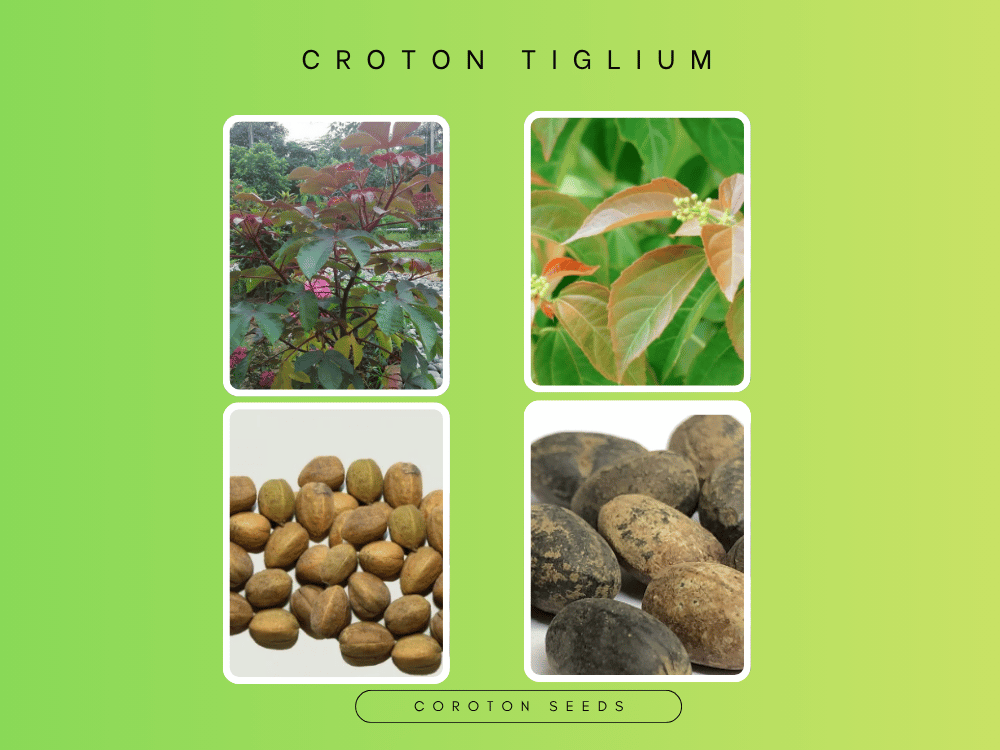
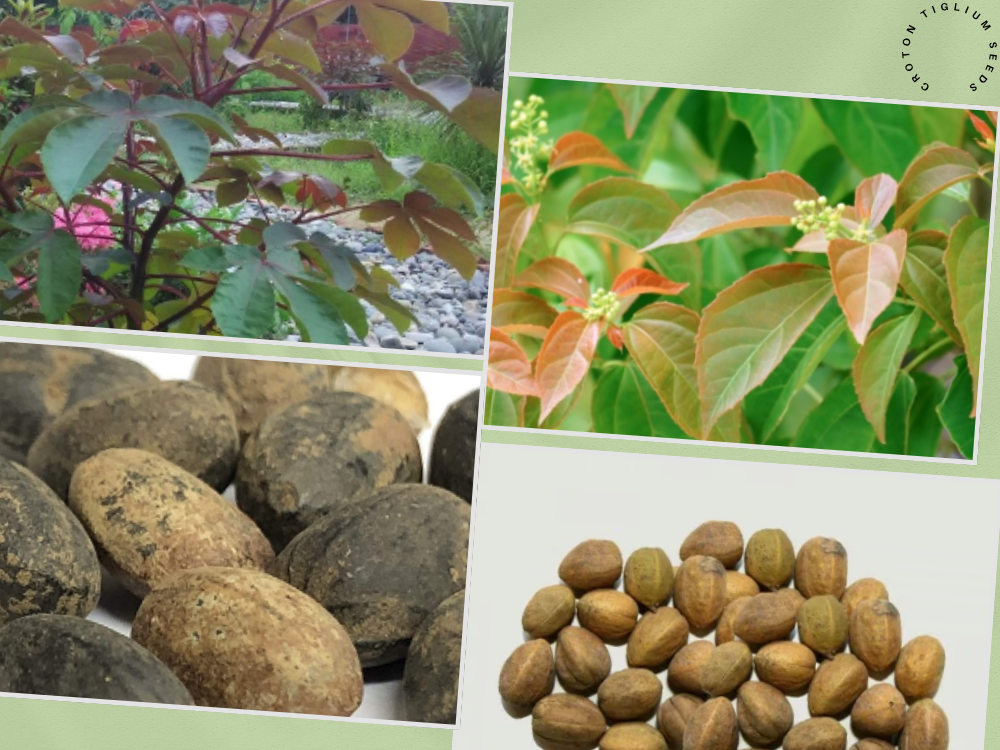
Croton tiglium, commonly known as Jamal Gota, is a tree that grows to a height of about fifteen to twenty feet. Its leaves resemble eggplant leaves in shape but are thinner, shiny, and approximately one and a half inches long, with a somewhat rounded form.
Flowers
The flowers appear in summer. They are yellowish-green or sometimes yellowish-white and have fine hairs on them. They grow in spike-like clusters resembling an ear shape.
Fruit
The fruit is in the form of a pod, similar to that of the castor plant.
Seeds
The seeds are oval and somewhat rounded, measuring about half an inch in length. Their color is brownish-black. Each fruit contains three seeds, which are initially green but turn black when ripe.
Inside each seed, there are two kernels separated by a small, snake-like structure, which is considered poisonous and must be removed by crushing. Good-quality seeds are white and thick, while older seeds turn yellow or black.
The oil extracted from the seeds is used in allopathic medicine and is known as Croton oil (Oleum Tiglii).
Place of Origin
It is widely found throughout the subcontinent, especially in East Bengal, Assam, Sri Lanka, China, the Indian Archipelago, and the Malabar Coast.
Types
There are three main types:
- Chinese (Khatai)
- Hindi
- A third local variety
Among these, Chinese and Hindi types are considered better, although their taste is unpleasant and often considered unsuitable.
Chemical Constituents
Croton tiglium contains the following:
- Tiglinic acid
- Crotonic acid
- Methyl crotonic acid
These compounds are strong irritants. Although not always directly poisonous, they can cause severe skin irritation and blistering upon contact.
Temperament
Hot and dry in the fourth degree.
Actions
- Strong laxative
- Vesicant (blister-forming)
- Irritant
Uses
It is used as a powerful laxative in conditions such as the following:
- Arthritis
- Phlegmatic disorders
- Asthma
- Syphilis
- Leprosy
External Uses
Externally, it is applied for:
- Ringworm
- Baldness
- Leprosy
- Joint pain
- Arthritis
- Syphilitic conditions
Important Note (Toxicity)
Improper use can cause the following:
- Severe vomiting
- Diarrhea (sometimes bloody)
Treatment for toxicity:
- Administer yogurt
- Or give milk mixed with egg white
It is believed to:
- Help expel harmful substances
- Open blocked channels
- Reduce mucus in conditions like gout and back pain
The root is also used to kill intestinal worms and aid digestion.
Traditional Preparation
A traditional preparation includes:
- Jamal Gota (20 pieces)
- Black seeds
- Turmeric
- Rhubarb and sugar (approximately one gram each)
These are finely ground, sieved, and mixed to form small pills about the size of a moong dal.
Dosage
- Tablets: 4 to 8 tablets
- Powder: 0.1215 grams or 0.06075 grams
- Oil: Half a drop to one drop
If diarrhea becomes severe, buttermilk or rose water should be given.