



Introduction (Nature)
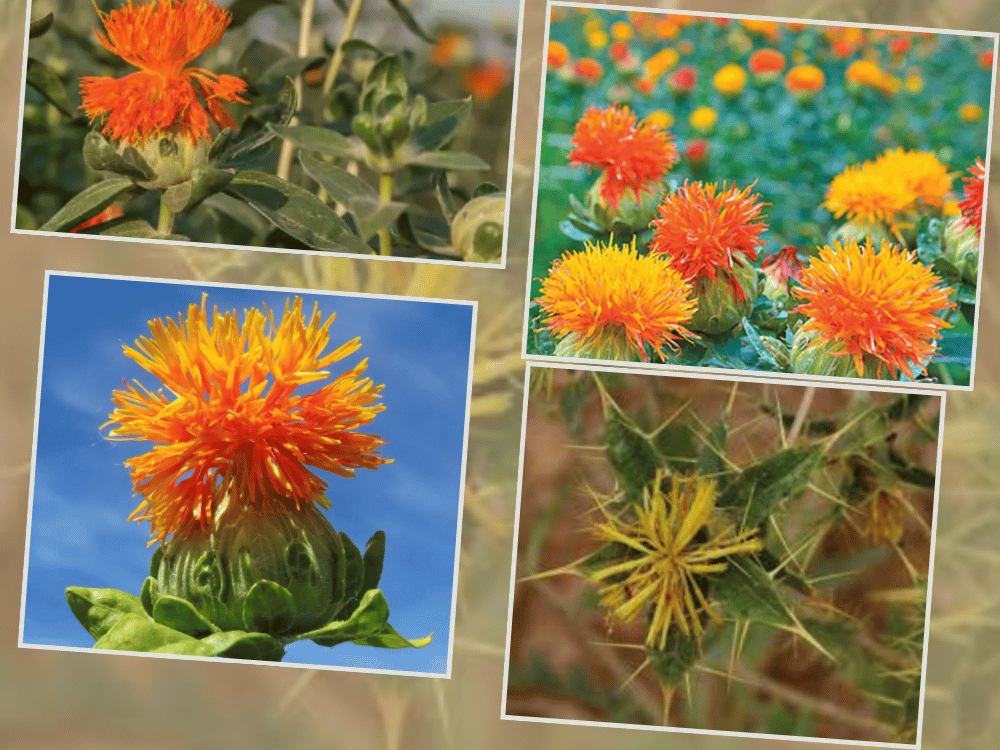
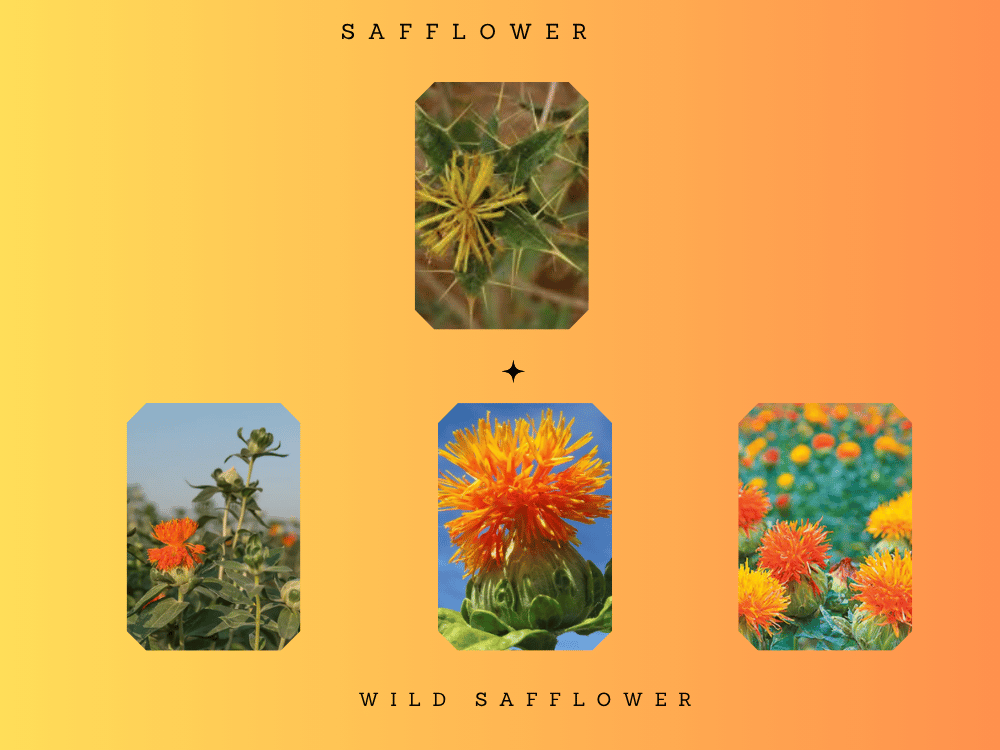
Safflower is of two types:
- One with thorns, having light red flowers
- The other without thorns, with dark saffron or red-colored flowers, considered superior
Its potency is said to last for up to three years. The plant grows to about four feet in height, with thin, whitish stems.
Leaves
The leaves are long and green, with whitish, serrated, and prickly edges.
Flowers
The flowers bloom in the winter season at the ends of stems or branches. They are light to dark red in color, slightly fragrant, and resemble saffron in appearance. Due to this similarity, it is sometimes called “village saffron” (wild saffron) and may even be mixed with true saffron.
In the past, safflower was widely cultivated for its dye. However, due to the development of duller colors, its use in textile dyeing has declined.
The plant produces large, pointed, thorny buds that develop into flowers. These flowers later produce small, white, edgeless seeds, from which oil is extracted.
Safflower is cultivated in regions such as Hyderabad and the Deccan for oil production. In some districts of Punjab and Uttar Pradesh, it is also grown as fodder for cattle, and it is believed to enhance the color of cow’s milk.
Chemical Constituents
Safflower contains:
- Carthamin (a water-soluble red dye)
- Yellow coloring matter
- Cellulose
- Mineral elements (including iron and manganese)
- Non-volatile oil (approximately 30%)
Temperament
Hot in the second degree and dry in the first degree.
Actions
- Tonic
- Aphrodisiac (sperm-producing)
- Expectorant
- Mild purgative
- Soothing
Uses
Safflower is used in various conditions, including:
- Phlegmatic disorders
- Cough (helps expel phlegm through the mouth)
- Dysentery and diarrhea
- Colic
Due to its expectorant properties, it is especially beneficial for elderly patients with phlegmatic conditions when taken with honey or sugar.
It is also useful for:
- Stomach disorders
- Jaundice
- Blood-related diseases
- Liver disorders
- Melancholy (when used with appropriate medicines)
Additionally, it helps:
- Improve voice quality
- Clear the throat
- Relieve hoarseness
Additional Benefits
- Acts as a diuretic
- Used in formulations to regulate menstruation
- Included in Majoon preparations for enhancing semen production
Special Benefit
Diuretic effect.
Dosage
Five to seven grams.
Other Uses
Safflower oil is used as edible oil, particularly in Hyderabad.
Traditional Formulations
- Majoon Chob Sugar (special preparation)
- Arq Ma’al Alham Ghabri (according to Kalan’s formulation)
- Yellowish potion
- Majoon Marwah al-Rawah
- Majoon Qurtum