



Introduction
Pistachio (Pistacia vera) is a well-known fruit tree valued for its delicious kernels and significant medicinal properties. In traditional medicine, both the kernel and other parts of the plant, such as its flowers and outer shell, are used for therapeutic purposes. It is especially appreciated for its nourishing and heart-strengthening qualities.
Plant Description
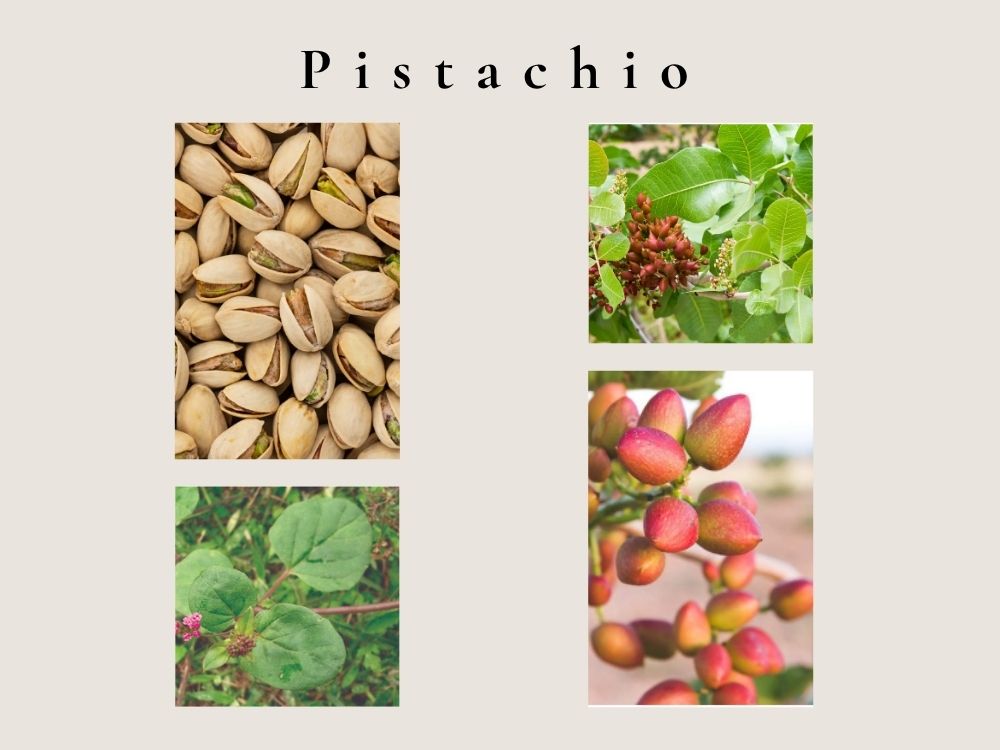
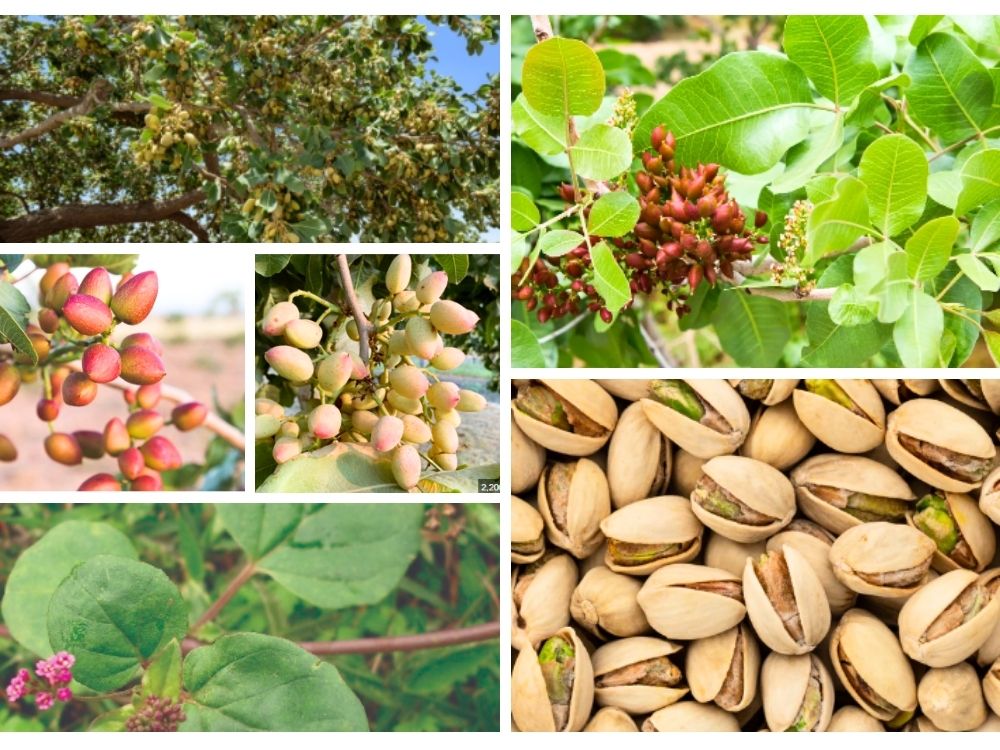
The pistachio tree is a medium-sized plant known for producing edible seeds (kernels). An interesting feature of the tree is the formation of gall-like structures on its leaves, often referred to as “pistachio flowers.” These are formed due to insect activity and appear as follows:
- Pink on one side
- Yellowish-white on the other
These structures are also used in traditional medicine.
Fruit and Kernel
Fruit Structure
The pistachio fruit is
- Rounded to oval in shape
- Covered with a hard, whitish outer shell
- Inside the shell lies the edible green kernel
The kernel is coated with a thin, light covering and is highly nutritious and (delicious).
Chemical Composition
Pistachio kernels and flowers contain important active compounds:
- Non-volatile aromatic oil (pleasant and fragrant)
- Oleoresin (about 70%), giving it a rich, fatty nature
- Gallotannic acid (about 40%) in the flowers, contributing to astringent properties
Temperament
Kernel
- Warm and dry (second degree)
Outer Shell
- Cold and dry (second degree)
Medicinal Properties
Kernel
- Nutritive tonic
- Cardiotonic (strengthens the heart)
- Body-building (promotes weight gain)
- Mild expectorant (relieves cough)
Outer Shell
- Astringent
- Stomachic (strengthens the stomach)
- Anti-diarrheal
- Anti-emetic (relieves vomiting)
Health Benefits
Heart and Brain Tonic
Pistachio kernels are widely used as a tonic for the heart and mind. They are often included in traditional preparations such as halwa and majoon to strengthen cardiac function and improve overall vitality.
Nutritional Support and Weight Gain
Due to their rich oil and fat content, pistachios:
- Help in healthy weight gain
- Provide energy and nourishment
- Strengthen weak individuals
Respiratory Health
The gall-like “pistachio flowers” are traditionally used for the following:
- Relief from cough
- Soothing respiratory irritation
Digestive Health (Outer Shell)
The outer shell of pistachios is beneficial for:
- Diarrhea
- Vomiting
- Weak digestion
Its astringent nature helps:
- Strengthen the intestines
- Reduce excessive bowel movements
Oral and Gastrointestinal Use
- Finely ground shell powder can be sprinkled in the mouth for oral benefits
- It may also be mixed with syrup and taken orally for digestive issues
Special Benefits
- Kernel: Strengthens the heart and brain
- Outer Shell: Effective in diarrhea and digestive disorders
Substitute
- Almond kernel (badam) is commonly used as a substitute for pistachio in traditional medicine.
Dosage
Kernel
- Approximately (about 10–12 grams)
Outer Shell
- 3 to 5 grams
Compound Preparations
Pistachios and their parts are used in several traditional formulations, including:
- Labub al-Asrar
- Labub al-Sagheer and Kabir
- Mufarah Dilkash
- Mufarah Mousavi
- Majoon Sangdanah
- Murgh Majoon Kalan
- Various ointments such as:
- Thalab ointment
- Maruh al-Arwah ointment
- Alvi Khan ointment