



Introduction
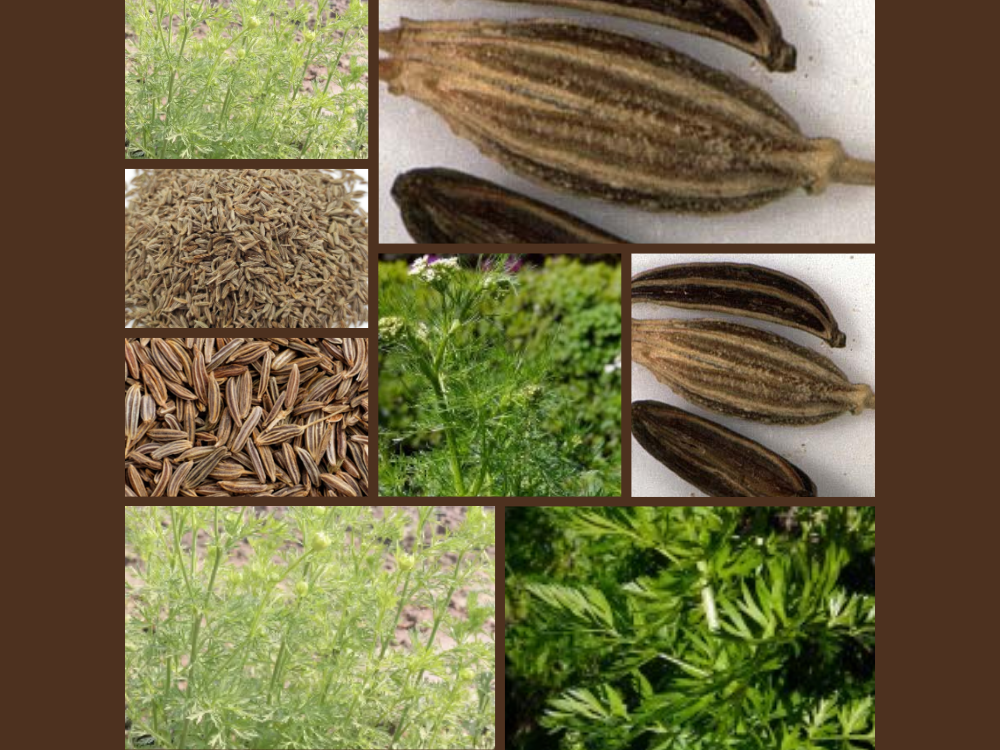
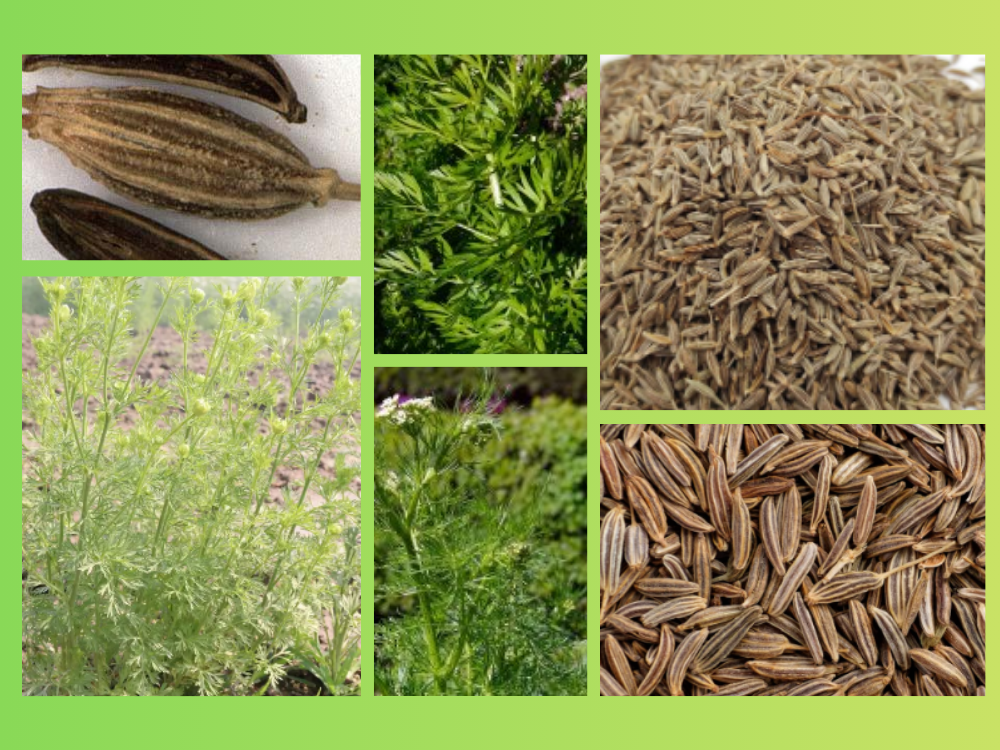
Cuminum cyminum is a plant that grows about one to three feet high. It resembles fennel and celery plants. Its branches are thin, and its leaves are long and slender, similar to fennel leaves.
The plant flowers in winter, producing yellowish-white flowers arranged in clusters. Later, seeds develop in these clusters and are separated when they become fully ripe. The seeds are small and white to brown in color and are commonly used as a component of hot spices.
Cumin is generally cultivated in Rajasthan, Uttar Pradesh, and Punjab. It is also found in Bengal and Assam.
Types
There are four types:
- Syrian
- Persian
- Kermani
- Nabati
They are also described according to their color as black, yellow, and white varieties.
Chemical Components
Cumin contains approximately:
- 3.5% to 5.5% volatile oil, which contributes to its aroma and flavor
- 10% to 12% non-volatile oil
- 6% to 7% pentosan
- Protein
- Other components
Temperament
Hot in the second degree and dry in the third degree.
Actions
Externally:
- Drying
- Astringent
- Retentive
Internally:
- Tonic
- Expectorant
- Stomachic
- Diuretic
- Retentive
The remaining therapeutic actions in the source appear repetitive or unclear. The next useful step would be to provide the Uses, Special Benefits, and Dosage section if you have it, so the article can be completed in the same format.