



Introduction
The kidneys are two bean-shaped organs located on either side of the spine, toward the back of the abdomen. Their main functions are to:
- Filter waste products from the blood.
- Remove excess water to produce urine.
- Maintain the body’s balance of electrolytes (such as sodium and potassium).
- Help regulate blood pressure.
- Produce hormones involved in red blood cell production and bone health.
Urine formed in the kidneys travels through two tubes called ureters to the urinary bladder, where it is stored until it is passed through the urethra.
Blood Filtration
The kidneys continuously filter the blood and remove waste products, including:
- Urea, produced during protein metabolism.
- Creatinine, produced by normal muscle activity.
- Uric acid, produced during the breakdown of purines.
Most proteins, including albumin, are normally retained in the bloodstream. If albumin appears in the urine (albuminuria), it may indicate kidney damage and should be medically evaluated.
Kidney Stones
Kidney stones are hard deposits that form when certain minerals and salts become concentrated in urine.
Common types include:
- Calcium oxalate stones (the most common)
- Uric acid stones
- Struvite stones
- Cystine stones
Symptoms may include:
- Severe pain in the side or back (renal colic)
- Pain radiating to the groin
- Blood in the urine
- Nausea and vomiting
- Frequent or painful urination
Small stones may pass naturally, while larger stones sometimes require medications or medical procedures.
Hydration
Adequate hydration is one of the most effective ways to reduce the risk of kidney stones. For most healthy adults, drinking enough fluids to produce at least 2 liters of urine daily is often recommended for stone prevention, although individual needs vary.
The passage claims that drinking water with meals dilutes digestive juices and should be avoided. Current scientific evidence does not support this claim. Drinking water during meals does not significantly impair digestion in healthy people.
Diet and Kidney Health
Maintaining kidney health generally includes:
- Staying well hydrated.
- Eating a balanced diet.
- Limiting excessive salt intake.
- Maintaining a healthy weight.
- Exercising regularly.
- Controlling blood pressure and diabetes.
- Avoiding smoking.
- Using medications such as NSAID pain relievers only as directed, especially if kidney disease is present.
Alcohol
Heavy alcohol consumption can contribute to dehydration and increase the risk of several health problems. However, the statement that alcohol is simply “poison for the kidneys” is an oversimplification. Excessive or chronic alcohol use can indirectly damage kidney health, but moderate alcohol consumption affects people differently and is not the sole cause of kidney disease.
Watermelon
Watermelon contains:
- A high percentage of water.
- Potassium.
- Vitamin C.
- Lycopene.
Because of its high water content, watermelon can contribute to hydration. However, there is no strong scientific evidence that regularly eating watermelon prevents kidney stones or all kidney and bladder diseases.
People with advanced kidney disease may need to limit high-potassium foods, including watermelon, depending on their healthcare provider’s advice.
Honey and Kidney Health
Honey contains natural sugars, antioxidants, and small amounts of vitamins and minerals.
Research suggests that honey has antioxidant and anti-inflammatory properties, but there is no strong clinical evidence that honey treats kidney stones, kidney infections, or chronic kidney disease in humans.
Honey may be included as part of a balanced diet, but it should not be considered a treatment for kidney disorders.
When to Seek Medical Care
Medical evaluation is important if you experience:
- Severe pain in the back, side, or groin.
- Blood in the urine.
- Fever or chills with urinary symptoms.
- Painful or frequent urination.
- Persistent vomiting.
- Reduced urine output.
- Swelling of the legs or face.
Kidney Pain
Kidney pain may be caused by:
- Kidney stones
- Urinary tract infection (UTI)
- Kidney infection (pyelonephritis)
- Urinary obstruction
- Kidney injury
- Other kidney diseases
Because the causes differ, treatment depends on the underlying condition.
Honey and Ghee (or Animal Fat)
The passage recommends a mixture of honey with animal fat (likely clarified butter or another animal fat).
There is no clinical evidence that this mixture:
- Cleanses the kidneys.
- Dissolves kidney stones.
- Improves urine flow.
- Treats kidney disease.
Difficulty Passing Urine
Difficulty urinating can have many causes, including:
- Enlarged prostate
- Urinary tract infection
- Kidney or bladder stones
- Certain medications
- Neurological disorders
The honey-and-sugar syrup described in the passage has not been shown to relieve urinary obstruction. Acute inability to pass urine is a medical emergency and requires prompt evaluation.
Kidney Stones
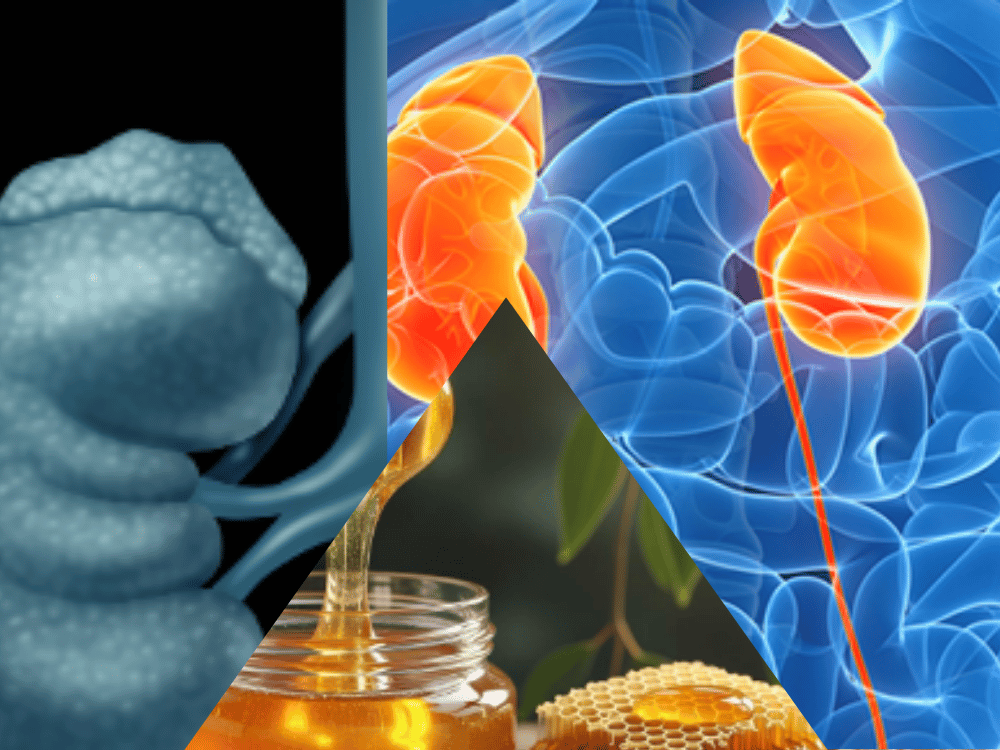
The text claims that honey mixed with herbs and followed by a herbal syrup will dissolve kidney stones.
Current evidence does not support this claim.
Treatment depends on:
- The size of the stone.
- Its location.
- Its chemical composition.
Small stones often pass naturally with hydration and pain control. Larger stones may require medications or procedures such as shock wave lithotripsy or endoscopic removal.
Walnuts and Honey
Walnuts are nutritious and provide:
- Healthy unsaturated fats
- Protein
- Fiber
- Antioxidants
Honey provides carbohydrates and small amounts of antioxidants.
Although this mixture may be a nutritious food, there is no evidence that it strengthens the kidneys or treats kidney disease.
Black Pepper and Honey
The traditional preparation using black pepper and honey is claimed to dissolve kidney stones.
There is no reliable clinical evidence that black pepper or honey dissolves kidney stones.
In fact, consuming large amounts of black pepper may irritate the digestive tract and may interact with certain medications.
Evidence-Based Prevention of Kidney Stones
To reduce the risk of kidney stones, healthcare professionals commonly recommend:
- Drinking enough fluids to produce at least 2 liters of urine daily, unless otherwise advised.
- Limiting excess salt intake.
- Eating adequate (but not excessive) dietary calcium.
- Limiting excessive animal protein if appropriate.
- Reducing foods high in oxalate if you have calcium oxalate stones and your healthcare provider recommends it.
- Maintaining a healthy weight.
The best prevention strategy depends on the type of stone and may require urine and blood tests.
“Kidney Weakness”
The term “kidney weakness” is not a diagnosis used in modern medicine. Symptoms described by traditional medicine may correspond to different conditions, including:
- Chronic kidney disease
- Urinary tract disorders
- Bladder dysfunction
- Bedwetting (nocturnal enuresis)
- General fatigue from unrelated causes
Treatment depends on identifying the underlying cause.
Black Cumin, Amla, and Honey
This mixture contains:
- Black cumin (Nigella sativa)
- Amla (Indian gooseberry)
- Honey
These foods contain antioxidants and have been studied for various health effects. However:
- There is no convincing evidence that they strengthen the kidneys.
- They have not been proven to treat chronic kidney disease.
- There is no evidence that they cure bedwetting by strengthening the kidneys or bladder.
Bedwetting in children often improves naturally with age. Persistent bedwetting should be evaluated by a healthcare professional to identify possible causes and discuss appropriate treatment.
Honey and Herbal Powder for Kidney Pain
The ingredients listed cannot all be confidently identified because of translation issues.
There is no scientific evidence that rubbing or taking this mixture treats kidney pain or kidney disease.
Kidney pain requires medical evaluation because it may result from:
- Kidney stones
- Kidney infection
- Urinary obstruction
- Other kidney disorders
Milk and Honey for Kidney Stones
The passage recommends drinking milk mixed with honey.
There is no evidence that this dissolves kidney stones.
In fact, current evidence suggests that normal dietary calcium from foods such as milk may help reduce the risk of certain kidney stones, whereas excessive calcium supplements may increase risk in some individuals. The effect depends on the type of stone and individual health factors.
Star Anise and Honey
Star anise and honey have not been shown to dissolve kidney stones or eliminate kidney odors.
There is also no recognized medical condition in which “kidney odor” is treated by this mixture.
Walnut and Watermelon Seeds
Walnuts and watermelon seeds provide:
- Healthy fats
- Protein
- Vitamins
- Minerals
However, there is no medical condition called “fat in the kidneys” that is treated by eating these foods.
Fat accumulation in the kidneys can occur in some medical conditions, but it is not treated with walnut and watermelon seed mixtures.
Pistachios and Honey
Pistachios are nutritious, but there is no evidence that pistachios with honey:
- Strengthen the kidneys.
- Improve bladder control.
- Increase the ability to hold urine.
Coconut and Honey
The claim that coconut mixed with honey dissolves kidney stones is not supported by scientific evidence.
Drinking enough fluids is one of the most effective measures to help prevent kidney stones and may help small stones pass naturally, but coconut and honey themselves have not been shown to dissolve stones.
Star Anise Tea with Honey
This drink may be pleasant and soothing, but there is no evidence that it relieves kidney pain caused by kidney stones or kidney disease.
If kidney pain is due to a stone, infection, or obstruction, appropriate medical treatment is needed.
Evidence-Based Kidney Stone Prevention
To reduce the risk of kidney stones, healthcare professionals commonly recommend:
- Drinking enough fluids to produce at least 2 liters of urine per day, unless advised otherwise.
- Limiting excess salt intake.
- Maintaining a balanced diet with adequate calcium from food.
- Limiting excessive animal protein if appropriate.
- Following individualized dietary advice based on the type of stone.