




Introduction
Our skin is one of the most important organs of the human body. It is not only responsible for our appearance but also plays a vital role in protecting us from the external environment. People of all ages care about their skin, and many, especially women, devote considerable attention to maintaining healthy and beautiful skin. Skin comes in different complexions, including fair, wheatish, tan, and dark, each of which is natural and unique.
The Skin: The Body’s Protective Covering
The skin is the outer covering of the entire body. It protects the muscles, bones, blood vessels, nerves, and internal organs from injury, harmful microorganisms, and environmental damage. As the body’s largest organ, the skin acts as a natural barrier against dust, germs, chemicals, and harmful ultraviolet (UV) rays from the sun.
The Sense of Touch
The skin is the organ responsible for the sense of touch. Millions of sensory nerve endings present in the skin detect pressure, temperature, pain, vibration, and texture. Whenever an object touches the body, these nerve endings send signals to the brain, allowing us to react immediately.
Different parts of the body have varying levels of sensitivity. The lips and fingertips are among the most sensitive areas because they contain a high concentration of nerve endings. In contrast, the back, arms, and soles of the feet are generally less sensitive to light touch.
Skin Sensations
Besides the sense of touch, the skin allows us to distinguish between:
- Hot and cold temperatures
- Smooth and rough surfaces
- Soft and hard objects
- Gentle pressure and pain
When the skin is injured by a cut, blister, or burn, the exposed nerve endings become extremely sensitive. As a result, even mild substances such as salt or certain chemicals can cause pain or irritation.
Sweat and Body Temperature
One of the skin’s most important functions is regulating body temperature. Sweat glands produce sweat, which evaporates from the skin’s surface and helps cool the body during hot weather or physical activity.
Sweating also removes small amounts of waste products from the body, although the kidneys and liver perform the primary role of eliminating toxins.
Absorption Through the Skin
The skin acts as a protective barrier, allowing only a limited number of substances to pass through it. Certain medicines can be absorbed through the skin using medicated creams, ointments, and transdermal patches. These medicines gradually enter the bloodstream and provide effective treatment for various conditions.
Some medicines are administered through subcutaneous injections, which are given just beneath the skin. The medicine is then absorbed into the bloodstream, producing its therapeutic effects.
Structure of the Skin
The skin is made up of three main layers:
Epidermis
The epidermis is the outermost layer of the skin. It consists mainly of flattened, dead cells that are continuously shed and replaced by new cells produced beneath them. This layer forms a strong protective barrier against injury, infection, and water loss.
Dermis
The dermis lies beneath the epidermis and contains blood vessels, nerves, sweat glands, oil glands, and hair follicles. It provides strength, elasticity, and nourishment to the skin.
Hypodermis (Subcutaneous Layer)
The deepest layer, known as the hypodermis or subcutaneous tissue, contains fat and connective tissue. It helps insulate the body, stores energy, and cushions internal organs from physical injury.
Skin Pores and Sweat Glands
Tiny openings called pores are visible on the skin’s surface. These pores are the openings of sweat glands, which release sweat to regulate body temperature. Healthy pores also help maintain normal skin function.
Importance of Healthy Skin
Healthy skin performs many essential functions. It:
- Protects the body from injury and infection.
- Regulates body temperature.
- Provides the sense of touch.
- Prevents excessive loss of water.
- Helps maintain overall health and well-being.
Maintaining healthy skin requires a balanced diet, adequate hydration, regular cleansing, sun protection, sufficient sleep, and proper skincare.
Honey and Skin Care
Honey has been used as a natural skincare remedy for centuries. It is known for its moisturizing, antibacterial, and antioxidant properties. Honey helps keep the skin soft, supports wound healing, and may reduce the growth of certain bacteria on the skin. It is commonly used in face masks, cleansers, and moisturizers to improve skin hydration and promote a healthy complexion.
Skin Structure and Common Skin Disorders
The Deeper Layer of the Skin
The second, or deeper, layer of the skin is composed of connective tissue containing collagen and elastic fibres. Within this layer is a network of tiny blood vessels, lymphatic vessels, and numerous nerve endings. Sweat glands, sebaceous (oil) glands, and hair follicles are also located here.
The lymphatic vessels help support the body’s immune system by trapping and filtering harmful microorganisms and foreign particles that enter the skin. Meanwhile, the nerve endings continuously send information to the brain about touch, pressure, temperature, and pain. The sensation of pain serves as a protective warning, alerting us to injury or potential harm.
Sebaceous and Sweat Glands
Sebaceous glands produce an oily substance called sebum, which travels through tiny ducts to the skin’s surface. Sebum keeps the skin soft, supple, and moisturized while helping to prevent excessive dryness.
Sweat glands release sweat through microscopic pores in the skin. As sweat evaporates, it cools the body and helps regulate body temperature. Sweating also removes small amounts of waste products from the body.
Healing of the Skin
The skin has a remarkable ability to repair itself. Minor cuts, scratches, and wounds usually heal naturally as new skin cells are produced and surrounding tissues regenerate.
When a large area of skin is severely damaged, such as in major burns, a skin graft may be required. In this procedure, healthy skin is taken from another part of the body—commonly the thigh—and transplanted to cover the injured area.
Because it forms the body’s outermost barrier, the skin is the first line of defence against injury, infection, and environmental hazards.
Skin Rashes
Traditional medical texts describe a skin condition characterized by red, itchy patches that may appear after digestive disturbances or certain foods. The rash may be accompanied by swelling of the face, hands, or feet and intense itching.
According to traditional Unani medicine, this condition is associated with digestive and liver disorders. Modern medicine, however, recognizes that similar symptoms may result from allergic reactions, urticaria (hives), food allergies, infections, or other medical conditions. Anyone experiencing persistent or severe skin rashes should consult a qualified healthcare professional.
Traditional Unani Remedy for Skin Rash
Ingredients
- Atrifal Million – 7 masha
- Dried mint – 6 masha
- Star anise – 12 tolas
- Pure honey – 4 tolas
- Mint powder – 3 masha
- Vinegar – 1 tola
- Rose water – 5 tolas
Preparation
Boil the dried mint with star anise in water and strain the liquid. Add the vinegar and rose water to the strained mixture, stir thoroughly, and store it in a clean glass bottle.
Traditional Method of Use
Traditionally, Atrifal Million is taken in the morning, followed after some time by the prepared herbal drink mixed with honey. This remedy is traditionally continued for three days.
Afterward, traditional practitioners recommend taking Jawarish Kamooni with mint powder and pure honey in the morning and evening. Mint powder is also traditionally taken after meals, while the affected areas are massaged with the vinegar and rose water mixture.
Dietary Advice
Traditional Unani practitioners recommend avoiding:
- Sweets
- Meat
- Poultry
Instead, a light diet such as khichdi is traditionally advised during treatment.
Note: These remedies belong to traditional Unani medicine and have not been conclusively proven by modern scientific research. Medical advice should be sought for persistent or severe symptoms.
Traditional Remedy for Scabies
Scabies is a contagious skin infestation caused by tiny mites. Modern treatment usually involves prescription medications that kill the mites. The following preparation is a traditional Unani remedy.
Ingredients
- Shahatra – 7 masha
- Chiraita – 7 masha
- Sarpunkha – 7 masha
- Mundi – 7 masha
- Cloves – 5 pieces
- Black Halila – 1 tola
- Red Sandalwood – 7 masha
- Pure honey – 4 tolas
Preparation
Place all the herbal ingredients except the honey into a clean vessel. Add enough lukewarm water to completely immerse the herbs. Leave the mixture outdoors in the moonlight overnight.
The following morning, squeeze and strain the herbs to obtain the liquid extract. Mix the extract thoroughly with pure honey and store it in a clean bottle.
Traditional Method of Use
According to traditional practice, one tola of the preparation is taken three times daily.
Traditional Unani practitioners believe that this preparation helps purify the blood and relieve symptoms of scabies.
Traditional Unani Remedies for Common Skin Conditions
Traditional Ointment for Scabies
Scabies is a contagious skin infestation caused by microscopic mites. Modern treatment requires prescription medicines that kill the mites. The following preparation is a traditional Unani remedy.
Ingredients
- Majoon Ishba – 7 masha
- Arq Ishba – 8 tolas
- Nabat Safed – 2 tolas
- Rogan Chambeli (Jasmine Oil) – 2 tolas
- Fresh lemon juice – 1 tola
Preparation and Traditional Use
Traditionally, Majoon Ishba, Nabat Safed, and Arq Ishba are taken in the late afternoon. Lemon juice is mixed with Rogan Chambeli, and the mixture is gently massaged onto the affected areas of the skin. According to traditional practice, regular use helps relieve itching over several days.
Medical Note: Scabies requires appropriate medical treatment to eliminate the mites. Anyone with persistent itching or a spreading rash should consult a qualified healthcare professional.
Traditional Remedy for Itchy Skin
Persistent itching may result from allergies, eczema, infections, dry skin, or other medical conditions. Traditional Unani medicine attributes many cases of itching to impurities in the blood or digestive disturbances.
Herbal Drink (Morning)
Ingredients
- Lemon peel – 1
- Shahatra – 7 masha
- Chiraita – 7 masha
- Sarpunkha – 7 masha
- Mundi – 7 masha
- Cloves – 5 pieces
- Black Halila – 7 masha
- Red Sandalwood – 7 masha
- Arq Ma-ul-Jabain – 3 tolas
- Arq Sheer – 10 tolas
- Pure honey – 2 tolas
Preparation
Place all the ingredients except the honey into a clean vessel and leave them overnight. In the morning, crush and strain the mixture thoroughly, then mix it with honey before drinking.
Evening Herbal Tonic
Ingredients
- Majoon Ishba – 1 tola
- Arq Ma-ul-Jabain – 6 tolas
- Arq Sheer – 6 tolas
- Pure honey – 2 tolas
Preparation
Mix all the ingredients thoroughly and consume the preparation in the evening.
Traditional External Ointment
Ingredients
- Kamila – 6 masha
- Dead Stone (traditional ingredient) – 6 masha
- Sulphur – 6 masha
- Blue Vitriol (traditional ingredient) – 6 masha
- Rogan Zard – 1 tola
Preparation
Traditionally, Rogan Zard is washed in water twenty-one times before use. The remaining ingredients are finely ground and mixed thoroughly to prepare an ointment.
Method of Use
Apply the ointment evenly over the affected areas of the body and sit in sunlight for approximately one hour. Afterwards, bathe with warm water. Traditional practitioners recommend repeating this process daily for three weeks.
Medical Note: Some traditional ingredients, such as sulphur and blue vitriol, may irritate the skin or be unsafe if improperly prepared. They should only be used under the guidance of a qualified practitioner.
Acne (Pimples)
Description
Acne is one of the most common skin conditions, especially during adolescence. It occurs when hair follicles become blocked with oil (sebum), dead skin cells, and bacteria. Acne may appear as blackheads, whiteheads, pimples, or painful cysts.
Many people use cosmetic creams without addressing the underlying causes, which may include hormonal changes, excess oil production, genetics, or inflammation. Squeezing pimples can lead to infection, scarring, and permanent blemishes.
Traditional Unani medicine considers acne to be associated with impurities in the blood and digestive disturbances. Honey has long been valued in traditional medicine for its soothing and moisturizing properties.
Traditional Honey Remedy for Acne
Ingredients
- Atrifal Shahatra – 1 tola
- Sapistan (traditional ingredient) – 3 tolas
- Sheer Anab (Jujube) – 5 pieces
- Arq (herbal distillate) – 12 tolas
- Pure honey – 2 tolas
Preparation
Mix all the herbal ingredients except the honey into a smooth paste.
Traditional Method of Use
Take one tola of the prepared herbal mixture with honey every morning and evening.
For external application, apply a thin layer of pure honey to the face before bedtime or for about one hour, then wash the face with lukewarm water.
According to traditional practice, regular use helps improve the appearance of the skin and supports a healthy complexion.
Traditional Perspectives on Leprosy, Smallpox, and Ringworm
Leprosy
Description
Leprosy is a chronic infectious disease caused by the bacterium Mycobacterium leprae. It primarily affects the skin, peripheral nerves, eyes, and the lining of the nose. Contrary to traditional belief, leprosy is not generally considered a hereditary disease. Today, it is a treatable and curable condition when diagnosed early and managed with multidrug therapy.
Traditional Unani medicine associated leprosy with an imbalance of bodily humours and weakness of certain organs. It describes the disease as causing white patches on the skin, itching, and the gradual spread of skin lesions if left untreated.
Traditional Use of Honey
Honey has traditionally been valued as a nourishing food and was often recommended alongside herbal medicines during the treatment of leprosy.
According to traditional practice, one tola of pure honey is taken daily together with prescribed herbal remedies.
Traditional Dietary Advice
Traditional practitioners recommend avoiding foods believed to increase mucus production, including:
- Rice
- Milk
- Other heavy or mucus-forming foods
Medical Note: Leprosy is a bacterial disease that requires treatment with multidrug antibiotic therapy prescribed by qualified healthcare professionals. Honey may provide nutritional support but is not a treatment for leprosy.
Smallpox
Description
Smallpox was once one of the world’s most deadly infectious diseases. It affected people of all ages and caused millions of deaths throughout history. Those who survived were often left with permanent scars, blindness, or other complications.
Thanks to worldwide vaccination efforts, smallpox was officially declared eradicated by the World Health Organization (WHO) in 1980. Naturally occurring smallpox no longer exists anywhere in the world.
Traditional medical texts believed that helping the skin eruptions appear fully was beneficial during the illness.
Traditional Honey Remedy
Ingredients
- Gold leaf – 2 pieces
- Pure honey – 2 tolas
Preparation
Traditionally, the gold leaf was finely rubbed and mixed thoroughly with pure honey.
Traditional Method of Use
The patient was traditionally given approximately six masha of the preparation to lick.
Medical Note: There is no scientific evidence that gold leaf or honey treats smallpox. Smallpox has been eradicated globally, and this historical remedy is of cultural interest only.
Ringworm
Description
Ringworm is a common fungal infection of the skin, despite its name, which suggests it is caused by worms. It produces circular, itchy, red patches that may gradually spread if left untreated.
Traditional Unani medicine attributed ringworm to impurities in the blood and imbalances of the bodily humours. Modern medicine recognizes that ringworm is caused by dermatophyte fungi and is usually treated with antifungal medications.
Without proper treatment, the infection may spread to other parts of the body or to other people.
Traditional Dietary Advice
Traditional practitioners recommend avoiding:
- Sour foods
- Very spicy foods
- Hot and irritating foods
A light, balanced diet is traditionally advised during treatment.
Traditional Unani Remedy for Ringworm
Ingredients
- Nagand Babri – 1 tola
- Black pepper – 7 grains
- Purified herbal preparation – 12 tolas
- Foon’s (traditional ingredient) – 1 masha
- Aardsanghara – 6 masha
- Lemon juice – 2 tolas
- Pure honey – 1 tola
Preparation
Traditionally, black pepper is soaked in water, and its extract is prepared.
The remaining herbal ingredients are mixed with lemon juice to form a smooth paste.
Traditional Method of Use
The black pepper extract is taken with one tola of pure honey every morning and evening.
The herbal paste is applied to the affected area after gently rubbing the skin with a rough cloth. Traditional practitioners recommend continuing the treatment for approximately three months while avoiding red chilli peppers and other spicy foods.
Traditional Honey Remedies for Skin Conditions
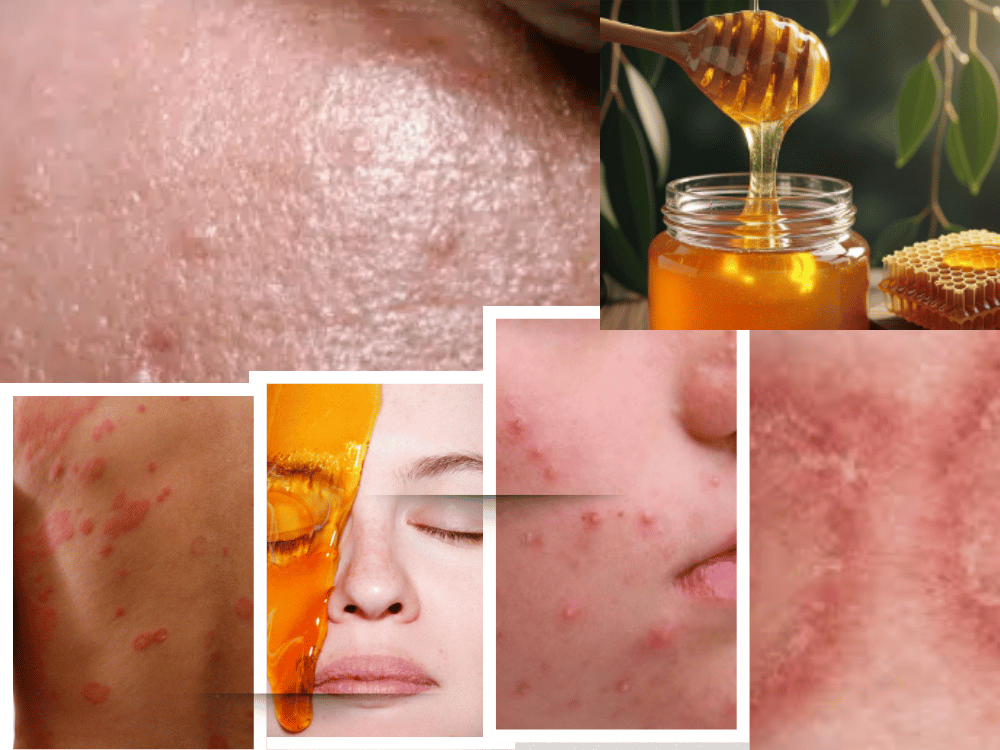
Honey has been valued in traditional medicine for centuries because of its soothing, moisturizing, and natural antibacterial properties. Traditional Unani medicine combines honey with various herbs and natural ingredients to prepare remedies for a variety of skin conditions. The following recipes are presented as part of traditional practice and should not replace modern medical treatment.
Traditional Remedy for Ringworm
Ringworm is a fungal infection of the skin that usually causes circular, itchy, red patches. Modern medicine treats ringworm with antifungal medications.
Ingredients
- Pure honey – 1 tola
- Rose water – 2 tolas
- Pure opium – 1 masha
Preparation
Grind the opium into a very fine powder and mix it thoroughly with the rose water. Add the honey and stir well to prepare a smooth paste.
Traditional Method of Use
Apply the preparation to the affected area once daily. If the itching is severe, traditional practitioners recommend applying it twice daily. One tola of honey mixed with half a cup of milk is also traditionally taken before bedtime.
Medical Note: Opium is a controlled narcotic and should never be used without medical supervision. Ringworm is a fungal infection that requires appropriate antifungal treatment.
Simple Honey Ointment
Ingredients
- Wheat flour – 2 tolas
- Pure honey – 2 tolas
Preparation
Mix the finely ground wheat flour with honey until a smooth ointment is formed.
Traditional Method of Use
Apply the ointment to the affected skin once or twice daily. Traditional practitioners believe it helps soothe irritated skin and improve its appearance over time.
Medical Note: There is no scientific evidence that this preparation cures ringworm or removes moles. Persistent skin lesions should be evaluated by a healthcare professional.
Traditional Remedy for Skin Blemishes
Ingredients
- Vinegar – 1 tola
- Lahore salt – ½ tola
- Pure honey – 1 tola
Preparation
Mix all the ingredients thoroughly until a smooth paste is obtained.
Traditional Method of Use
Apply a thin layer to the affected areas of the skin. Traditional medicine recommends this preparation to improve the complexion and reduce the appearance of skin blemishes.
Medical Note: Vinegar and salt may irritate sensitive skin. Perform a patch test before applying any homemade preparation to larger areas.
Traditional Remedy for Skin Ulcers and Wounds
Ingredients
- Pure honey – 1 tola
- Rose oil – 2 tolas
Preparation
Mix the honey and rose oil thoroughly until well blended.
Traditional Method of Use
Apply the ointment to clean skin ulcers or minor wounds as traditionally directed.
Traditional texts also recommend applying this preparation to the scalp to help remove lice and nits.
Medical Note: Medical-grade honey has been shown to support the healing of certain wounds under professional supervision. However, infected or deep wounds should always be assessed by a healthcare provider.
Traditional Remedy for Dark Circles
Ingredients
- Khat (traditional ingredient) – 2 tolas
- Pure honey – 2 tolas
- Lemon juice – 2 tolas
Preparation
Boil the khat until soft, then mash it into a smooth pulp. Mix the pulp thoroughly with honey and lemon juice to prepare a thick paste.
Traditional Method of Use
Apply the paste beneath the eyes or to areas of skin discoloration. Leave it on for a short period before washing with lukewarm water.
Medical Note: Lemon juice may irritate delicate skin around the eyes and can increase sensitivity to sunlight. Avoid contact with the eyes and discontinue use if irritation develops.
Traditional Remedy for Bruises
Ingredients
- Lahore salt – 2 masha
- Pure honey – 1 tola
Preparation
Grind the salt finely and mix it well with honey until a smooth paste forms.
Traditional Method of Use
Apply the paste gently over bruised skin caused by minor injuries. Traditional practitioners believe it helps reduce discoloration and promotes recovery.
Medical Note: Cold compresses during the first 24–48 hours remain the standard first-aid treatment for most bruises.
Honey for Cuts and Sharp Wounds
Ingredients
- Pure honey – 2 tolas
Traditional Method of Use
Spread honey onto a clean muslin cloth or sterile dressing and apply it gently to a clean wound.
Traditional medicine has long regarded honey as a valuable dressing for cuts, puncture wounds, and minor burns because of its soothing properties.
Modern research has also shown that medical-grade honey can help promote healing in certain types of wounds and burns by maintaining a moist healing environment and reducing bacterial growth. However, only sterile, medical-grade honey should be used for wound care, and serious injuries require prompt medical attention.