



Introduction
Nutmeg (Myristica fragrans) is a well-known aromatic spice and medicinal plant. It is valued for its fragrance, flavor, and therapeutic properties in traditional systems like Unani and Ayurveda. Both the seed (nutmeg) and its covering (mace/javetri) are used medicinally.
Botanical Description
Nutmeg is a tall evergreen tree, growing up to 35–80 feet in height. Its branches are slender and often droop downward.
Leaves
- Resemble jamun leaves but slightly smaller
- Upper surface: Dark green
- Lower surface: Yellowish-brown
- Aromatic in nature
Fruit Structure
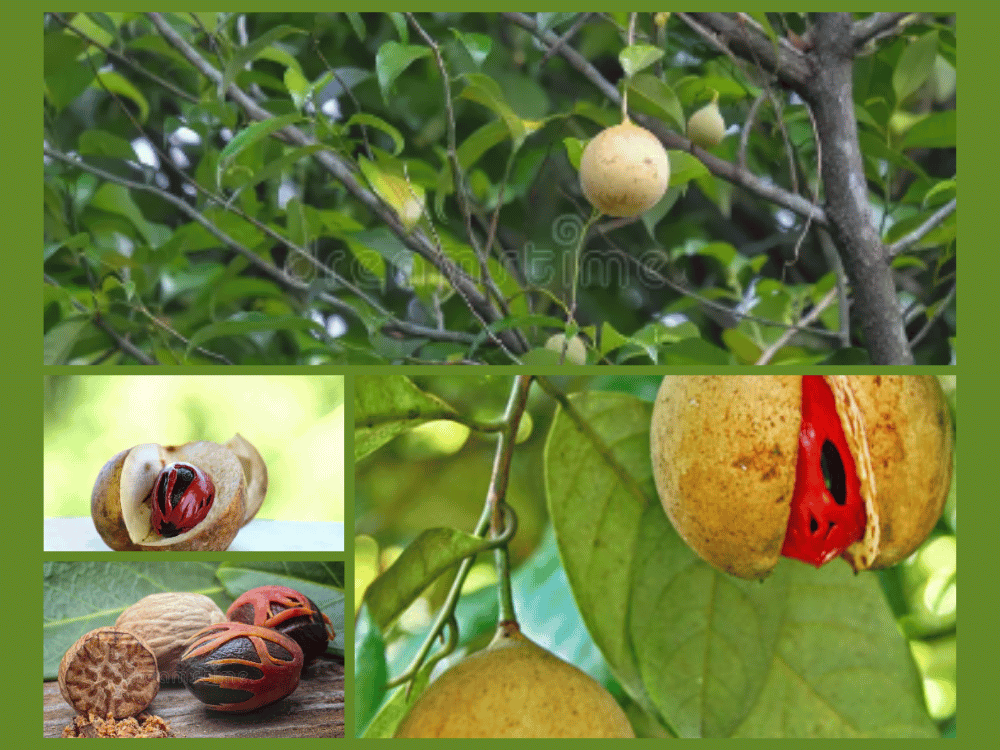
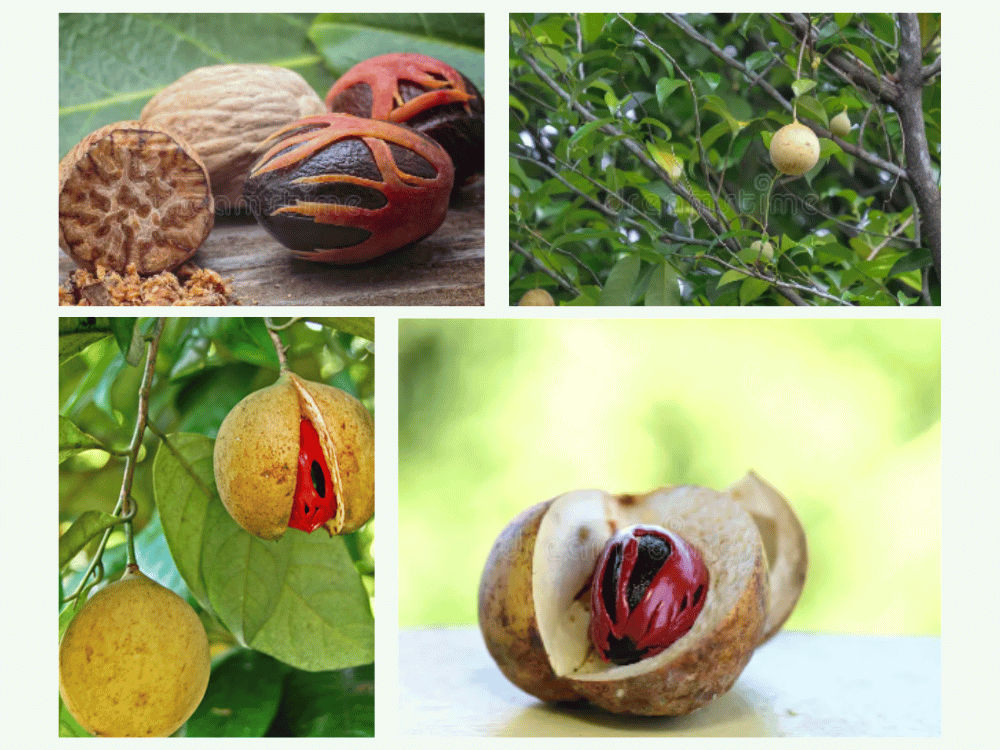
The fruit appears after the rainy season and has a unique three-layered structure:
1. Outer Layer
- Fleshy covering
- Splits into two halves when ripe
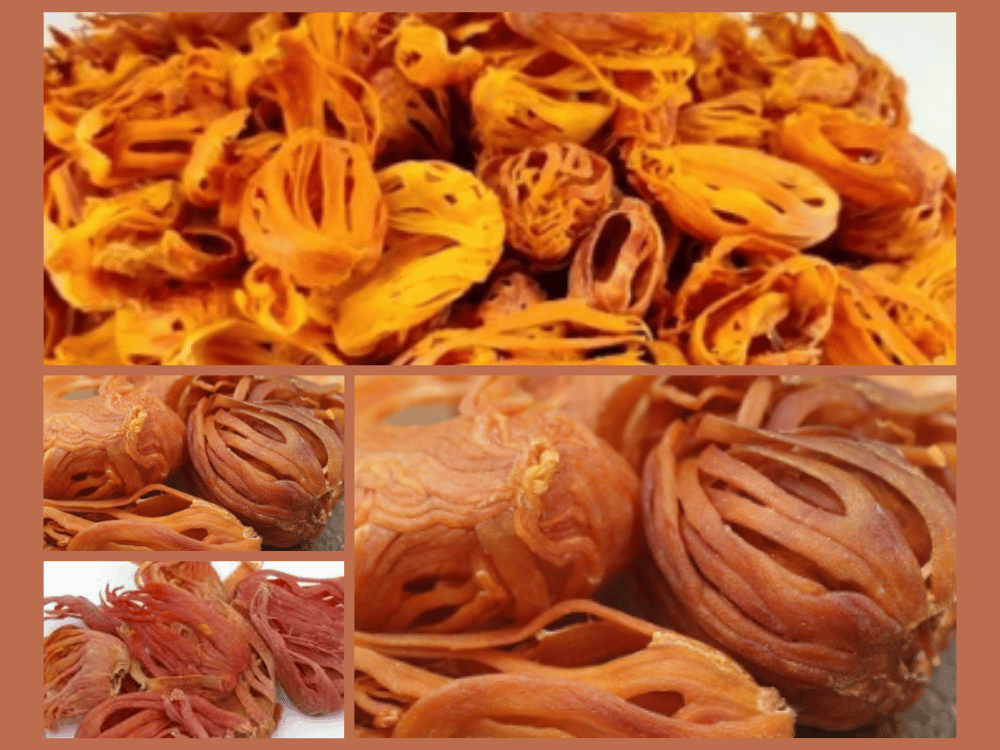
2. Middle Layer (Mace / Javetri)
- Red, net-like (reticulate) structure
- Surrounds the seed
- Separates naturally upon drying
- Known as Javetri (mace)
3. Inner Layer (Nutmeg / Jaifal)
- Hard, brown seed
- Known as Jaifal (nutmeg)
- The main medicinal and culinary part
Varieties
- Around 25 varieties reported in India
- A notable variety from Bombay has an outer peel called “Rampatri.”
- Adulteration with jaggery is sometimes reported in markets
Geographical Distribution
Nutmeg is widely grown in tropical regions, including:
- Indonesia (Sumatra, Java)
- Sri Lanka
- Singapore
- West Indies
- Mauritius, Madagascar, Zanzibar
- India (Konkan, Madras, Karnataka, North Malabar)
- China and Sukkur regions
Chemical Constituents
Nutmeg contains both volatile and fixed oils:
Volatile Oil (5–15%)
- Contains:
- Eugenol
- Isoeugenol
- Myristicin
- Responsible for aroma and medicinal activity
Fixed Oil (24–40%)
- Rich in myristic acid (about 61%)
- Known as nutmeg butter
Other Components
- Benzoic acid
- Starch
- Fibrous materials
Temperament (Unani Concept)
- Warm and dry in the second degree
Pharmacological Actions
Nutmeg has a wide range of actions:
- Cardiac tonic (strengthens the heart)
- Nervine tonic
- Digestive and stomachic
- Astringent
- Anti-inflammatory
- Analgesic (pain reliever)
- Mild sedative and narcotic
- Carminative (relieves gas)
Medicinal Uses
Digestive Health
- Improves digestion and appetite
- Useful for:
- Stomach weakness
- Bad breath (chewing nutmeg helps)
- Nausea and vomiting
Heart and Nervous System
- Strengthens the heart, especially in cold-tempered individuals
- Helpful in:
- Headaches and migraines
- Nervous weakness
Diarrhea
- Due to its astringent properties, it helps control:
- Loose motions
- Digestive imbalance
Respiratory and ENT Uses
- Nutmeg oil is used for:
- Earache relief
- Mild sedative effects
Skin, Pain & External Use
- Nutmeg paste or oil helps in:
- Headaches
- Joint pain and arthritis
- Toothache (applied locally)
- Nervous pain
Eye and Hair Benefits
- Traditionally used for:
- Improving eyesight
- Relieving eye irritation
- Mixed with oils (olive or sesame) for:
- Hair strengthening and fragrance
Special Benefits
- Refreshes the body and mind
- Helps maintain internal body heat (vital energy)
- Useful in chronic pain and weakness
Traditional Formulation (Unani)
A classical compound preparation (as described by traditional practitioners) includes nutmeg combined with ingredients such as
- Cloves
- Cinnamon
- Anise
- Saffron
- Cardamom
- Musk and herbal extracts
(Note: Some traditional recipes include potent or toxic substances like opium or datura and must NOT be used without expert supervision.)
Dosage
- 1–2 grams (powder form)
- Or as prescribed
(Note: The originally mentioned tablespoon dose is excessive and potentially unsafe.)
Compound Preparations
Nutmeg is included in various Unani medicines, such as the following:
- Labub Kabir
- Labub Asrar
- Hab Azaraki
- Jawarish Oud Sheerin
- Hab-e-Musk
Precautions
- Excess use may cause:
- Drowsiness
- Toxic effects (due to myristicin)
- Avoid high doses, especially in:
- Pregnancy
- Children
- Always use under medical supervision