



Introduction
Delphinium denudatum, commonly known as Jadwar, is an important medicinal herb in Unani medicine. It is highly valued for its antidotal, nervine tonic, and therapeutic properties, especially in nervous and toxic conditions.
Botanical Characteristics
Plant
- Grows up to about 3 feet in height
- The stem is straight and may be slightly hairy
Leaves
- Round and 2–6 inches long
- Yellowish-green on both sides
- Marked with small spots resembling sesame seeds
- Deeply divided like coriander leaves
- Attached with long stalks
Flowers
- Round to oblong, about 1–1.5 inches long
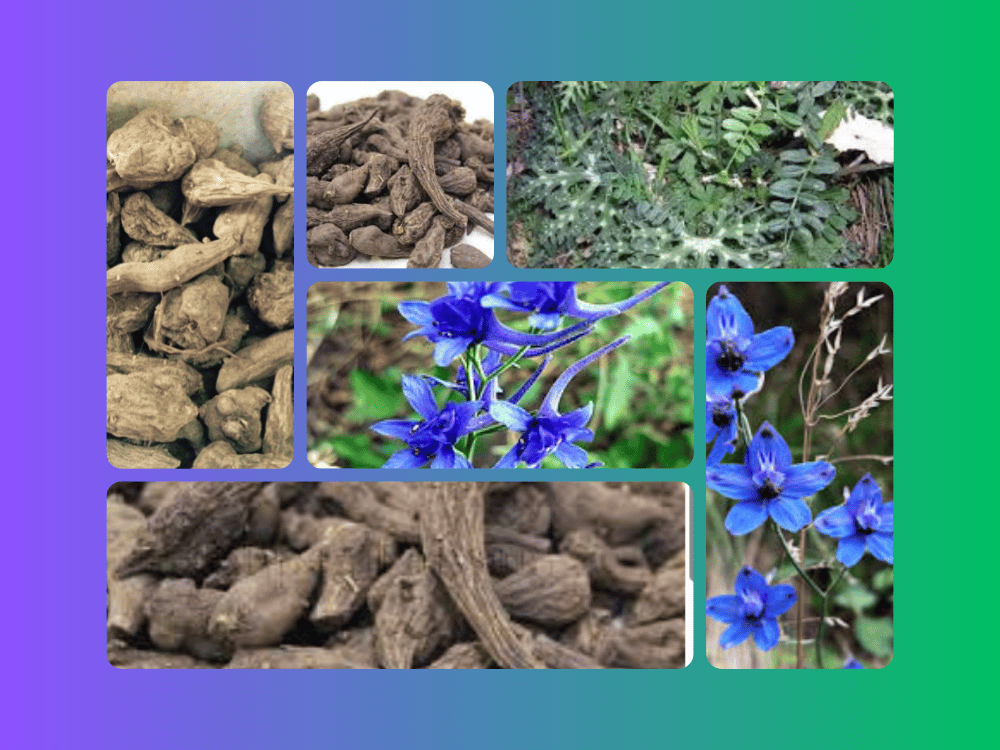
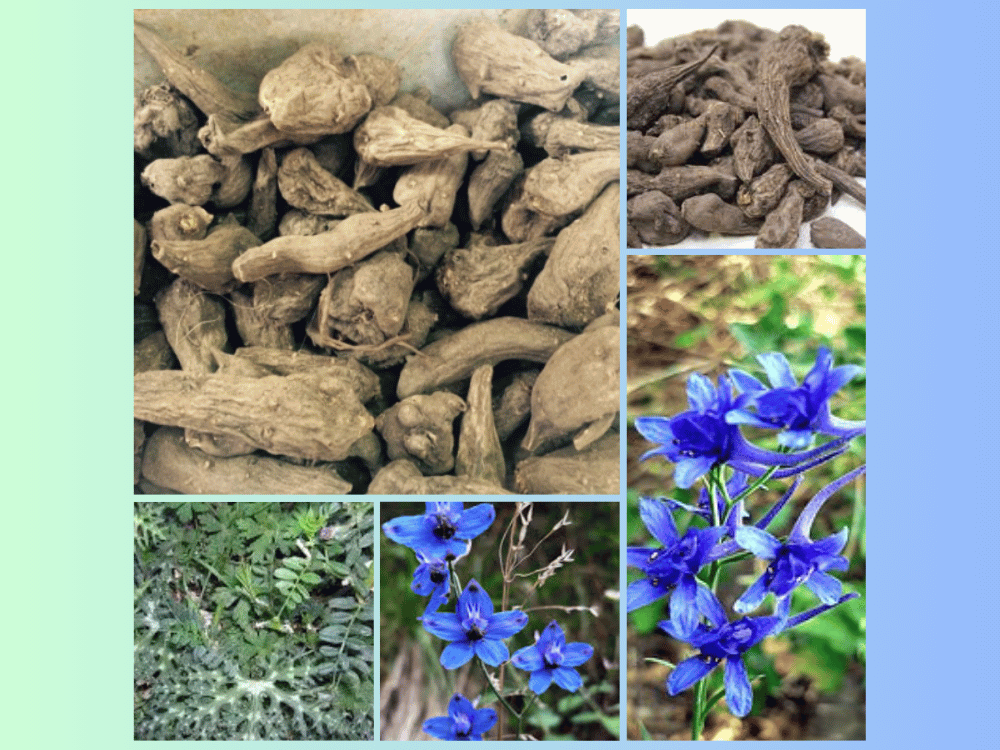
- Blue to grayish-blue in color
- Petals are distinctly blue
- Characterized by spur-like extensions on both sides
- Inner petals are narrow and symmetrically arranged
Roots
- Conical and slightly curved (scorpion-like shape)
- About the length of a finger
- Light in weight
- Initially sweet in taste, later becomes bitter
- Outer color: black or brown; inner color: bluish
- When soaked in water, it turns the water blue
Varieties and Origin
1. Jadwar Khatai (Best Type)
- Black exterior, blue interior, slightly reddish
- Scorpion-shaped
- Taste: initially sweet, then bitter
- Found in the mountains of Khatai
2. Second Type
- Black both inside and outside with a yellowish tinge
- Bitter in taste
- Found in Tibet, Nepal, and Rangpur
3. Third Type
- Dark exterior, bluish interior
- Colors water blue when soaked
- Found in Himalayan regions
4. Wakhan Variety
- Blackish-brown and slightly thick
- Found in the mountains of Wakhan
5. Andalsi (Atla)
- About 8–9 inches long
- Black, very bitter, and soft
- Found near Bachnag (Aconite) regions
6. Fiq (White Type)
- White, slightly sweet, fragrant, and mildly pungent
- Found in Khorasan
- Has weaker antidotal properties
Note: Jadwar is considered the best antidote for Bachnag (aconite poisoning).
Chemical Constituents
- Delphinine
- Staphisagrine
- Other alkaloids
Identification
- When powdered and placed on the tongue, it causes:
- Burning sensation
- Numbness
Temperament
- Hot and dry in the third degree
Actions (Pharmacological Properties)
- Antipyretic (reduces fever)
- Antidote (anti-poison)
- Astringent
- Nervine tonic
- Analgesic (pain reliever)
- Antispasmodic (relieves cramps)
- Mild laxative
- Stimulant
- Lithotriptic (breaks stones)
- Skin cleanser and complexion enhancer
Medicinal Uses
Nervous System Disorders
- Effective in:
- Epilepsy
- Paralysis
- Tremors
- Numbness
- Melancholia and mental disorders
- Strengthens the nerves and brain
Digestive and Abdominal Disorders
- Relieves:
- Colic
- Dysentery
- Liver weakness
- Spleen disorders
Respiratory and Phlegmatic Conditions
- Useful in:
- Colds
- Phlegmatic diseases
Antidotal Uses
- Effective against:
- Snake bites
- Wasp stings
- Other poisons (hot and cold)
Method of Use:
- Mixed with wine and administered internally
- Applied locally to the affected area
- Induces vomiting to eliminate toxins
- Followed by administration with milk for recovery
Pain Relief and External Uses
- Relieves both internal and external pain
- Helps dissolve:
- Tumors
- Boils
Skin Disorders
- Improves complexion
- Removes:
- Freckles
- Blemishes
- Leprosy (traditional reference)
Urinary and Stone Disorders
- Helps in:
- Breaking kidney and bladder stones
- Relieving urinary obstruction
Use in Children
- Traditionally used in epilepsy and nervous weakness
Preventive Uses
- Acts as a protective remedy during epidemics such as
- Cholera
- Plague
- Works by stimulating the body and promoting detoxification
Special Benefits
- Powerful antidote
- Nervine tonic
- Strengthens upper limbs and vital organs
Dosage
- 1 to 4 grams (as per traditional use)
Compound Preparations
Jadwar is used in several classical formulations, including:
- Hab Jadwar
- Jadwar-based electuaries (Majun)
- Herbal pastes with cow tongue and other ingredients
- Traditional compound tonics