



Introduction
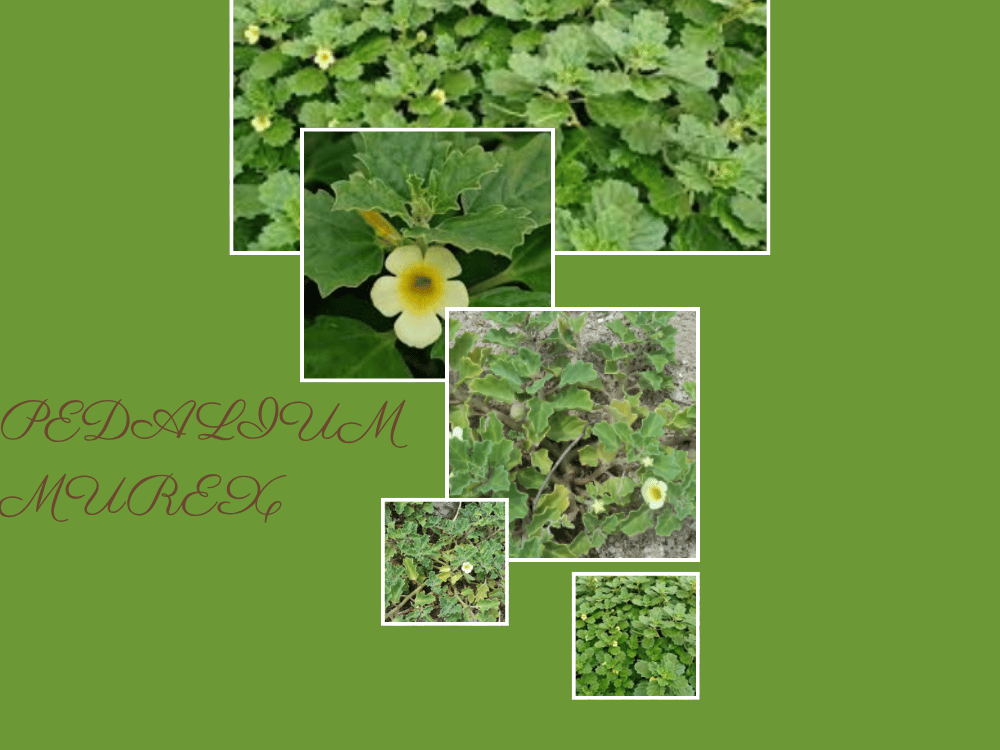
Pedalium murex is a small, annual herb that typically grows up to one to one and a half feet in height. The plant has rough, spreading branches and sheds its leaves seasonally (deciduous in nature). It is commonly found in coastal and tropical regions.
Morphological Characteristics
Leaves
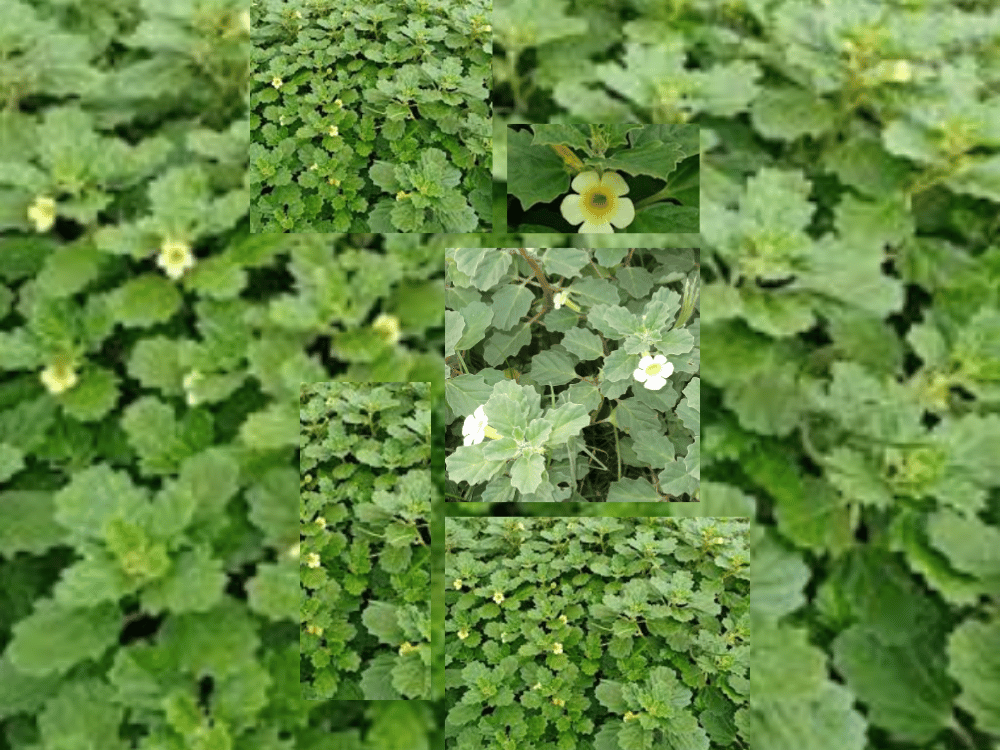
The leaves are about one to two inches long and nearly one and a half inches wide. They are rounded in shape with slightly serrated (toothed) edges.
Flowers
The flowers are bright yellow, attractive, and approximately one and a half inches long. When crushed, they emit a pleasant, sweet fragrance.
Fruits
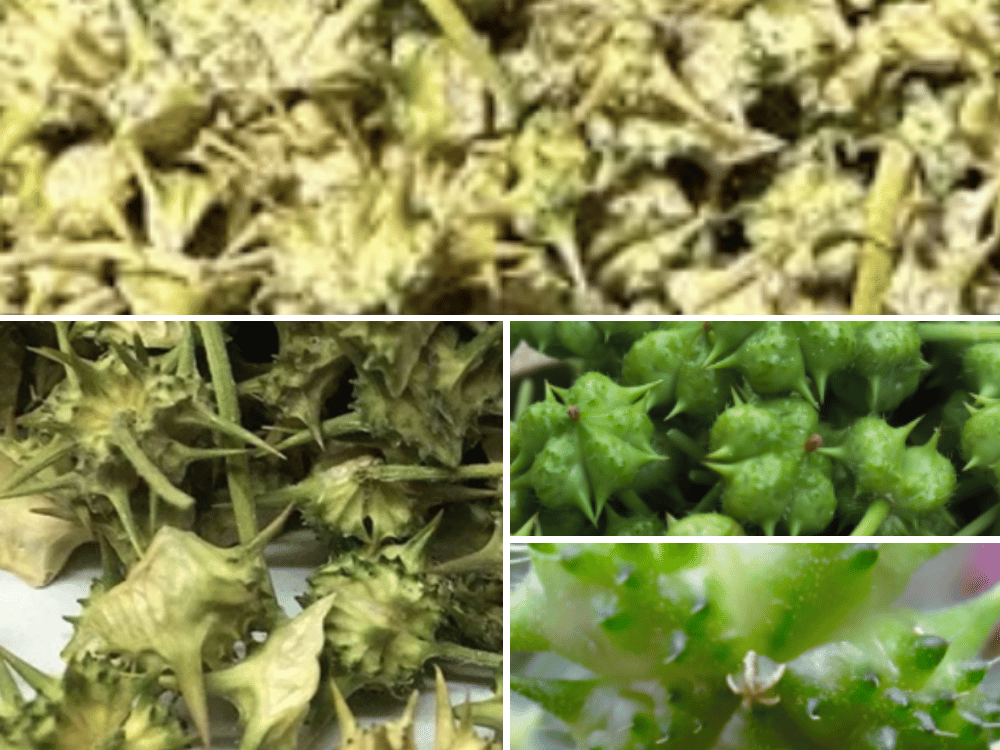
The fruit is distinctive, having a four-angled (four-cornered) structure with a sharp thorn at each corner. Inside the fruit are compartments (locules), each containing two seeds.
Root
The root varies from five inches to one foot in length and is about the thickness of a finger. It is reddish in color.
Special Characteristics
When the plant or its leaves are soaked or crushed in water, they produce a mucilaginous (slimy or salivary) substance. This property is significant in traditional medicine.
Geographical Distribution
This plant is commonly found in:
- Deccan region
- Gujarat and Konkan coastal areas
- Sri Lanka
- Parts of Africa
Chemical Composition
The plant contains:
- Salts
- Resin
- Mucilage (salivary substance)
- Lac
Temperament
Hot and dry in the first degree
Functions and Uses
- It has properties similar to other pungent and drying herbs, though it is less commonly used.
- Due to its mucilaginous nature, it may have soothing effects in traditional remedies.
- It is sometimes used as an ingredient in Bateesa and traditional preparations like gutka (herbal formulations in Unani/Ayurvedic context, not commercial tobacco products).