



Introduction
Datura stramonium, commonly known as “Dhatura,” is a poisonous medicinal plant belonging to the Solanaceae family. It is widely found in India, Pakistan, Iran, and Afghanistan and is used cautiously in traditional medicine due to its strong narcotic and toxic properties.
Morphological Characteristics
Plant
- Grows 2–4 feet high
- Leaves resemble those of belladonna and Ajwain Khorasani
- Leaves are about 6–7 inches long and 4 inches wide
- Color: Dark green (upper surface) and lighter underneath
- Texture: Wrinkled with slightly irregular or toothed edges (some white varieties have smoother edges)
- Smell: Slightly acrid
- Taste: Bitter and slightly salty
Flowers
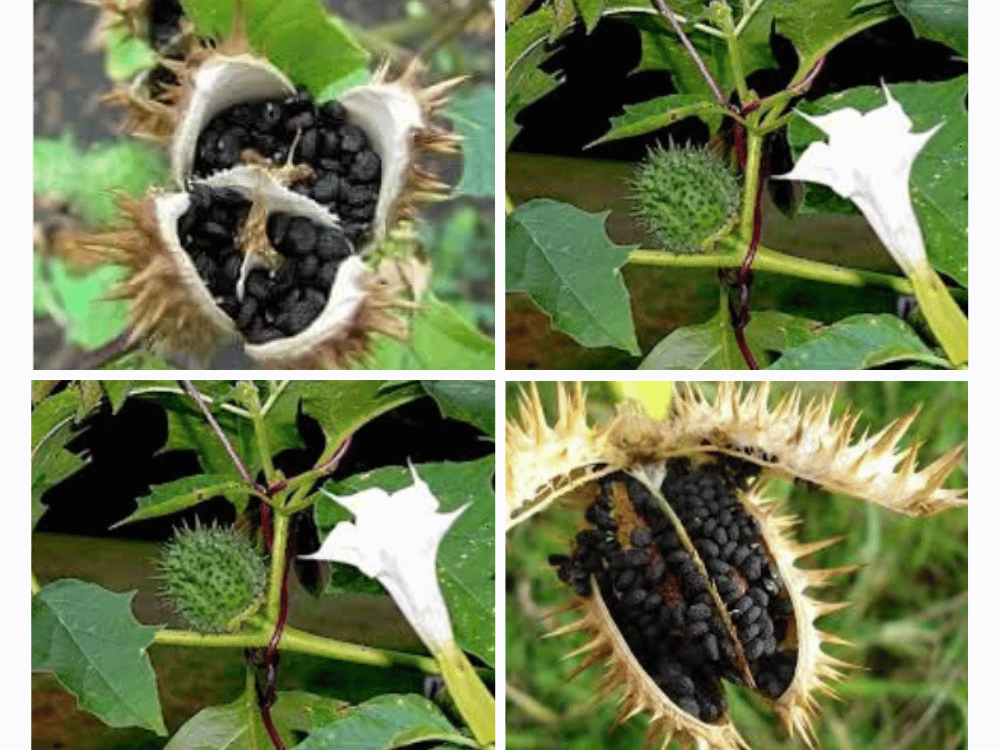
- Trumpet (shehnai)-shaped, about 6–7 inches long
- Open at the front and narrow at the back
- Divided into segments
- Color: White or bluish
- Several varieties exist, with white and black types being most common
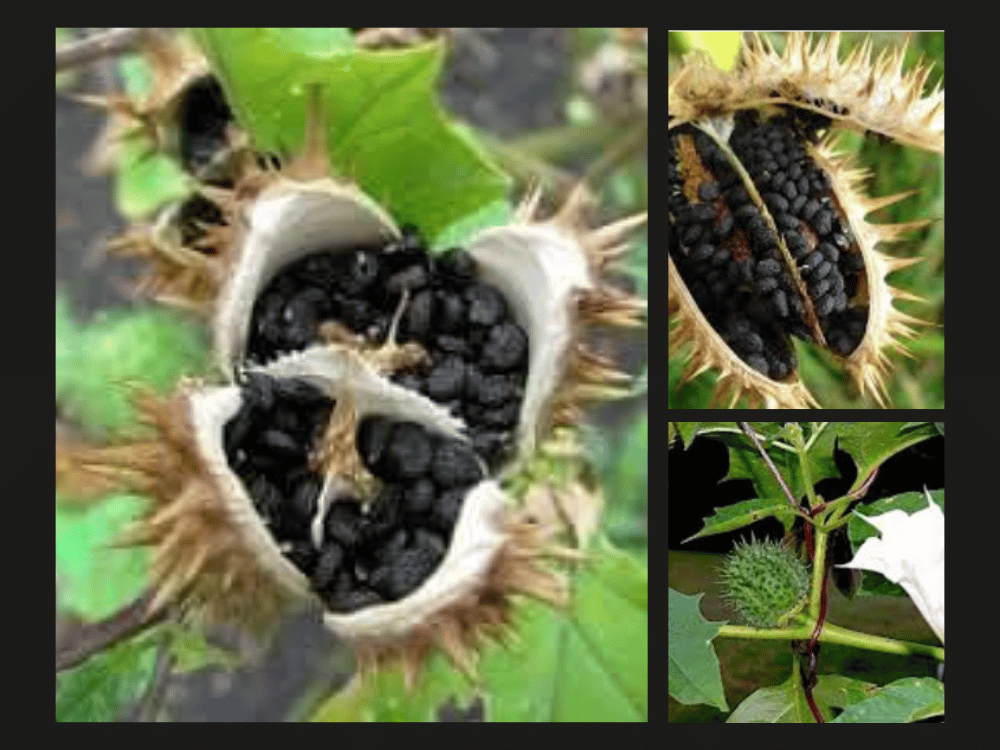
Fruits and Seeds
- Fruit size: Similar to a lemon, walnut, or small egg
- Shape: Round and covered with soft spines
- Divided into four chambers, each containing numerous seeds
- Color changes:
- Initially dark green
- Turns whitish-green
- At maturity, releases brown or black seeds
Habitat and Growth
- Flowers in spring
- Fruits mature in mid-summer
- Native to India, and widely distributed in South and Central Asia
Chemical Composition
- Contains potent alkaloids, including:
- Daturine
- Hyoscyamine
- Atropine
- Hyoscine (Scopolamine)
- Also contains:
- Chlorogenic acid
- Volatile oils
These compounds are responsible for its narcotic and toxic effects.
Temperament (Mizaj)
- Cold and dry (4th degree)
Actions (Pharmacological Effects)
- Sedative and narcotic
- Hypnotic (induces sleep)
- Antipyretic (reduces fever)
- Desiccant (drying)
- Stimulant (in small doses)
- Causes vascular irritation in excess
Uses
Nervous System
- Used as a sedative in controlled doses
- Helpful in certain nervous disorders
Pain and Inflammation
- Applied externally (oil or paste) for:
- Joint pain
- Headache (as poultice on forehead)
Respiratory System
- Leaves are sometimes smoked (under supervision) to relieve the following:
- Asthma
- Chronic catarrh, especially in elderly patients
Fever and Cold
- Used in fevers and colds due to its antipyretic action
Toxicity and Symptoms
Datura is highly poisonous. Excess intake can cause the following:
- Dryness of mouth and throat
- Dilated pupils and blurred vision
- Red eyes
- Confusion and delirium
- Hallucinations and restlessness
- Hoarse voice
- Nausea and vomiting
- In severe cases:
- Unconsciousness
- Respiratory failure
- Death
Treatment of Poisoning
- Induce vomiting immediately
- Perform gastric lavage (stomach wash) if possible
- Give milk, ghee, or butter
- Provide supportive care, including artificial respiration if needed
- Honey may be given to improve weakness
Special Benefit
- Strong sedative and pain-relieving effect, especially when used externally
Dosage
- Very small doses only (1–4 rice-grain equivalent)
- 1–1.5 grams can be fatal
Compound Formulations
- Dhatura oil preparations
- Chaharberg oil
- Sarsaf oil
- Haftberg oil (leaf oil)
- Other traditional compound medicines