



Introduction
Joint diseases can significantly affect mobility, comfort, and quality of life. Many traditional health systems have suggested that honey may help relieve joint pain and improve overall health. While honey is a nutritious natural food with antioxidant and anti-inflammatory properties, some traditional claims about its ability to cure joint diseases are not supported by modern medical research. The following article presents these traditional beliefs in a clear and grammatically correct format.
Understanding Uric Acid and Joint Health
According to traditional beliefs, waste products produced by the body are converted into toxic substances, which are then removed from the bloodstream by the kidneys through urine. If the kidneys become weak or fail to eliminate these substances effectively, they may accumulate in the body and contribute to health problems.
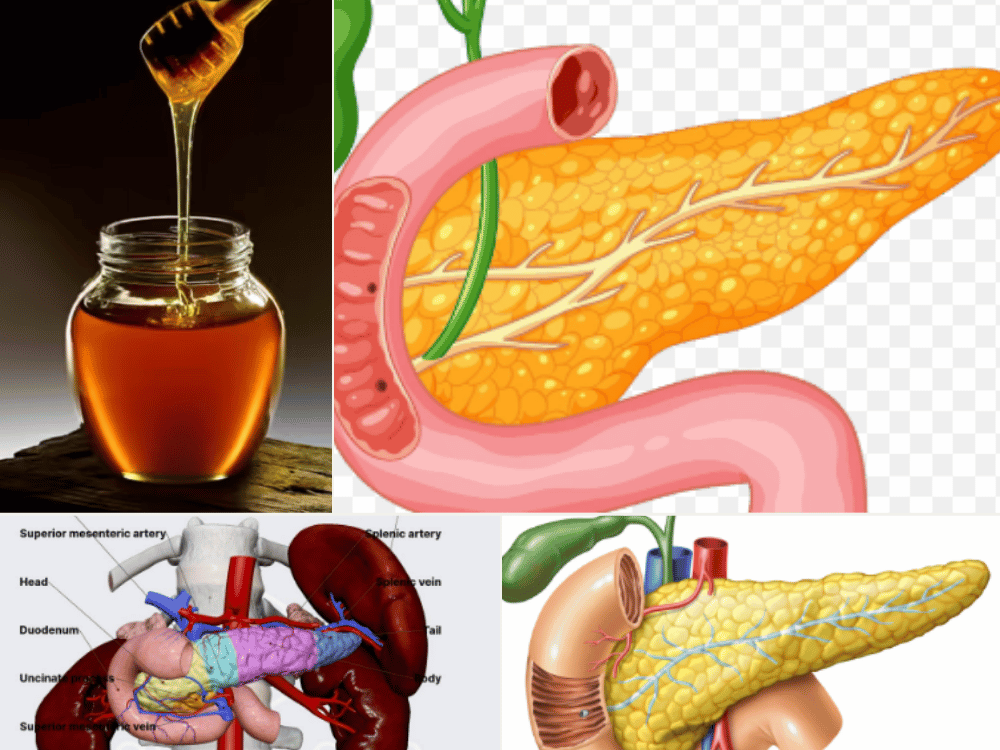
Modern medicine explains that uric acid is a waste product formed when the body breaks down purines. Healthy kidneys usually remove excess uric acid through urine. However, when uric acid levels become too high or the kidneys cannot remove enough of it, uric acid crystals may accumulate in the joints, leading to gout, a painful form of arthritis.
Symptoms of Joint Pain
Joint pain may develop due to a variety of causes, including digestive disorders, infections, autoimmune diseases, or metabolic conditions such as gout. Common symptoms include:
- Swelling of the joints, especially in the ankles and feet.
- Pain, stiffness, and tenderness in the affected joints.
- Difficulty moving or standing comfortably.
- Reduced appetite in some cases.
- Burning sensation during urination if an underlying urinary condition is present.
- Pain that may become more severe at night.
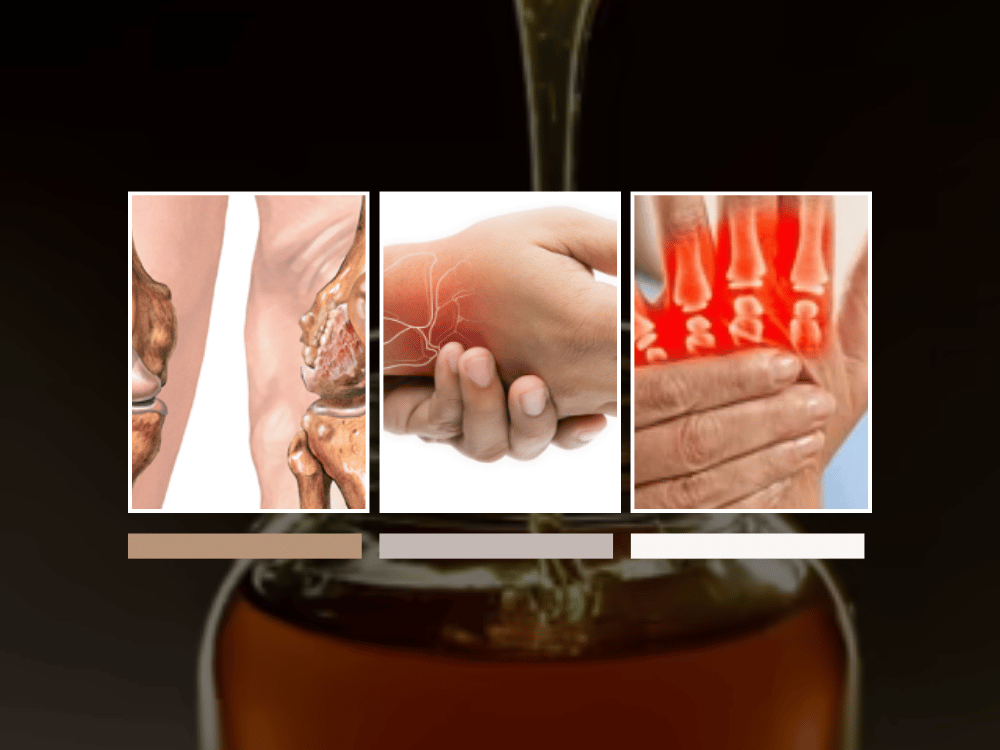
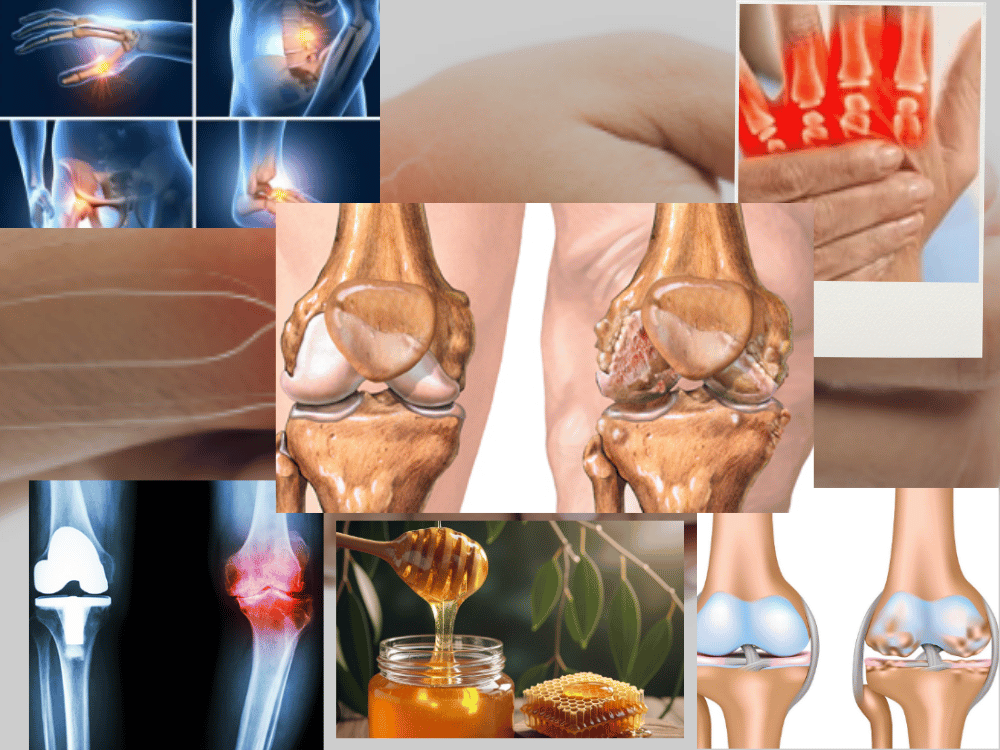
- In severe cases, inflammation may spread to multiple joints, including the fingers, wrists, shoulders, knees, and ankles.
Persistent joint pain should always be evaluated by a healthcare professional to determine its underlying cause.
Traditional View of Honey
Traditional medicine regards honey as a valuable natural remedy because of its moisturizing, nourishing, and healing properties. It is believed that honey helps remove harmful substances from the body, supports kidney function, and promotes sweating, which was traditionally thought to assist in eliminating toxins.
Some traditional practitioners also recommend combining honey with herbal medicines and applying the mixture as a massage to painful joints, believing that it helps relieve discomfort and improve joint function.
What Modern Research Says
Modern scientific research confirms that honey contains antioxidants and has antibacterial and mild anti-inflammatory properties. It may support general health and is widely used for wound care and soothing sore throats.
However, there is currently no strong scientific evidence that honey:
- Dissolves uric acid crystals.
- Removes uric acid from the body.
- Cures arthritis or gout.
- Restores kidney function.
- Eliminates toxins through sweating.
Although honey can be included as part of a healthy diet, it should not be considered a replacement for medical treatment.
Managing Joint Diseases
Effective management of joint diseases depends on the underlying cause. Healthcare providers may recommend:
- Medications to reduce pain and inflammation.
- Medicines that lower uric acid levels in people with gout.
- Regular physical activity and joint-strengthening exercises.
- Maintaining a healthy body weight.
- Drinking plenty of water.
- Eating a balanced diet and limiting foods that increase uric acid levels.
- Regular medical check-ups for ongoing joint problems.
Traditional Honey Remedies for Joint Pain and Irq-ul-Nisa (Sciatica)
Traditional Recipe for Joint Pain
Ingredients
- 7 grams dried pink rose petals
- 9 raisins
- 7 grams dried star anise
- 7 grams star anise
- 7 grams cucumber seeds
- 5 grams Bouzidan (traditional herb)
- 5 grams cow’s tongue (traditional herb)
- 4 tolas pink yeast
- 7 grams Khagsi
- 2 grams pure honey
Preparation
- Place all the ingredients except the honey and pink yeast into a pot.
- Add sufficient water and boil over medium to high heat.
- Once the mixture has boiled well, strain it.
- Add the pink yeast to the strained liquid and mix thoroughly.
- Store the preparation in a clean container.
Directions for Use
- Take 1 tola of the prepared medicine twice daily, in the morning and evening.
- Sprinkle 7 grams of Khagsi over each dose and consume it with 2 grams of pure honey.
- Soak a clean cloth in hot water and apply it as a warm compress to the affected joints.
- Continue this treatment for one week. If relief is experienced, discontinue the remedy. If symptoms persist, repeat the course after a one-week break.
- Traditional practitioners also recommend consuming 2 tolas of honey twice daily as part of the routine, believing it supports kidney function and helps the body eliminate waste products.
Note: This is a traditional herbal remedy. There is no scientific evidence that it improves kidney function, removes uric acid, or cures arthritis. Consult a qualified healthcare professional before using herbal preparations, especially if you have chronic medical conditions or take prescription medications.
Irq-ul-Nisa (Sciatica)
Description
Irq-ul-Nisa is the traditional name for a condition commonly associated with sciatica, in which pain radiates along the sciatic nerve. Traditional medicine attributes this condition to the accumulation of waste materials in the veins. In modern medicine, sciatica is usually caused by irritation or compression of the sciatic nerve, often due to a herniated disc, spinal stenosis, or other spinal disorders.
The condition may affect one or both legs and is characterized by:
- Severe pain extending from the lower back through the buttock and down the leg.
- Pain that may radiate to the foot or toes.
- Difficulty walking, standing, or sleeping due to discomfort.
- Numbness, tingling, or weakness in the affected leg in some cases.
Traditional Remedy for Irq-ul-Nisa
Ingredients
- 2 tolas poppy seeds
- Goat’s milk (as required)
- 1 tola pure honey
Preparation
- Grind the poppy seeds into a fine powder.
- Mix the powder thoroughly with enough goat’s milk to form a thin, oil-like consistency.
- Add the honey and stir until well combined.
Directions for Use
- Warm the mixture slightly until it is comfortably warm.
- Massage it gently onto the affected area.
- Cover the area with a soft cloth after the massage.
- Traditional practitioners advise avoiding exposure to cold air immediately after application.
- Continue the treatment for several days as needed.
According to traditional belief, this massage promotes sweating and helps remove accumulated waste materials from the body. However, these claims have not been confirmed by modern scientific research.